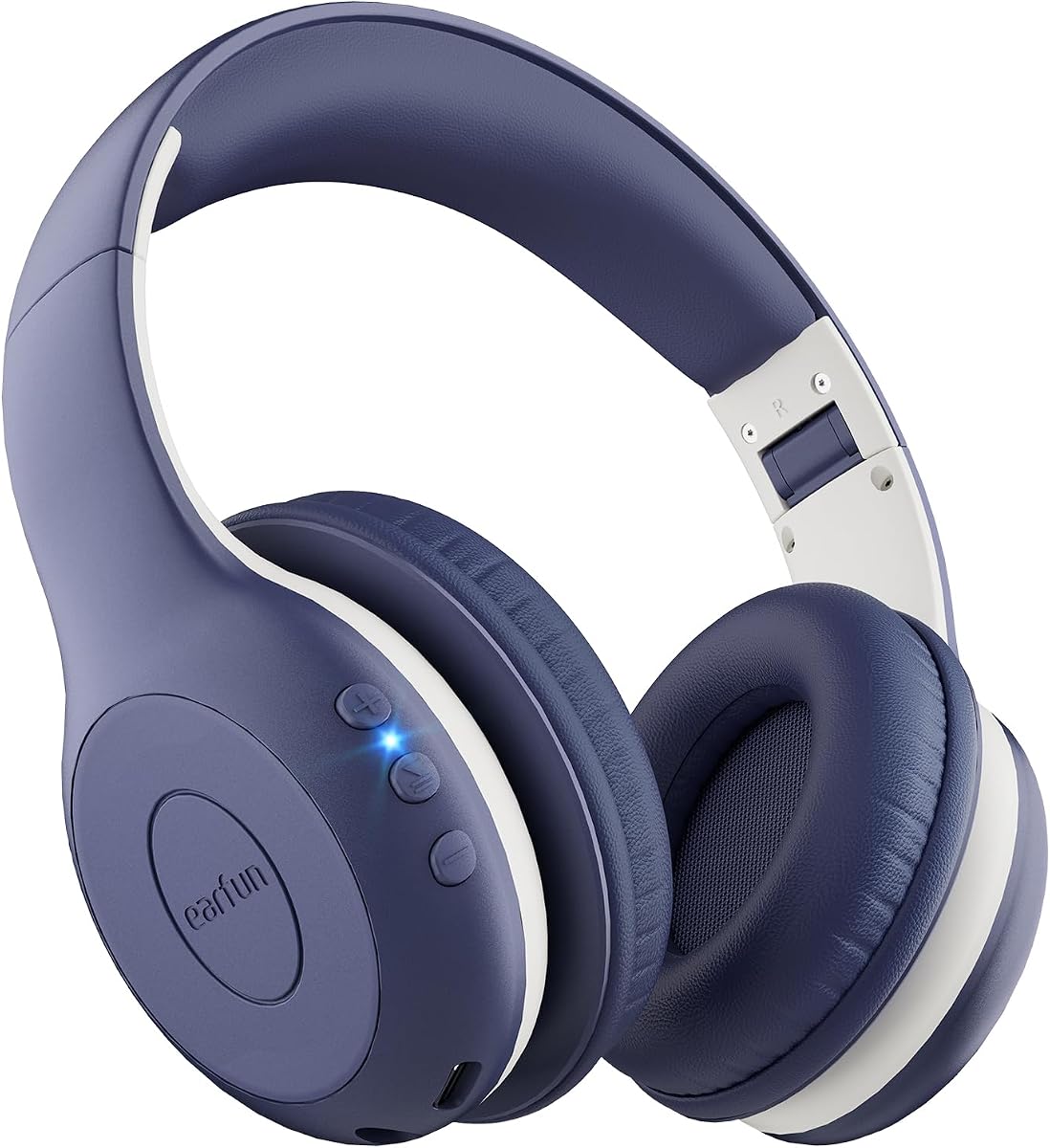
EarFun K2 Kids Headphones
4.6Editor score
74/85/94dB volume modes
Bluetooth 5.4 connectivity
Up to 60-hour playtime
Memory foam comfort
Discover the best headphones for kids with volume limit, comparing safety, comfort, sound, portability, battery life, and school-ready features for parents.
Headphones for kids with volume limit help children enjoy music, lessons, stories, and calls without unrestricted audio exposure. A useful pair should combine a dependable limiter with soft materials, a secure fit, clear sound, and controls that young users can operate. The right model also needs to suit school bags, travel, and different learning devices.
We compared ten featured models across volume-limiting modes, wired or wireless connectivity, microphones, driver size, comfort materials, foldability, cable durability, battery life, and device compatibility. The guide covers options for classrooms, online learning, home listening, gaming, and travel, giving families practical distinctions beyond the shared volume-control feature.
Each entry explains the strongest benefits, trade-offs, and ideal buyer so the final choice is easier to narrow down. Product designs and current offers can change, so confirm the listed specifications and device requirements before ordering, especially when your child uses a school-issued tablet or laptop.
4.6Editor score

4.6Editor score

4.6Editor score
This side-by-side comparison highlights each model's volume control, connection style, core comfort features, portability, and microphone support to help identify the most suitable option for a child's routine.


The Candy Bila Wired Kids Headphones combine a child-focused over-ear design with an 85/94dB dual volume limiter, making them a strong all-around choice for families seeking both hearing control and everyday usability. The model has a 4.6 rating and is built for children from approximately three years old, making it relevant for school, reading, gaming, travel, and communication.
We may earn a commission when you buy through this link, at no additional cost to you.
Its strongest advantage is the combination of safety and simple operation. The inline remote lets children play or pause audio, answer or end calls, and move between tracks without navigating a complicated control panel. A built-in microphone supports online learning and family communication, while the wired 3.5mm connection works with compatible smartphones, tablets, laptops, PCs, and Kindle Fire devices.
Durability is another meaningful strength. The tear-resistant nylon cord is better suited to normal child handling than a thin, easily frayed standard cable, and the folding design makes the headphones easier to place in a bag. The adjustable headband supports a personalized fit. The main limitation is that the wired design requires access to a compatible jack and removes the freedom of wireless listening.
This is a strong recommendation for a child who mainly uses a school-issued computer, Chromebook, tablet, or another 3.5mm device. It may be less convenient for children who frequently move between screens or want to use a device without a headphone jack. For those situations, a wireless alternative may fit better, but for dependable school use the Candy Bila model offers a persuasive mix of protection, durability, and control.
The dual 85/94dB limiter gives parents a more useful degree of control than a model that only advertises a single ceiling. It is designed to preserve a listening environment for children without encouraging excessive volume during lessons, games, music, or travel.
The foldable construction and reinforced nylon cord address two common frustrations: headphones taking up too much room and cables being damaged by repeated handling. An inline mic also makes the pair suitable for classroom communication and virtual learning.
We may earn a commission when you buy through this link, at no additional cost to you.
The EarFun K1 is a capable wired option for children who want volume-limited listening, a microphone, and a convenient way to share audio. Its 4.6 rating reflects a well-rounded package, while the 85/94dB limiter provides the essential hearing-conscious design expected from this category.
We may earn a commission when you buy through this link, at no additional cost to you.
The sharing jack sets this model apart from many basic school headphones. A child can connect another compatible pair through the 3.5mm sharing connection, allowing a sibling or friend to listen without a separate splitter. The inline control supports play, pause, call management, and track changes, while the cable-mounted microphone handles online study and communication.
Sound quality is another strength. Built-in 40mm drivers are intended to produce balanced stereo audio with clear highs, rich bass, and a broad dynamic range. The product also emphasizes child-friendly sustainable materials, CPC compliance, a nylon braided cable, and a design that can tolerate being squished or twisted. Its adjustable sliders and soft ear caps should accommodate a growing range of head sizes.
The K1 is best for a child who regularly completes assignments on a wired school device, studies with a sibling, or wants straightforward audio without charging. Families prioritizing untethered use should consider a Bluetooth model instead. Even so, the sharing feature, durable cord, microphone, and balanced drivers make the K1 a well-equipped educational headphone.
The built-in 3.5mm sharing connection is particularly useful for group study, sibling listening, and travel. It adds flexibility without requiring the child to carry a separate splitter.
The 40mm drivers provide a fuller stereo presentation than basic on-ear school headsets. Clear vocals and controlled bass can make spoken lessons easier to follow while still satisfying music and game listening.
We may earn a commission when you buy through this link, at no additional cost to you.
The JBL Junior 320 is designed for younger listeners who want a recognizable, colorful headphone with clear hearing protection. It carries a 4.4 rating and uses a straightforward 85dB maximum-volume design, making its safe-listening concept easy for parents and children to understand.
We may earn a commission when you buy through this link, at no additional cost to you.
The over-ear cups are round, which helps them sit securely and reduce sound leakage, while the soft 12mm padded headband is proportioned for smaller heads. A built-in microphone allows children to speak with teachers, relatives, and friends without an extra accessory. The purple finish and included customization stickers add an element of ownership that can make wearing school headphones feel more engaging.
Portability is handled with a flat-folding design, allowing the headphones to fit more neatly into a backpack or travel bag. The straightforward wired format avoids battery charging and pairing routines, although that means the child must have a compatible 3.5mm audio connection available.
The Junior 320 is a good fit for families prioritizing a single, clearly defined volume ceiling, a child-friendly appearance, and uncomplicated operation. Parents who want different volume modes for studying and travel may prefer an 85/94dB model. Its main appeal remains the combination of JBL styling, compact construction, a microphone, and firm 85dB protection.
A clear 85dB ceiling simplifies the safety proposition. Children can still enjoy music, games, books, and lessons without adjusting the headset above the intended maximum.
The compact round earcups and softly padded narrow headband focus attention on a secure, child-oriented fit. The colorful appearance and sticker customization also make the headphones feel more personal.
We may earn a commission when you buy through this link, at no additional cost to you.
The JoySpark Kids Bluetooth Headphones provide a generous 60-hour listening runtime, making them a practical choice for children who use headphones across school, homework, games, and travel. The model has a 4.6 rating, supports Bluetooth 5.3, and includes a built-in microphone for classes and calls.
We may earn a commission when you buy through this link, at no additional cost to you.
Comfort is addressed with memory foam ear cushions, a softly padded adjustable headband, and an over-ear shape. Audio comes from 40mm drivers, with the volume constrained by an 85/94dB limiting system. Combination keys are intended to reduce accidental changes, which is useful when a child might otherwise press the wrong button during independent study.
The one-button interface keeps daily operation approachable. Children can use it to play or pause content, answer calls, or end calls, while the built-in mic supports virtual lessons and interactive learning. A 3.5mm backup jack adds a wired option for uninterrupted use, although the main attraction is the freedom of wireless listening.
This model is ideal for a child who uses a tablet or smartphone throughout the day and does not want frequent charging. Families prioritizing the simplest possible setup may favor a permanently wired headset, while those needing modern wireless convenience will appreciate the long runtime and backup connection. The main trade-off is that the headset must be charged and paired before use.
The advertised 60-hour runtime reduces the likelihood of battery interruptions during a school day or extended trip. It also suits children who use headphones for both lessons and entertainment on the same device.
Combination-key controls make it harder to raise the volume unintentionally. This can be particularly helpful for children who use headphones independently while completing online coursework.
We may earn a commission when you buy through this link, at no additional cost to you.
The Kids Headphones Wired for School are a flexible all-cord option with an adjustable 85/94dB limiter, soft over-ear cushions, and a design intended for children aged three and up. The model has a 4.5 rating and positions its two levels around different activities, with 85dB suited to study and 94dB to travel.
We may earn a commission when you buy through this link, at no additional cost to you.
A built-in microphone and inline controls make the headphones suitable for online learning, video chats, and answering calls. The 4.9-foot tangle-free, tear-resistant nylon cable is unusually substantial for a child-focused headset, while 40mm drivers provide stereo sound for educational apps, music, games, and video.
The 90-degree swivel earcups can sit more naturally when the child is using the microphone, and the folding structure supports compact storage. The adjustable headband and soft cushions encourage a stable fit during longer sessions. Compatibility is broad across devices with a 3.5mm jack, including Chromebooks, tablets, phones, laptops, portable media players, and gaming consoles.
This is a strong recommendation for parents who want different listening levels for quiet study and noisier travel without moving to a wireless model. It is especially suitable for school-issued equipment and children who benefit from one-button call controls. The unavoidable limitation is the cable, which may be less convenient than Bluetooth for a child moving between devices.
The 85dB and 94dB modes offer a practical way to distinguish focused indoor study from a busier travel environment. The design gives parents more control without requiring complicated software.
The long braided cord is designed to resist twisting and tearing. Combined with the folding earcups, it makes this a practical wired option for daily school bags and family travel.
We may earn a commission when you buy through this link, at no additional cost to you.
The Kids Headphones for School with Microphone offer a clearly defined 93dB limit, a lightweight child-friendly fit, and a 12-month warranty. The model has a 4.4 rating and is positioned for K-12 learning, virtual classes, reading practice, travel, and everyday entertainment.
We may earn a commission when you buy through this link, at no additional cost to you.
Its headband is reinforced and bend resistant, while the collapsible structure helps the headphones fit into a backpack. Ultra-soft padding and memory-protein ear cushions are intended to remain comfortable during longer study or entertainment sessions. The adjustable, lightweight design is also stated to suit children from approximately three years old.
An HD inline microphone supports virtual classes, calls, and voice-note recording. A one-button control gives young hands a straightforward way to manage playback and calls. The standard 3.5mm connection works with compatible Kindle Fire tablets, Switch devices, Chromebooks, PCs, and many school-issued systems, making setup uncomplicated.
This headset is well suited to families that value warranty coverage and a robust, traditional school-headphone format. Its 93dB ceiling is less granular than the 85/94dB options, but it may suit listeners who want one consistent maximum. Those prioritizing multiple modes or wireless use should look elsewhere, while plug-and-play school users get a practical, covered design.
The 93dB limiter provides a consistent boundary for daily use. That simplicity is useful for families who do not want children switching between study and travel settings.
Soft cushions, an adjustable headband, a reinforced frame, and a 12-month warranty make the model appealing for regular use. The collapsible form also helps protect the headphones during storage and transit.
We may earn a commission when you buy through this link, at no additional cost to you.
The Acer HK03 Kids Headphones emphasize a soft, child-friendly fit and a dual 85/94dB limiter. The model has a 4.6 rating, uses an over-ear wired design, and is aimed at children who spend time in school, travel, or at home using phones, tablets, laptops, and Kindles.
We may earn a commission when you buy through this link, at no additional cost to you.
The product description highlights CPSIA-approved, hypoallergenic materials, breathable over-ear cushions, and an adjustable headband. These details are particularly relevant for children who wear headphones for long classes or who have sensitive ears. The folding design also supports compact storage, while the universal 3.5mm plug reduces connection complexity.
The over-ear construction is presented as a way to reduce ambient sound naturally, helping the child hear the audio without wanting to raise the volume. A microphone supports calls and interactive learning, and a 12-month comprehensive warranty provides additional reassurance. A plug-and-play design also means the child does not need to manage charging or pairing.
The Acer HK03 is a strong option for a child who values gentle materials, simple setup, and adjustable volume protection. It is less suitable if wireless movement is the priority, and it does not provide active noise cancellation for loud environments. For ordinary lessons, communication, and entertainment through a wired device, however, it is a balanced and thoughtful choice.
Hypoallergenic, breathable cushions and an adjustable headband address common pressure and skin-comfort concerns. These features are especially helpful during homework, school lessons, and long journeys.
The 85/94dB limiter offers separate levels while preserving a straightforward wired design. Children can connect to compatible devices without dealing with batteries, firmware, or wireless pairing.
We may earn a commission when you buy through this link, at no additional cost to you.
The EarFun K2 stands out for its three volume settings of 74, 85, and 94dB, giving families more granularity than most models. It also supports Bluetooth 5.4, offers up to 60 hours of playtime, and carries a 4.6 rating, making it a versatile wireless choice for school and travel.
We may earn a commission when you buy through this link, at no additional cost to you.
The lowest 74dB mode can support quieter study or bedtime use, while 85dB and 94dB provide alternatives for lessons, games, and travel. The headphones use 40mm drivers for balanced stereo audio with clear vocals and dynamic bass. A built-in microphone supports hands-free calls, online courses, and interactive learning.
For comfort, the model includes a soft memory foam headband and earpads. Its ergonomic frame is designed to withstand twisting and bending, and the foldable, lightweight construction simplifies carrying. A two-hour USB-C recharge provides a practical rapid replenishment option, while the battery supports extended periods of music, study, and calls.
The K2 is a compelling recommendation for a child who needs different listening modes throughout the week and wants to move between devices wirelessly. It is particularly useful for study, entertainment, and family calls. The trade-off is that the headphones require charging and Bluetooth compatibility, so families with only older wired classroom equipment may find a corded model easier.
The 74, 85, and 94dB settings offer finer control than a two-level limiter. Families can match the listening environment to quiet homework, school, games, or travel without removing the headset.
Memory foam padding, a flexible headband, and a foldable shape support both comfort and portability. The long runtime reduces the disruption of frequent charging during a busy school or travel routine.
We may earn a commission when you buy through this link, at no additional cost to you.
The Awatrue AT2 is a child-focused wired headset with an 85/94dB adjustable limiter, a microphone, and a useful 3.5mm sharing connection. The model has a 4.6 rating and is designed for children ages two through 15, giving it one of the broadest stated age ranges in the group.
We may earn a commission when you buy through this link, at no additional cost to you.
The sharing jack allows a second pair of compatible headphones to connect directly, making it convenient for siblings, classmates, or collaborative listening sessions. The standard 3.5mm connection also supports Chromebooks, tablets, PCs, and laptops, covering many common school assignments without requiring an adapter.
Comfort comes from ultra-soft, breathable protein leather cushions and an adjustable headband. The sturdy PP construction is CPC certified and intended to resist twisting, bending, and rough daily handling. A built-in microphone supports Zoom classes, language-learning apps, video chats, and team communication.
The AT2 is a strong recommendation for a family with more than one child or for children who regularly work alongside a sibling. It combines clear volume modes, a sharing feature, and a wide age range in a straightforward wired format. Its limitation is clear: there is no wireless connection, and devices without a 3.5mm jack require a separate adapter.
The built-in sharing connection supports collaborative lessons, shared videos, and sibling entertainment. It is a practical advantage in homes with multiple children or in family travel situations.
Soft protein leather cushions and an adjustable headband accommodate children from age two to 15. The CPC-certified construction also targets frequent school-bag use and repeated handling.
We may earn a commission when you buy through this link, at no additional cost to you.
The Acer Wireless Kids Headphones combine modern wireless technology, a notably light 6.63-ounce frame, and an 85/94dB limiter. The model has a 4.6 rating and supports Bluetooth 6.0, 40mm drivers, a built-in microphone, and up to 60 hours of playback for a broad range of child listening needs.
We may earn a commission when you buy through this link, at no additional cost to you.
The soft memory foam ear cushions and adjustable headband are designed for long study sessions and extended travel. A reinforced headband hinge is intended to withstand school bags, playgrounds, and bumpy environments. The foldable, compact structure makes storage easier, while the CPSIA-certified, BPA-free materials add reassurance for families focused on child-safe construction.
Bluetooth 6.0 supports cord-free streaming from compatible phones and tablets, and the built-in mic handles calls, interactive lessons, games, and video chats. A 60-hour runtime is especially useful for a child who listens throughout the school day. A five-minute quick charge provides two hours of playback, while a 3.5mm cable can also be used for wired listening.
This is an excellent recommendation for a family seeking a light, modern, wireless headset with strong volume protection and long battery life. It may be more feature-rich than a child needs, and it requires charging and Bluetooth pairing. Even so, the combination of low weight, strong portability, 60-hour runtime, and flexible listening makes it a strong premium option.
The 6.63-ounce frame reduces the burden of wearing over-ear headphones during school, homework, and travel. Memory foam cushions and an adjustable band help distribute pressure across different head shapes.
Bluetooth 6.0 provides convenient cord-free listening, while 3.5mm compatibility offers a backup path for devices or situations where wireless is inconvenient. The long battery life further reduces charging interruptions.
We may earn a commission when you buy through this link, at no additional cost to you.
The right choice depends on more than the loudest advertised number. Consider the child's age, listening environment, device ports, daily routine, tolerance for ear pressure, and need for microphones or wireless freedom before comparing models.
Look for a mode that fits the child's routine. A lower level can suit homework and bedtime, while a somewhat higher level may be more practical in a noisy vehicle. Confirm how the mode is selected and whether a child could change it.
Choose wired for a school computer or consistent 3.5mm setup. Choose wireless for greater freedom, but verify that the child's usual devices support the required Bluetooth connection.
Adjustability is essential because a child may use the headphones for years. Favor soft materials, a secure headband, and earcups that do not depend on excessive clamping force to stay in place.
For regular online learning, verify both microphone availability and the age of the child's device. A simple one-button interface is generally easier for small hands than a complex multi-button controller.
For wired use, look for a braided cable and reinforced headband. For wireless use, prioritize a stated folding mechanism and a hinge designed for repeated flexing rather than only a thin plastic frame.
Folding improves storage, but the best portable model is one the child can pack without help. Confirm the folded dimensions, cable length, and whether loose cords can reach into other bag compartments.
Look for balanced stereo drivers and uncomplicated controls rather than a specific bass preference. For schoolwork, clear vocals and stable volume control are generally more useful than exaggerated bass.
Before buying, check the exact port or wireless requirement, applicable safety certification, and warranty terms. These details prevent the most common disappointment: a well-made headphone that cannot connect to the child's actual equipment.
Begin by reading the specific model's volume-control instructions and identifying the correct listening mode. For a wired headset, connect it fully to the intended 3.5mm device before raising the sound. For Bluetooth models, charge the headphones, complete pairing, and confirm that the selected volume limit remains active. Teach the child that the limiter is a safeguard rather than permission to play at the maximum level during extended sessions.
Fit the headband so the earcups sit evenly and do not press painfully against the ears. Keep the microphone or inline control accessible when the child participates in a class or call. Use the sharing connection only with compatible headphones, and avoid pulling the attached cable to move the device. For younger children, explain which buttons control calls, playback, and the volume limit so accidental presses are less likely.
Store the headphones in their folded form when possible, loosely winding any attached cable rather than tightly wrapping it. Clean the earcups and headband according to the manufacturer's care instructions, and do not use liquids that could enter the drivers. Inspect the cable, hinge, cushions, connector, and charging port for damage, and avoid leaving the headset in extreme heat or a crushed school bag.
The featured models commonly cap listening at 85dB or 94dB, while the EarFun K2 also offers a 74dB mode. A lower level may be useful for concentrated study or bedtime, and a higher one may suit a noisy vehicle. The limiter should be combined with breaks, moderate listening duration, and adult supervision rather than treated as a guarantee against every hearing risk.
Wired models are usually simpler for classrooms and school-issued Chromebooks because they need no charging or pairing. Wireless models provide more freedom and make it easier to use a phone or tablet around the home, although they require battery management. Check the child's daily devices and school rules before choosing the connection style.
Yes, all ten featured models include microphone support. Some use a cable-mounted inline microphone, while others place the microphone in an earcup. Confirm that the child's laptop or tablet can route calls through the selected headset, and test the microphone in a short practice call before a live lesson.
The operating method varies by model. Some provide physical switches or combination-key commands, while others may use controls on the headphone body. Consult the included instructions or product listing rather than assuming every button changes the limiter. It is also wise to test the maximum setting with a familiar source before handing the headphones to a child.
Comfort depends on head shape, earcup depth, padding, and adjustability more than age alone. Over-ear models can feel comfortable for some children but warmer than lighter on-ear designs. Look for soft cushions, a padded adjustable headband, and a fit that does not create painful pressure around the ears or temples.
Use the cleaning method specified by the manufacturer, which may include a lightly dampened soft cloth for removable cushions. Avoid saturating the earcups, pushing moisture into the drivers, or using harsh chemicals. For wired models, inspect the plug and cable for dirt or damage, and for wireless models, clean the charging port carefully with dry materials.
Wired models require a compatible 3.5mm connection or a suitable adapter, while the three featured Bluetooth models can connect wirelessly to compatible devices. The Acer wireless model also supports a 3.5mm cable for backup use. Confirm the connector shape and device compatibility before ordering, especially for school-issued equipment.
No design is indestructible, but several models specifically address common child handling. Braided cables, reinforced headbands, flexible hinges, and foldable ear cups can reduce damage from pulling, twisting, dropping, and compression. Choose the most durable-looking option for frequent travel and inspect the headphones regularly for signs of wear.
The Candy Bila Wired Kids Headphones lead the list as the most balanced overall option, combining an 85/94dB limiter, an inline microphone, durable nylon cord, and foldable over-ear design. The EarFun K2 is a versatile wireless alternative with three volume levels, 40mm drivers, and long battery life, while the Acer Wireless Kids Headphones provide an especially light frame, modern Bluetooth connectivity, 60-hour runtime, and a wired fallback.
When narrowing the field, prioritize the limiter levels your family will actually use, the ports or wireless standards of the child's devices, and comfort over an extended session. Children who share audio benefit from the EarFun K1 or Awatrue AT2 sharing connections, school-focused users may prefer the Acer HK03 or JoySpark, and regular travelers should give extra attention to foldability, cable strength, and battery life.
Before ordering, verify the current specifications, device requirements, included accessories, and warranty terms. Product features and current offers can change, so checking the latest listing helps ensure that the chosen headphones work with your child's schoolwork, communication, and entertainment routine.