
JMH Illuminated Handheld Magnifier
4.4Editor score
Portable handheld design
Three switchable light modes
Large 3.15-inch lens
A magnifying machine makes tiny details easier to inspect, whether you are reading fine print, examining coins, working on electronics, crafting, sewing, or supporting everyday low-vision needs. The best model balances useful magnification, clear optics, steady positioning, and lighting that reveals details without creating glare.
We compared ten options spanning digital microscopes, handheld illuminated magnifiers, desktop magnifying lamps, full-page readers, floor lamps, and clamp-mounted work lights. Our evaluation focuses on magnification range, lens or screen clarity, lighting controls, stand flexibility, portability, and how comfortably each device supports hands-free work.
The list shows why there is no single universal choice for every magnifying machine task. Digital models excel at coin and electronics inspection, broad reading lenses cover more page area, and adjustable lamps suit prolonged crafts or professional tasks. Product availability and prices can change, so confirm current details before buying.
4.4Editor score

4.5Editor score
4.4Editor score
As an Amazon Associate we earn from qualifying purchases.
This side-by-side comparison highlights each product's core magnification, viewing method, lighting, and mounting style, helping readers identify the option that best matches their reading, crafting, inspection, or low-vision needs.


The Elikliv Digital Coin Magnifier earns a 4.5 rating and stands out as the most versatile choice in this guide. It combines a digital microscope with a bright 4.3-inch IPS screen, allowing collectors, electronics hobbyists, and makers to inspect objects without pressing an eyepiece against their eye. The screen-based format also makes the device more comfortable for longer observation sessions.
We may earn a commission when you buy through this link, at no additional cost to you.
Its 50X–1000X adjustable range covers several levels of detail. Users can begin with larger surface features and increase magnification for coin dates, mint marks, lettering, circuit-board components, and textured surfaces. Adjustable focus and microscope height help maintain a useful view, while integrated LED illumination can be changed to suit reflective coins or irregular materials. The eight-inch stand provides a stable working distance and reduces the need to hold the subject awkwardly.
Photo and video capture is a major advantage over ordinary glass magnifiers. Findings can be saved for comparison, documentation, or sharing rather than disappearing as soon as the device is switched off. Compatibility with Windows and Mac computers also permits a larger live-view experience, making this practical for comparing specimens, reviewing repair work, or sharing a live image with another person.
This is the best overall magnifying machine for readers who want one device to cover coins, jewelry, watches, stamps, electronics, fabric, and plant specimens. It is less suitable for someone who primarily needs a wide reading field or a simple lens, and it requires more deliberate setup than a handheld magnifier. Even so, its flexible magnification, documentation features, and comfortable display make it an exceptionally broad all-purpose option.
Viewing the specimen on the IPS display keeps the face away from a conventional eyepiece. That arrangement can make prolonged inspections more comfortable and also makes it easier to show another person what appears beneath the lens.
Adjustable illumination, focus controls, and image capture work together to reveal fine structure. These features are particularly valuable when surface marks, small lettering, or component connections need to be examined and documented.
We may earn a commission when you buy through this link, at no additional cost to you.
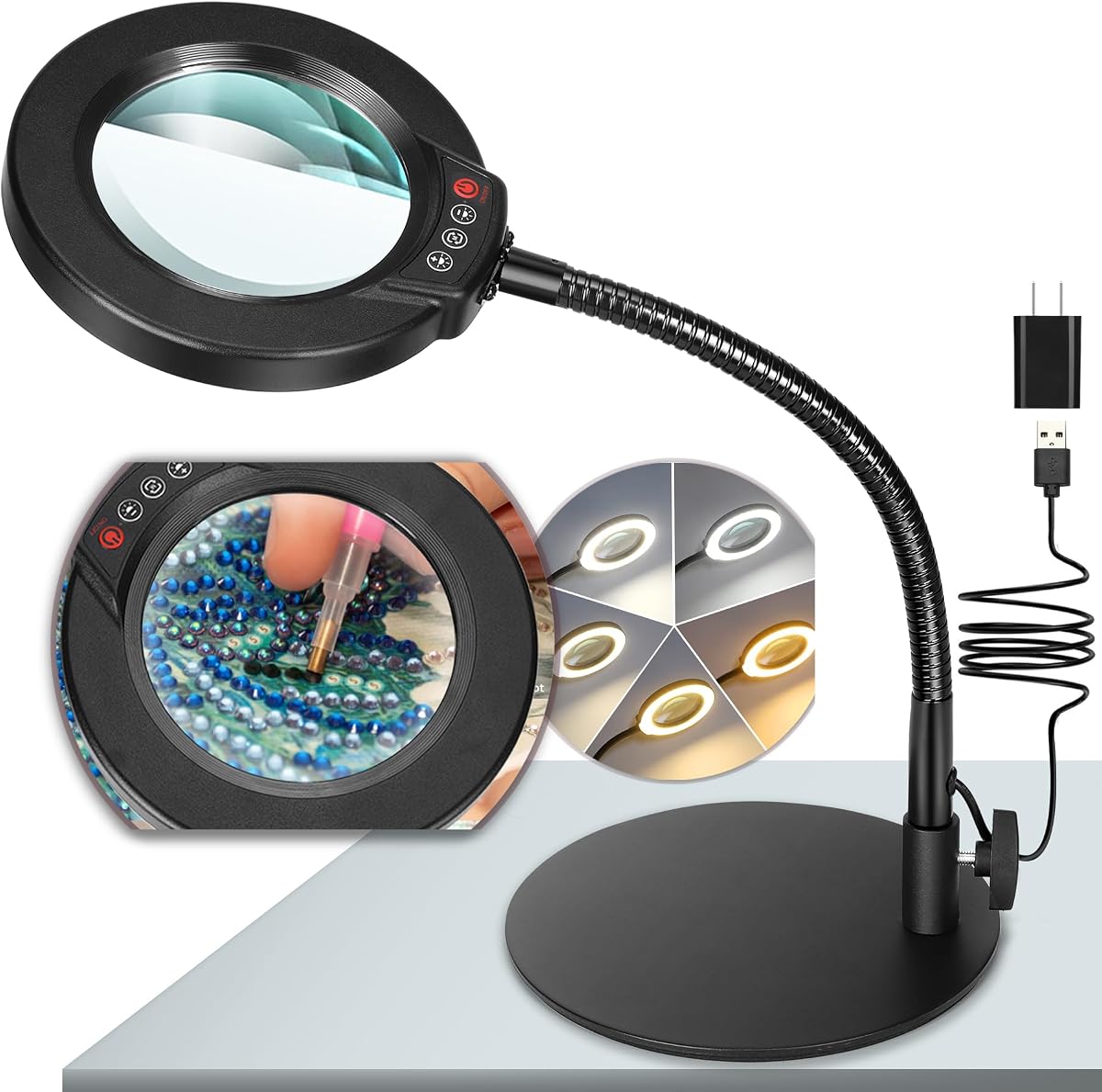
The 10X Magnifying Lamp carries a 4.6 rating and provides a balanced desktop setup for reading, crafts, sewing, painting, and repair. Its 4.3-inch high-definition glass lens magnifies at 10X without requiring a screen or electronic image. This makes it a natural choice for users who want a direct optical view and a steady illuminated work area.
We may earn a commission when you buy through this link, at no additional cost to you.
The lamp is especially useful when both hands need to remain active. A 12.6-inch flexible metal gooseneck can be bent to place the lens and light over a project, while the circular metal base offers stability and doubles as a small-parts tray. On-lamp controls let the user change settings without reaching beneath the desk, reducing interruptions during needlework, miniature painting, electronics work, and similar tasks.
Lighting is one of the strongest aspects. Five color modes and stepless dimming from 5% to 100% allow the illumination to be matched to reflective materials, thread colors, skin tones, or general reading conditions. The combination of a high-definition lens and broad lighting control is useful for tasks where color and contrast can determine whether a detail is visible.
Choose this magnifying machine if you need one dependable desktop tool for general-purpose close work. It does not provide the extreme magnification or image capture of a digital microscope, and the fixed 10X level cannot be changed. Nevertheless, the clear lens, flexible arm, stable base, and highly adjustable lighting make it a strong all-around work lamp for hobbies and home projects.
Five color modes and continuous brightness adjustment make it easier to control glare, reveal surface texture, and distinguish fine colors. The broad range is useful when the same workspace handles sewing, painting, reading, and repair.
The articulated metal arm allows the lens to be moved directly over the work and held out of the way when it is not needed. On-head controls help maintain the preferred settings without pulling attention away from the project.
We may earn a commission when you buy through this link, at no additional cost to you.
The Brightech LightView Pro has a 4.6 rating and offers the strongest premium floor-standing design in the group. It combines a genuine 5-diopter glass lens, an adjustable illuminated arm, and a six-wheel base, giving users a mobile station for reading, facials, sewing, crafts, jewelry work, and other detailed tasks that benefit from a large working area.
We may earn a commission when you buy through this link, at no additional cost to you.
The lens magnifies tasks by 2.25 times, and the listed 15-inch-plus focal range provides a practical distance between the glass and the work surface. The 4.5-inch lens is large enough to show a useful portion of a page or project without requiring the user to move the head constantly. Adjustable arms let the magnifier and integrated LED be focused exactly where they are needed while both hands remain free.
The lighting system is unusually versatile for a magnifying lamp. Its integrated 9-watt LED produces 800 lumens, equivalent to a 60-watt incandescent source, and the touch controls adjust brightness and color temperature from 3,000K warm white to 6,000K cool white. These options can make a difference for color-sensitive crafts, facial work, and reading in different ambient conditions.
This premium magnifying machine is best for salons, treatment rooms, workshops, sewing spaces, and homes where a large stationary setup is preferable to a compact desk lamp. The mobile base reduces the need to carry the lamp and lets it move between clients or work areas, although it takes more space than tabletop models. The included three-year limited warranty adds reassurance for buyers investing in a larger fixture.
Six wheels let the lamp move between workstations without being dismantled. That portability is especially valuable for estheticians, jewelers, crafters, and other professionals who work in different positions or locations.
Warm-to-cool color control and dimmable output allow the illumination to suit both detailed color work and broader reading needs. The 800-lumen LED provides a bright working light without requiring a separate task lamp.
We may earn a commission when you buy through this link, at no additional cost to you.
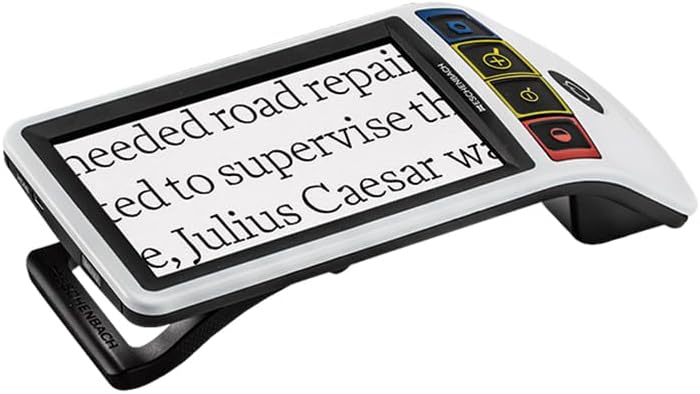
The Eschenbach SmartLux Digital earns a 4.4 rating and delivers a more specialized digital viewing experience. It offers continuous or stepped magnification from 3X to 15X on a five-inch non-reflective display. Rather than functioning as a general-purpose microscope, it is designed as a portable video magnifier for reading, viewing, and capturing images of small subjects.
We may earn a commission when you buy through this link, at no additional cost to you.
One of its strongest features is viewing-mode flexibility. Users can work in true color or select from 14 false colors, while adjustable reading lines and blinds help isolate text or portions of an image. A blue-light filter is included to reduce digital eye strain. LED illumination is dimmable at four levels or can be switched off, allowing the display and lighting to be adapted to different surfaces and environments.
The device includes practical connectivity and image-management tools. HDMI output can connect it to an external monitor, and USB allows photos to be transferred to a computer. Freeze-frame, image capture, and eight gigabytes of internal storage make it possible to save and revisit observations. The listed 50 fps refresh rate supports smooth movement, while the rechargeable battery provides about three hours of operation after roughly 3.5 hours of charging.
This magnifying machine is a strong choice for readers who value configurable colors, reading guides, and portable electronic viewing. It may appeal to users with low vision, educators, and people who need to enlarge writing beyond the range of a simple optical lens. Its 860-by-480 resolution is modest, however, and the three-hour battery life requires planning for extended sessions.
True color, false colors, reading lines, and blinds allow users to increase contrast or isolate a section of text. These options are useful when conventional magnification alone does not make a page comfortable to read.
The rechargeable design supports use away from a desk, while HDMI and USB provide ways to enlarge the view or transfer saved images. Internal storage helps retain important observations between uses.
We may earn a commission when you buy through this link, at no additional cost to you.
The 5X Full-Page Magnifier has a 3.9 rating and focuses on a different goal from most products in the guide: showing more content at once. Its large 10.6-by-7.8-inch viewing area is designed to magnify books, newspapers, prescriptions, bills, labels, and other small print. The moderate 5X level may not reveal extremely fine marks, but it can reduce the need to reposition a narrower lens while reading.
We may earn a commission when you buy through this link, at no additional cost to you.
The hands-free mounting system includes a weighted base, C-clamp, and flexible gooseneck. Users can place the stand on a table or secure it to a desk, shelf, workbench, or bedside table. The 360-degree adjustment places the lens at a comfortable angle, while both hands remain available for turning pages, following lines, sewing, or handling another task.
Fifty LED beads provide the illumination needed to make small print easier to see under a desk or bedside lamp. The USB-powered design avoids battery replacement and helps maintain consistent brightness during extended reading or craft sessions. It can draw power from a wall adapter, power bank, or another USB-enabled source, which adds flexibility to where the magnifier is used.
This magnifying machine is a practical choice for anyone who values a large reading field more than extreme magnification. It is well suited to books, newspapers, medication labels, and low-vision reading support, while the same wide lens can assist with cross-stitch, embroidery, and general close work. The 5X limit and lower 3.9 rating should be considered if microscopic detail is the main objective.
The 10.6-by-7.8-inch viewing area is large enough to reduce frequent repositioning over a line or paragraph. That makes this model more suitable for sustained reading than a narrow circular magnifier.
A weighted base supports portable tabletop use, while the C-clamp offers a more secure attachment to a suitable edge. The USB connection provides consistent light and flexible access to power.
We may earn a commission when you buy through this link, at no additional cost to you.
The 30X Extra-Large Floor Magnifier carries a 4.2 rating and combines a broad viewing area with two magnification levels. Its 10X lens is intended for general close work, while the 30X spot lens provides additional support for very small details. The stated viewing area reaches up to 6.2 inches, helping users cover larger sections without shifting the magnifier constantly.
We may earn a commission when you buy through this link, at no additional cost to you.
Lighting can be tailored extensively. Sixty LEDs offer five adjustable color temperatures and four brightness settings, allowing the user to reduce glare or increase contrast according to the material. An anti-glare design is particularly helpful for sustained close-focus work. The magnifier is also positioned as a visual aid for aging eyes and users managing macular degeneration, though individual comfort and suitability vary.
The magnifying head can be detached from the stand, and the 9.5-inch gooseneck bends in multiple directions. Its segment is replaceable, and the holder can be adjusted according to table height, which allows the floor unit to function as a working magnifier above a surface. A solid metal base provides stability, while USB power offers flexible placement and consistent illumination.
This magnifying machine is well suited to reading, crafts, puzzles, crocheting, and other hobbies that require a free-standing light and a choice of magnification. Its 30X option is useful for tiny details, but the floor format occupies more space than a desktop model. It is most attractive to users who want the reach of a floor lamp and do not need digital recording features.
The 10X main lens supports wider tasks, while the 30X spot lens helps when a subject is too small for comfortable viewing. This dual approach offers more flexibility than a single-level magnifier.
Multiple color temperatures and brightness levels let the light fit reflective or textured surfaces. The anti-glare design supports the kind of sustained close work for which the floor format is intended.
We may earn a commission when you buy through this link, at no additional cost to you.
The JMH Illuminated Handheld Magnifier receives a 4.4 rating and offers the most straightforward way to enlarge fine details. Its large 3.15-inch lens can be moved directly across books, newspapers, maps, photographs, medicine labels, jewelry, coins, electronics, miniatures, models, and crafts. Because it operates without a screen, users receive a direct optical view wherever the lens is placed.
We may earn a commission when you buy through this link, at no additional cost to you.
Eighteen integrated LEDs make the lens useful in dim rooms or at night. Cold, warm, and mixed lighting modes allow the illumination to be changed for different conditions, while stepless dimming provides finer control over brightness. These options can help reduce visual fatigue and make small print more comfortable to examine without adding a separate lamp.
Operation is uncomplicated. The magnifier arrives assembled, uses three AAA batteries that are not included, and has a simple on/off button. That straightforward design is useful for older adults, travelers, or anyone who wants a magnifier that can be picked up immediately and moved from one subject to another.
This is the best budget magnifying machine for portable reading, quick inspections, and small-object viewing. It does not offer hands-free positioning, image capture, or extreme magnification, and the batteries must be replaced when depleted. Within those limits, it provides a useful combination of optical clarity, integrated lighting, and uncomplicated operation.
Cold, warm, and mixed modes let users select a more comfortable light for different environments. The integrated LEDs also eliminate the need to carry a separate light during quick reading or inspection.
The handheld lens provides an immediate view of the subject, with no menus, image processing, or digital delay. Its compact format makes it convenient for travel, bedside reading, and quick checks around the home.
We may earn a commission when you buy through this link, at no additional cost to you.
The 30X 10X Magnifying Lamp has a 4.6 rating and offers one of the strongest combinations of magnification, lighting, and placement in the desktop category. Its 10X main lens supports broad activities such as painting, beading, reading, cross-stitch, knitting, model work, repair, sewing, and soldering. A 30X spot lens provides extra detail for miniature tasks and very small subjects.
We may earn a commission when you buy through this link, at no additional cost to you.
The optical-grade HD lens is described as clear and distortion-free, offering a more traditional viewing experience than a digital screen. Illumination is similarly flexible, with five color modes and stepless dimming intended to provide glare-free light for extended work. A smart memory function restores the last selected settings at power-up, which is useful for artists, repairers, jewelers, and technicians who repeatedly use the same setup.
Controls are located on the gooseneck rather than under the table. This permits one-handed changes without interrupting a task, which helps when both hands are occupied with embroidery, drawing, or detailed repair. The 360-degree metal gooseneck positions the light and lens accurately, while the heavy metal base provides stability and doubles as a tray for small materials.
This magnifying machine is an excellent match for experienced crafters and hobbyists who want more magnification than a basic 10X lamp. It is also suitable for users with low vision who appreciate the dual lenses and adjustable light. The main limitation is that the 30X option is a focused spot rather than a full-area view, so users must switch lenses for different tasks.
The five lighting modes and continuous dimming can be adjusted to match a project. Once configured, the memory function restores the preferred setup, reducing repetitive changes at the start of a work session.
A broad 10X lens handles reading and general crafts, while the 30X spot lens resolves tiny features. This combination allows one station to serve both general projects and miniature work.
We may earn a commission when you buy through this link, at no additional cost to you.
The Digital Coin Microscope 1000X earns a 4.5 rating and is built for detailed inspection of coins and other tiny objects. A 4.3-inch LCD presents the image at 1080P high definition, while the 50X–1000X magnification range reveals scratches, lettering, edge details, year marks, mint marks, and other features that may be difficult to assess by eye.
We may earn a commission when you buy through this link, at no additional cost to you.
The screen-based format separates the user's face from the lens, reducing the neck and eye strain associated with looking into a traditional eyepiece microscope. Eight adjustable LED lights help control shadows and glare, and their brightness can be changed with the side dial. This is useful for metallic coins and other subjects whose reflective surfaces can obscure detail under even, flat lighting.
A built-in camera supports both photos and video. Internal storage can hold approximately 200 images, and the system can be expanded with a TF card up to 64GB, although a card is not included. Windows and Mac compatibility allows live viewing on a computer, where the image can be organized, reviewed, analyzed, or shared.
This magnifying machine is best for coin collectors, electronics hobbyists, students, and anyone wanting to document tiny findings. Its rechargeable battery provides up to 3.5 hours of continuous use, making it portable for indoor or outdoor observation. Very high magnification levels require careful adjustment, and the digital image is not equivalent to examining a specimen directly through an optical eyepiece.
The 1080P display and broad magnification range are well suited to checking dates, lettering, scratches, and edge details. Adjustable LEDs help control the reflections and shadows that can interfere with surface inspection.
Built-in photo and video capture make it possible to compare a coin with later examples. Windows and Mac support provides an additional route for viewing, organizing, and sharing the recorded material.
We may earn a commission when you buy through this link, at no additional cost to you.
The 30X 12X Clamp Magnifier holds the highest listed rating in the roundup at 4.8. It combines a large five-inch 12X main lens with a built-in 30X precision spot lens, giving users a broad view for normal work and a focused option for extremely fine details. The optical HD design avoids the screen-based experience offered by digital alternatives.
We may earn a commission when you buy through this link, at no additional cost to you.
The clamp mount is the defining feature. A wide-opening metal clamp can attach to desks, workbenches, shelves, and other flat surfaces up to 2.55 inches thick. The arm consists of two 14.5-inch sections for a total reach of up to 29 inches, while four springs and three joints support smooth movement and steady positioning. This creates a practical overhead magnifier without requiring a permanent tabletop base.
Lighting is highly adjustable. Five color modes, ten dimming levels, and continuous brightness adjustment from 10% to 100% allow illumination to be tailored to reflective materials, fine colors, and long working periods. A memory function restores the last-used setting, and soft silicone control buttons provide responsive one-handed changes without the stiffness associated with some plastic switches.
The magnifier head adjusts horizontally and vertically, and two locking knobs keep it secure after positioning. It is an excellent choice for crafters, technicians, artists, jewelers, and readers who want substantial magnification with a long reach. The main constraint is the clamp itself: it must have a suitable edge, and the 30X spot lens naturally offers a much narrower field than the main lens.
The spring-supported arm can extend over a work area and then remain where it is placed. Dual-axis adjustment and locking knobs make it possible to find a comfortable viewing angle for detailed projects.
Five color modes and broad brightness control help reveal texture, color, and small edges. Remembered settings and accessible silicone buttons make repeated adjustments straightforward during long sessions.
We may earn a commission when you buy through this link, at no additional cost to you.
The right magnifying machine depends on what you need to see, how closely you work, and whether portability, documentation, broad reading coverage, or hands-free operation matters most. Comparing optical and digital models, magnification claims, lighting, and mounting options prevents an unsuitable purchase.
Optical magnifiers show the subject directly through a glass lens, making them intuitive for reading, crafts, sewing, and quick inspections. There is no screen, image delay, or electronic workflow to learn. Digital microscopes and video magnifiers instead translate the image onto a display, which can make prolonged viewing more comfortable and allow image capture, computer connection, false colors, or larger viewing. Digital systems may magnify beyond what a simple glass lens provides, but the displayed image depends on resolution, focus, lighting, and sensor quality. Choose optical glass when natural color, immediate viewing, and minimal setup matter most. Choose a digital system when documentation, remote sharing, screen-based inspection, or very high nominal magnification is important.
Magnification figures can be misleading when different products use different reference conventions. A 5X full-page lens is designed to cover a wide reading area, while a 10X or 12X main lens offers a closer craft or repair view. Small 30X lenses are often spot lenses for very fine details rather than broad magnified fields. Digital microscopes may advertise ranges up to 1000X, but perceived clarity falls as magnification rises because the image is enlarged beyond the sensor's native detail. For books and labels, prioritize a wide field at moderate magnification. For jewelry, soldering, miniature painting, or coin marks, a 10X–30X option is more useful. Digital inspection is attractive when tiny details, images, and timestamps need to be studied and saved.
Illumination is often more important than a small increase in magnification. A bright lens helps reveal fine lines, but light that is poorly positioned can create glare on coins, metal, photographs, or glossy pages. Good options provide direct illumination around the subject rather than a distant lamp shining at an angle. Dimmability helps prevent glare and allows the user to match brightness to the task. Color-temperature controls are useful for crafts, art, skin work, and color-sensitive inspection, while multiple modes help adapt to different materials. For a desk or reading magnifier, continuous dimming and warm-to-cool adjustment offer broad control. For digital inspection, even and adjustable LEDs are particularly valuable because the camera otherwise captures unwanted shadows and reflections.
A magnifier that shifts or sags during detailed work can be more distracting than helpful. Desktop models generally use a weighted metal base and flexible gooseneck, while floor lamps add height and reach. Clamp models conserve desk space and allow precise positioning over a workbench, but they require a suitable edge of the required thickness. Handheld magnifiers are the easiest to carry and can follow lines of text or move between small objects, though they demand more arm movement. Digital microscopes benefit from stable stands because focus and working distance change with magnification. Consider the intended surface, available clearance, and whether both hands must remain free. For prolonged crafts or professional work, stability should be a higher priority than maximum compactness.
A large viewing area can reduce the repeated movement needed to read a page or inspect a project. Wide 5X and 10X lenses are especially suitable for books, newspapers, labels, maps, and broad craft surfaces. Narrow spot lenses reveal finer details but require precise alignment. Screen-based devices are often easier for extended use because the user can maintain a natural viewing distance and adjust the image size. Screen size, non-reflective surfaces, blue-light filtering, and adjustable reading lines can further improve comfort. Optical users should consider lens diameter, focal distance, and distortion around the edge. Anyone with low vision should choose a broad, well-lit field for general reading or a digital model with customizable colors for difficult text, rather than assuming greater magnification alone will solve every visibility issue.
Portable options are useful for reading in bed, traveling, or inspecting objects away from a fixed desk. Handheld magnifiers need little space and are easy to carry, although their batteries eventually require replacement. Digital microscopes with built-in rechargeable batteries are more flexible, yet their operating time depends on the charge and the intensity of LED and screen use. USB-powered desk lamps provide continuous illumination without disposable batteries, but they need access to a power source. Floor lamps require the greatest space and offer mobility through wheels rather than true portability. Before buying, decide whether the device will be used in one stationary location or carried among several. A model that suits the main workspace but is awkward to transport may be less useful than a simpler product that is always available.
Controls should be easy to reach without interrupting the task. On-lamp or on-arm buttons are more convenient than low-mounted switches, while remembered lighting settings reduce repeated adjustments. Digital magnifiers add choices such as photo capture, video recording, freeze frame, false color, reading lines, and computer transfer. These are valuable for documenting coins, repairs, study, or shared viewing, but they are unnecessary for basic reading. Check operating-system compatibility and included accessories before choosing a computer-connected device. Also examine whether image storage is built in, whether expansion requires an additional card, and whether external-display output is useful. The best control scheme is the one that supports the intended task without adding unnecessary complexity.
Begin by choosing a stable, clean workspace and placing the subject where it will not shift. For a handheld optical magnifier, hold the lens close enough to fill the view while keeping the light aimed at the surface. For a digital microscope, lower the lens gradually, adjust the focus, and use the stand to maintain a consistent working distance. For a desk, floor, or clamp magnifier, secure the base, bend the arm, and lock the head at a comfortable angle before beginning.
Adjust the lighting after setting the position. Start at a moderate brightness, then change the color mode or temperature according to the material and surroundings. Increase magnification gradually rather than jumping directly to the highest level, and refocus whenever the distance changes. On digital devices, use the illumination controls to reduce shadows, capture images when a finding should be saved, and follow the device's instructions for file transfer or external-display connection.
Clean the lens or display with a soft, lint-free cloth suitable for the surface. Avoid harsh liquids, abrasive pads, and forceful pressure, particularly on coated lenses and screens. Keep digital ports dry, protect the device from impact and extreme heat, and store handheld models with their batteries removed if they will remain unused for a long period. Periodically check the arm joints, clamp tension, fasteners, and power connections so loose or worn parts do not undermine image quality or positioning.
A broad 5X or 10X optical magnifier is often the most straightforward choice for reading because it shows a meaningful portion of a page at once. A digital video magnifier can be even more comfortable for some low-vision users, particularly when it offers a large display, adjustable color modes, and reading lines. Choose based on the size of the print, the distance at which you work, and whether a direct optical view or adjustable electronic image is more comfortable.
No. High magnification can make small marks easier to see, but it also narrows the field and makes focus and lighting more difficult to manage. For coin inspection, a digital microscope with adjustable LEDs and image capture can be particularly useful, while a 10X–30X optical spot lens is handy for quick checks. Start at lower magnification to locate the feature, then increase it and refine the focus and illumination.
These devices can make text and objects easier to see by increasing size, brightness, and contrast, but they do not correct the underlying condition. A wide-field illuminated magnifier may help with reading, while a digital model can offer false colors, reading guides, and a blue-light filter. Users should consult an eye-care professional for personalized advice and should test comfort and visibility before committing to an elaborate setup.
A magnifying glass uses a physical lens to enlarge an image directly, so it is immediate, simple, and free of screen glare. A digital microscope uses a camera sensor and displays the enlarged image on a screen. Digital models can provide image capture, higher nominal magnification, computer connectivity, and color adjustments, although their effective clarity depends on the camera, screen, focus, and lighting.
A weighted base is convenient for a dedicated table and requires little installation. A clamp saves workspace and can be positioned precisely over a desk or workbench, but it needs a suitable edge and may be awkward on thick surfaces. A floor lamp offers the greatest reach and is useful in salons, clinics, and large craft areas, yet it occupies more space. Prioritize stability and reach in the location where the magnifier will actually be used.
Smooth surfaces can reflect the light source directly into the lens or camera, producing glare that hides surface details. Moving or tilting the magnifier, lowering the brightness, changing the color mode, and adjusting the angle of the illumination can reduce reflections. Digital inspection models are especially useful because their adjustable LEDs can be repositioned around the subject to control shadows and bright spots.
It depends on the design. Handheld illuminated magnifiers commonly use AAA batteries, while several digital microscopes include rechargeable batteries. USB-powered desk and floor lamps provide continuous illumination and avoid disposable battery replacement, but they need access to a compatible power source. Check the included power accessories and expected operating time before deciding which method best fits the intended use.
Keep the lens and display free of dust and fingerprints by wiping them gently with a soft, lint-free cloth. Avoid abrasive cleaners, excessive moisture, and pressure on optical or screen surfaces. Store desktop models with the arm relaxed, secure handheld units in a protective case, and keep digital connections dry. If the device will remain unused for an extended period, removing disposable batteries helps prevent leakage.
The Elikliv Digital Coin Magnifier is the strongest all-around selection because its wide magnification range, 4.3-inch IPS display, adjustable lighting, stable stand, and image capture cover coins, electronics, crafts, and everyday inspection. The JMH handheld model is the most portable budget-friendly option, while the Eschenbach SmartLux is the premium choice for users who value configurable viewing modes, reading aids, and portable digital magnification.
Prioritize the task before the magnification number. A wide 5X lens is well suited to full-page reading, a stable 10X–30X lamp supports crafts and repair, and a digital microscope is valuable when tiny details must be documented or inspected on a screen. Stand stability, even lighting, and a comfortable viewing field often improve the experience more than a modest increase in nominal magnification.
Before purchasing, confirm the lens or screen size, mounting method, power source, computer compatibility, and included accessories against your specific needs. Product details, ratings, and prices can change, so check the current listing and manufacturer information before making a final decision.