
RM520N AX3000
3.8Editor score
Nine detachable antennas included
Qualcomm SDX62 5G modem
AX3000 dual-band Wi-Fi 6
Multi-WAN failover support
Discover the best 5G router with external antenna ports, comparing cellular speed, Wi-Fi performance, antenna flexibility, failover, VPN, and remote management.
A 5G router with external antenna ports can make cellular service more reliable in homes, vehicles, remote offices, and rural properties where signal quality varies. The right combination of modem capability, Wi-Fi coverage, antenna connectors, network redundancy, and management features can transform a weak connection into a dependable broadband alternative.
This guide compares ten supplied products based on their documented 5G support, external or detachable antenna options, Wi-Fi capabilities, SIM and eSIM handling, wired connectivity, VPN features, and suitability for fixed or mobile deployments. It also identifies important limitations, including products that provide related networking functions but are not dedicated cellular routers.
Each ranked review explains who benefits most from the product and where its design may fall short. Ratings reflect the supplied customer feedback, while technical performance comes from manufacturer information rather than personal testing. Product configurations and pricing can change, so confirm current specifications and availability before purchasing.
3.8Editor score

4.3Editor score

4.4Editor score
The comparison below highlights the most relevant documented features across all ten products. Because several entries are outdoor wireless systems, antennas, or LTE-only alternatives, their suitability as full 5G routers with external cellular antenna ports is evaluated separately from their networking strengths.



The GL.iNet GL-X3000, also called the Spitz AX, combines 5G cellular networking with Wi-Fi 6, six detachable antennas, dual-SIM capability, and extensive travel-oriented controls. Its supplied rating is 4.2, reflecting generally favorable customer feedback. The combination of external antenna access, cellular redundancy, and a home-router feature set makes it one of the most versatile options in this guide.
We may earn a commission when you buy through this link, at no additional cost to you.
The router supports 5G NSA and SA as well as backward compatibility with LTE and 3G networks. It is certified for AT&T and T-Mobile IoT use, and its dual-SIM arrangement can select a stronger connection or provide automatic failover between providers. Six detachable antennas are central to its appeal, while the ability to connect a suitable wired dome antenna gives RV and rural installers additional placement options. Wi-Fi 6 is rated at up to 574 Mbps on 2.4 GHz and 2402 Mbps on 5 GHz, with MU-MIMO support for simultaneous connections.
Network flexibility is another major strength. Multi-WAN can combine Ethernet, repeater, cellular, and tethering links, with configurable load balancing and failover priorities. Preinstalled OpenVPN and WireGuard support secures client traffic, while DNS over TLS and DNS over HTTPS add privacy options. The OpenWrt-based platform also provides access to thousands of available plug-ins. The trade-offs are that dual-SIM operates in single standby rather than true dual standby, and the physical eSIM feature needs a separately purchased card. Its mobile performance and external antenna variety make it especially useful for homes, RVs, road trips, and remote work locations.
This is an excellent general choice when external cellular antennas are important but remote administration and travel features are also priorities. Buyers who need two simultaneously active cellular connections may prefer the Cudy P5, while those seeking the newest Wi-Fi standard and an integrated eSIM may prefer the GL.iNet GL-E5800. Even with those alternatives, the GL-X3000 offers one of the strongest combinations of 5G, antenna access, multi-WAN, and customization in the list.
The six detachable antennas allow cellular and Wi-Fi components to be positioned more strategically, particularly when the router sits inside an RV or building with less favorable radio propagation. Connecting an appropriate external or wired dome antenna can also help when the router's initial location has weak signal.
Multi-WAN failover, OpenWrt customization, VPN support, and encrypted DNS options make the Spitz AX more than a basic cellular hotspot. These features suit road travelers, remote workers, and anyone combining cellular service with another internet source.
We may earn a commission when you buy through this link, at no additional cost to you.
The RM520N AX3000 stands out for an unusually comprehensive antenna package and a Qualcomm SDX62 5G modem. Its supplied rating is 3.8, which is lower than several other dedicated routers in the comparison, but its documented hardware is well matched to buyers seeking external antenna flexibility. The device supports 5G SA and NSA, a physical SIM slot, and Wi-Fi 6.
We may earn a commission when you buy through this link, at no additional cost to you.
Cellular performance is specified at up to 3.4 Gbps with a compatible 5G SIM, while the local Wi-Fi 6 network supports up to 574 Mbps at 2.4 GHz and 2402 Mbps at 5 GHz. It accommodates up to 128 simultaneous Wi-Fi users. Nine detachable antennas are included: four 5 dBi cellular antennas and five 5 dBi Wi-Fi antennas. The SMA connection also permits an outdoor cellular antenna, making the package particularly attractive for rural properties, weak-signal areas, and temporary deployments.
The router supports PPTP, L2TP, GRE, WireGuard, and ZeroTier connections, along with compatibility for numerous DDNS providers, a useful combination for remote cameras and other distributed devices. Multi-WAN can use Ethernet, repeater, cellular, or tethering connections, while load balancing and ordered failover help preserve access when one link fails. These features give the RM520N more advanced network utility than its rating alone might suggest.
The principal concern is its lower supplied rating, which may reflect a less polished ownership experience for some customers. It also offers a SIM-card slot rather than the eSIM and multiple physical-SIM options found in the premium GL.iNet model. For buyers whose priority is a capable 5G modem, many included antennas, external SMA access, and useful VPN functions, the RM520N remains a strong value-oriented recommendation.
Separate cellular and Wi-Fi antenna sets give installers more freedom to address reception and local coverage independently. The external SMA option is particularly useful when the router must remain indoors while an antenna is placed near a window, rooftop, or outdoor enclosure.
The Qualcomm SDX62 platform, physical SIM support, multi-WAN controls, and broad VPN compatibility create a sensible foundation for rural offices, temporary sites, remote monitoring, and other cellular-dependent applications.
We may earn a commission when you buy through this link, at no additional cost to you.
The Teltonika RUTM50 is designed for industrial and mission-critical networking rather than consumer convenience. It has the highest supplied rating in the comparison at 4.8, along with dual-SIM failover, Gigabit Ethernet, VPN support, a rugged enclosure, and remote management through Teltonika's RMS platform. Its defining strength is operational control in distributed or demanding environments.
We may earn a commission when you buy through this link, at no additional cost to you.
Dual-SIM failover automatically changes between two SIM cards when the active service becomes unavailable, while load balancing can distribute network traffic. Multiple Gigabit Ethernet ports provide flexible WAN and LAN arrangements for critical equipment. The router supports OpenVPN, IPsec, WireGuard, and firewall protection, giving administrators several options for securing connections to sites, services, and remote devices.
RMS is especially valuable for fleets of distributed routers. It allows devices to be monitored, updated, and configured remotely, reducing the need for on-site visits. The enclosure, wide operating-temperature range, and reliable design are intended for industrial environments. Against those advantages, the RUTM50 uses Wi-Fi 5 rather than Wi-Fi 6 or Wi-Fi 7, and the supplied information does not identify detachable cellular antenna ports. That omission is significant for anyone shopping specifically for a 5G router with external antenna ports.
The RUTM50 is best for industrial sites, utility networks, kiosks, building controls, and other applications where remote administration and reliability outweigh wireless speed. It may serve as a high-quality cellular gateway, but buyers requiring documented external cellular antenna connections should confirm the exact modem and antenna configuration before purchase. For a mobile 5G router with clearly documented detachable antennas, the GL-X3000, RM520N, or Cudy P5 is a safer fit.
RMS centralizes monitoring, configuration, and updates, helping administrators maintain many routers without repeated site visits. This is one of the strongest reasons to choose an industrial platform over a consumer travel router.
Dual-SIM failover, traffic load balancing, firewall protection, and multiple VPN options provide several ways to maintain a secure, available connection. These features suit applications where interruption would be more costly than slower Wi-Fi performance.
We may earn a commission when you buy through this link, at no additional cost to you.
The Cudy P5 is a purpose-built 5G router with four detachable SMA cellular antennas, two nano-SIM slots, AX3000 Wi-Fi 6, and a Qualcomm X62 modem. Its supplied rating is 4.3. The product is especially compelling for locations where losing the active carrier connection would be disruptive, because it supports both dual-SIM redundancy and triple failover involving WAN and two cellular connections.
We may earn a commission when you buy through this link, at no additional cost to you.
The Qualcomm X62 supports 5G NR SA and NSA, with cellular speeds documented up to 3.4 Gbps under compatible network conditions. Wi-Fi 6 performance is specified at 2402 Mbps on 5 GHz and 574 Mbps on 2.4 GHz. Four external cellular antennas can be replaced with suitable high-gain models when the router is used in weak-coverage or rural locations, directly addressing the needs of this buying guide.
Multi-WAN features are comprehensive. WireGuard, OpenVPN, IPsec, ZeroTier, PPTP, and L2TP can operate in server or client roles where supported, while WAN, Cellular 1, and Cellular 2 can participate in failover. One configurable WAN/LAN Gigabit port and three LAN ports support a variety of wired arrangements. The Cudy App adds cloud management, parental controls, WPA3, band locking, and mesh support through a satellite unit.
The main limitation is that the supplied specification lists physical nano-SIM slots but not an integrated eSIM, so it offers less carrier flexibility while traveling than the GL.iNet GL-E5800. The P5 nevertheless stands out for its clearly documented external cellular antenna ports and continuity features. It is a strong recommendation for rural homes, small offices, retail locations, remote sites, and any buyer who prioritizes carrier redundancy alongside a modern 5G and Wi-Fi 6 platform.
Four detachable SMA cellular antennas give users a direct path to better reception. High-gain external antennas can be particularly useful when a router is placed indoors, in a metal enclosure, or at the edge of reliable 5G coverage.
Triple failover can move traffic among a wired WAN connection and two cellular providers. For a remote office or unattended installation, that redundancy can be more valuable than a faster local Wi-Fi standard.
We may earn a commission when you buy through this link, at no additional cost to you.
The MikroTik Chateau LTE6-US is a carrier-certified LTE Cat 6 home access point with dual-band Wi-Fi 5 and five Gigabit Ethernet ports. Its supplied rating is 4.2, and its quad-core ARM platform is designed for home networking, rural connectivity, and users who want more Ethernet connectivity than a typical wireless router provides. It is a useful alternative, but it is not a 5G router with external antenna ports.
We may earn a commission when you buy through this link, at no additional cost to you.
LTE performance is documented at up to 300 Mbps, depending on the service provider and network conditions. The supplied information notes that carrier aggregation can improve rural results in some circumstances. A quad-core ARM CPU supports the routing and dual-band wireless functions, while the five Gigabit Ethernet ports allow several wired devices, switches, access points, or a home network to be connected without relying on an additional Ethernet switch.
The principal limitation is fundamental: this model uses LTE rather than 5G. The supplied product details also do not advertise detachable cellular antennas or external antenna ports. For a buyer searching specifically for 5G and external antenna access, the Chateau does not meet the core requirement. Its strengths instead lie in wired flexibility, a proven LTE platform, dual-band Wi-Fi, and MikroTik's router ecosystem.
The Chateau is most appropriate for a home or rural property that has reliable LTE service, limited 5G coverage, or a need for multiple Ethernet connections. It can also serve users who prefer a mature LTE modem over newer 5G equipment. Those who need 5G, dual-SIM continuity, and detachable cellular antennas should focus on the Cudy P5, RM520N, or GL-X3000 instead.
Five Gigabit Ethernet ports make the Chateau attractive to people building a mixed wired and wireless home network. It can act as the central router without immediately requiring a separate multi-port switch.
In areas with stable LTE coverage but inconsistent 5G service, an LTE Cat 6 router may deliver a steadier experience. The deciding factors should be local coverage, available carriers, and the need for external antennas.
We may earn a commission when you buy through this link, at no additional cost to you.
The MikroTik NetBox 5 ax is an outdoor Wi-Fi 6 access point and customer-premises equipment with a conectorized antenna design, Gigabit Ethernet, PoE input, and a durable enclosure. Its supplied rating is 4.6. It is not a cellular router and does not accept a SIM, but its external antenna arrangement makes it relevant when a 5G router is being combined with a separate outdoor radio system.
We may earn a commission when you buy through this link, at no additional cost to you.
The device can operate as an access point, customer-premises equipment, or point-to-point system. Its modern dual-core ARM processor and dual-band 5 GHz Wi-Fi 6 radio support demanding outdoor links, while the weather-resistant enclosure is better suited to external installation than an ordinary indoor router. PoE simplifies deployments where electrical power is available but conventional wiring is inconvenient.
Its lack of an integrated 5G modem is the critical limitation. A NetBox 5 does not directly connect to a cellular carrier, so it cannot replace a 5G gateway in the way the Cudy P5, RM520N, or GL-X3000 can. It would generally be paired with a cellular router, an outdoor 5G antenna, or another wired source, adding complexity to the overall system.
The NetBox 5 is a strong choice for extending Wi-Fi beyond building walls, creating a rural point-to-point link, or providing outdoor coverage where an indoor cellular router cannot be placed effectively. Users seeking an all-in-one 5G router should choose a dedicated cellular model instead. Users who already have a 5G source but need a weather-resistant Wi-Fi 6 bridge can find this product highly specialized and capable.
The conectorized configuration allows compatible antennas to be positioned in better line-of-sight or closer to usable signal. That is valuable in outdoor and rural installations where the main electronics may need to remain farther away.
Using the same unit as an access point, CPE, or point-to-point device can simplify a professional deployment. It is especially relevant for extending cellular internet beyond a building or across an outdoor property.
We may earn a commission when you buy through this link, at no additional cost to you.
The MikroTik LHG XL 5 ax is a specialized outdoor Wi-Fi 6 CPE with a high-gain directional antenna and a claimed point-to-point range of up to 30 km. It holds a 5.0 supplied rating. Although it appears in a guide to 5G routers with external antenna ports, it does not include a cellular modem and is better understood as a long-range wireless bridge.
We may earn a commission when you buy through this link, at no additional cost to you.
Its integrated 27 dBi grid antenna is designed for stable point-to-point and point-to-multipoint links, especially in rural and remote deployments. Wi-Fi 6 throughput is documented at up to 1200 Mbps, while the IP54 enclosure provides weather resistance for outdoor use. Passive PoE operates at 12 to 28 volts, and the listed power consumption is approximately 5 watts, helping reduce electrical demands at remote endpoints.
The key limitation is that this is not a 5G cellular product. It cannot accept a SIM, connect directly to a mobile carrier, or serve as a typical 5G internet gateway. Its directional design is also fundamentally different from the omnidirectional external cellular antennas used with 5G routers. A long-range link may connect two buildings or extend internet access to an outbuilding, but cellular service still requires a separate router or source.
The LHG XL is an excellent specialist device for rural backhaul, building-to-building links, and remote property coverage. It may be combined with a 5G router at one end of a link, but that arrangement is a complete network system rather than a single product. Buyers looking for one box to connect to 5G and improve cellular reception should favor the Cudy P5, RM520N, GL-X3000, or GL-E5800.
The 27 dBi grid antenna concentrates energy toward a specific target, making it far more useful for a stable long-distance link than for general omnidirectional coverage. Proper alignment and clear paths are essential to achieving strong results.
Passive PoE and low listed power use simplify installation at outdoor endpoints. The rugged IP54 enclosure supports use in exposed locations where an indoor consumer router would be unsuitable.
We may earn a commission when you buy through this link, at no additional cost to you.
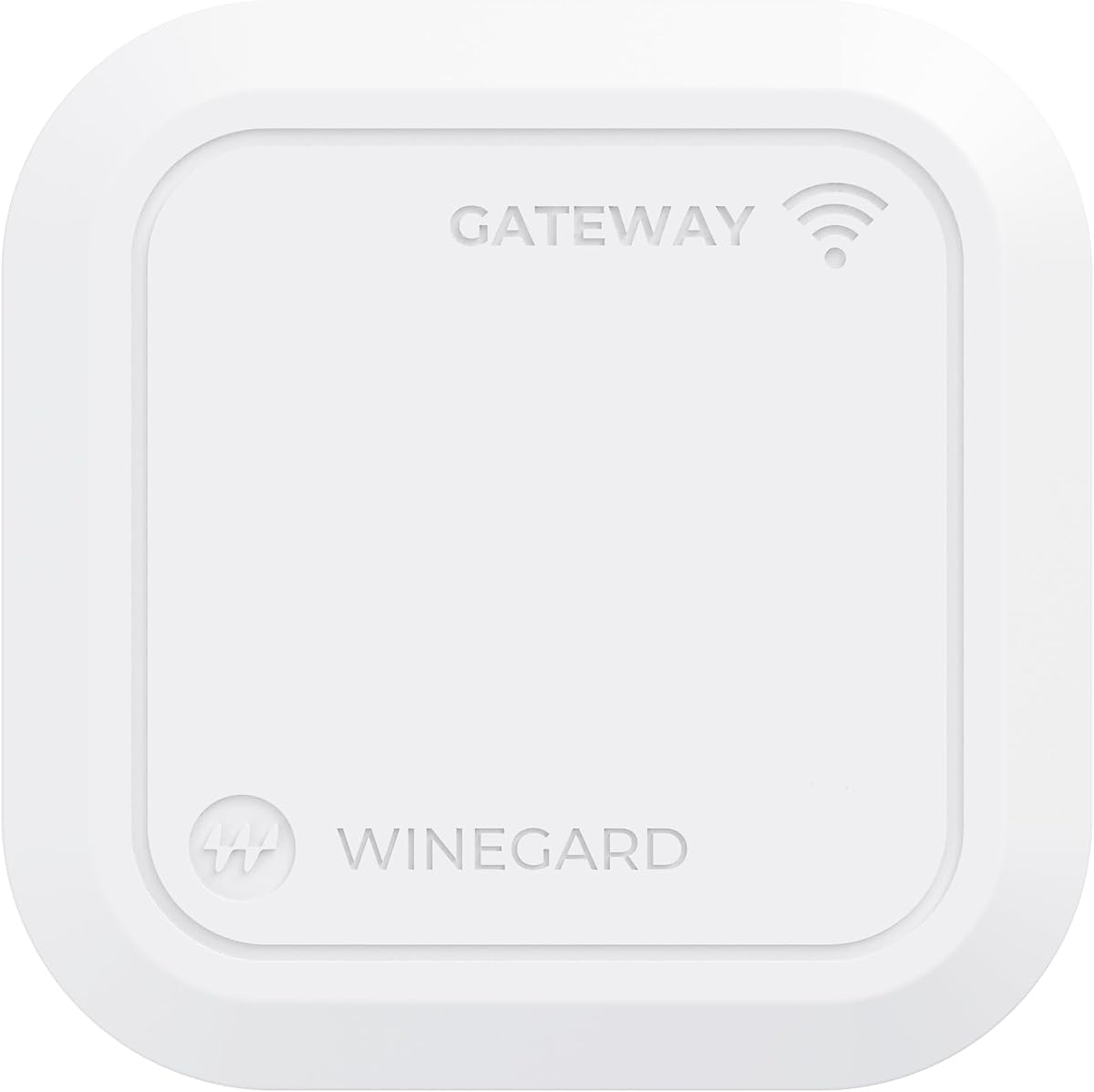
The Winegard Gateway 5G GW-5G01 is designed specifically for RVs and works directly with the Air 360+ 5G antenna system. Its supplied rating is 3.5, the lowest among the products in this guide, but its narrow focus creates a clear advantage for travelers who want a coordinated cellular and Wi-Fi installation rather than a generic desktop router.
We may earn a commission when you buy through this link, at no additional cost to you.
The gateway includes a 5G modem compatible with Air 360+ hardware, allowing the cellular antenna to be placed on the RV roof while the router supplies dual-band 802.11ac Wi-Fi indoors. Supported data options include Winegard FreedomGO plans, T-Mobile, Verizon, and AT&T, with compatibility also noted for newer T-Mobile 5G Unlimited plans. This carrier flexibility is useful when domestic travel takes the vehicle between markets with different network coverage.
The router can add Ethernet WAN connectivity, including Starlink or another satellite network, and is compatible with Winegard RV Halo Smart Sensors for a hybrid system. This expands its usefulness beyond basic 5G backhaul. However, the supplied details do not describe generic detachable cellular antenna ports, so flexibility is tied to Winegard's own antenna ecosystem rather than a broad range of third-party antenna choices.
Buyers should evaluate both the low supplied rating and the integrated-system design. Winegard is most attractive to RV owners who already use Air 360+ or intend to build around that platform. It is less appropriate for someone seeking a general-purpose home router with interchangeable SMA cellular antennas, simultaneous dual-SIM operation, or a newer Wi-Fi 6 or Wi-Fi 7 local network.
Direct compatibility with the Air 360+ 5G system is the defining feature. This can simplify wiring, antenna placement, and carrier setup for travelers who want an integrated mobile internet installation.
Ethernet WAN support allows the gateway to coexist with Starlink or another satellite connection. That makes it useful for RV owners who want cellular and satellite services available through a more unified setup.
We may earn a commission when you buy through this link, at no additional cost to you.
The GL.iNet GL-E5800 MUDI 7 is a premium mobile 5G router with Wi-Fi 7, an integrated eSIM, two physical nano-SIM slots, a touchscreen, and a rechargeable battery. Its supplied rating is 4.4. It is especially appealing to international travelers who want flexible carrier access and a modern local wireless network without relying on public Wi-Fi.
We may earn a commission when you buy through this link, at no additional cost to you.
The Qualcomm Dragonwing MBB Gen 3 X72 platform is documented at up to 4.67 Gbps of 5G download speed. Local connectivity uses tri-band Wi-Fi 7, with specified rates of 688 Mbps at 2.4 GHz, 2882 Mbps at 5 GHz, and 5765 Mbps at 6 GHz, supporting up to 64 connected devices. Dual standby allows the built-in eSIM and physical SIM options to be managed conveniently, although the eSIM occupies one SIM position when active.
Multi-WAN is unusually flexible. Ethernet, Wi-Fi repeater, USB tethering, and 5G cellular can operate together, with automatic rerouting if a link fails. A 2.5 Gbps Ethernet port supports wired backhaul, while a 10 Gbps USB-C port handles tethering, storage, and NAS synchronization. The 5380 mAh battery provides up to 13.5 hours of untethered use and supports 30 W PD/PPS charging. A 2.8-inch color touchscreen allows quick changes to SIM, VPN, Wi-Fi sharing, and data monitoring.
Preinstalled OpenVPN-DCO and WireGuard clients support numerous VPN providers, with the touchscreen making everyday control convenient. The important limitation for this particular guide is that the supplied information does not list external cellular antenna ports. Although it is unquestionably a capable 5G travel router, it is not as clearly suited to antenna upgrades as the X3000, RM520N, or Cudy P5. Choose it for global eSIM convenience, battery independence, Wi-Fi 7, and polished travel operation rather than documented external antenna flexibility.
The integrated eSIM and importable profiles make the MUDI 7 convenient for international travel. Regional plans can be managed through QR codes, while the touchscreen helps travelers switch connections without opening a web interface.
Battery operation, 2.5G Ethernet, 10G USB-C, multi-WAN failover, and preinstalled VPN tools allow the router to function as a travel gateway for many device types. Its tri-band Wi-Fi 7 also supports modern local connectivity beyond the cellular backhaul.
We may earn a commission when you buy through this link, at no additional cost to you.
The Waveform QuadMini is not a router but a low-profile external 5G MIMO antenna kit for compatible routers with four antenna ports. Its supplied rating is 4.1. Because it directly addresses the physical hardware needed to improve cellular reception, it remains an important companion product for a buyer whose existing 5G router has suitable connectors.
We may earn a commission when you buy through this link, at no additional cost to you.
The antenna provides up to 5.2 dBi gain and uses a 4×4 MIMO design. Its low profile and lightweight construction make it easier to position near a window or exterior wall than a large directional antenna. The complete kit includes a Window Entry Cable, UltraFlex-Quad cables, and weatherproofing boots, reducing the need to source each component separately.
Installation is designed to be straightforward. The omnidirectional pattern means there is no need to point the antenna at a distant tower, although it still should be positioned on the side of a building with the best available signal. Mounting options include suction cups for a window, a pole adapter, a desktop stand, and direct wall mounting. This flexibility makes the QuadMini useful for temporary or permanent residential, office, and vehicle-adjacent setups.
The QuadMini is a strong add-on when a router's four cellular antenna ports match the kit's connections and the router's internal antennas do not provide ideal placement. It cannot provide Wi-Fi, SIM management, VPN, Ethernet, or failover on its own, so a separate 5G router is mandatory. Buyers seeking a complete solution should choose one of the dedicated routers in this guide; buyers who already own a compatible four-port router can use the QuadMini to improve its antenna placement.
The omnidirectional design collects signals from a broad area, making placement based on signal quality more practical than precise directional alignment. This can help when a router must remain indoors but a window location receives a stronger cellular signal.
Included cables, entry hardware, boots, and several mounting options make it easier to create a complete external-antenna installation. Confirm router connector type and antenna support before buying, as not every 5G router accepts a four-antenna MIMO kit.
We may earn a commission when you buy through this link, at no additional cost to you.
The most important decisions involve cellular compatibility, antenna flexibility, local network performance, redundancy, and management. The right choice depends less on maximum headline speed than on the signal conditions, carrier landscape, and installation environment where the router will operate.
A router marketed around 5G should identify the cellular standard, supported bands, and whether it handles both SA and NSA networks. The RM520N and Cudy P5 use Qualcomm SDX62 or X62 platforms, while the GL-E5800 uses the Qualcomm Dragonwing MBB Gen 3 X72. These are materially different from LTE-only devices such as the MikroTik Chateau LTE6, even if all can provide cellular internet.
The number and type of connectors determine which antennas can be used. The Cudy P5 documents four detachable SMA cellular antennas, the RM520N supplies nine detachable antennas and supports an outdoor cellular antenna, and the GL-X3000 provides six detachable antennas with wired dome-antenna support. By contrast, the Teltonika RUTM50, Winegard Gateway, and GL-E5800 do not list generic external cellular antenna ports in the supplied information.
External antennas do not guarantee stronger service; placement, cable quality, obstruction, carrier coverage, and modem compatibility all affect results. Omnidirectional antennas are easier to position and can gather signals from several directions, while directional antennas can concentrate energy toward a specific tower. The Waveform QuadMini offers an omnidirectional option at up to 5.2 dBi gain, whereas the MikroTik LHG XL uses an integrated 27 dBi directional antenna for point-to-point links.
Dual-SIM and eSIM support affect how easily a router can use different carriers. The GL-X3000 has dual-SIM slots but operates them in single standby, the Cudy P5 has two nano-SIM slots, and the GL-E5800 combines an eSIM with two physical nano-SIM positions. Dual-SIM redundancy is useful for failover, while eSIM is particularly convenient for international travel. Always verify regional carrier and frequency compatibility.
The cellular connection is only one part of the experience. The GL-X3000, RM520N, and Cudy P5 provide dual-band Wi-Fi 6, while the GL-E5800 adds tri-band Wi-Fi 7. The RM520N supports up to 128 simultaneous Wi-Fi users, and the GL-E5800 supports up to 64. The Teltonika RUTM50 and Winegard Gateway use Wi-Fi 5, which may still be adequate for a small office or RV but trails the newest options.
Multi-WAN allows a router to combine cellular, Ethernet, repeater, or tethering connections. The GL-X3000, RM520N, Cudy P5, and GL-E5800 all document load balancing and failover priorities. The Cudy P5 extends this to WAN, Cellular 1, and Cellular 2, while the GL-E5800 supports four paths. These features are valuable when a remote site or vehicle must remain reachable during a network interruption.
VPN support protects traffic and enables access to company resources. The RM520N supports PPTP, L2TP, GRE, WireGuard, and ZeroTier; the Cudy P5 adds OpenVPN and IPsec; the GL-X3000 provides preinstalled OpenVPN and WireGuard. For distributed industrial equipment, Teltonika RMS adds centralized monitoring, updates, and configuration. The best choice depends on whether the priority is individual privacy, remote access, or fleet management.
Fixed rural installations may favor wall mounting, Ethernet expansion, and external antennas, while travelers need battery operation and broad carrier support. The GL-E5800 includes a battery and touchscreen for mobile use, the GL-X3000 targets houses and RVs, the Winegard Gateway integrates with an RV antenna system, and the NetBox 5 is built for outdoor use. Consider enclosure durability, operating conditions, mounting method, and access to power before finalizing a choice.
Begin by identifying the strongest available cellular signal at the intended router location. Temporarily place the router near a window or exterior wall, connect the compatible cellular antennas, and check the signal indication in the administration interface or mobile app. Moving a router by a few feet can materially change performance because nearby walls, metal, appliances, and terrain may block or reflect cellular signals.
Install antennas in the position recommended by their manufacturer, keep the radio elements away from metal obstructions, and secure every connector. Weatherproof entry points and boots are important for outdoor cables, but the router body should remain in a protected, ventilated location unless its enclosure is specifically designed for exposure. Review the router's supported bands, carrier requirements, SIM format, antenna impedance, and regional restrictions before activating service.
After installation, update the router firmware, change default administrator credentials, enable encryption, configure cellular failover, and test every intended WAN path. Keep antennas and cables away from moving parts, direct sun when avoidable, moisture, and pets. Periodically inspect connectors for corrosion or looseness, review carrier coverage changes, and revisit the router's location if performance declines after renovations, seasonal foliage changes, or nearby construction.
No. Some routers use internal cellular antennas, while others provide detachable SMA connectors or a proprietary external antenna system. The GL-X3000, RM520N, and Cudy P5 clearly document external cellular antenna options, but the supplied specifications for the Teltonika RUTM50, Winegard Gateway, and GL-E5800 do not. Always verify the exact modem and antenna configuration before purchase.
Antennas cannot create coverage where the carrier has none, and performance depends on signal quality, frequency bands, cable length, placement, and local interference. A well-positioned external antenna can improve marginal reception and stability, but it may not raise speed if the router already has a strong unobstructed signal. Placement often matters more than a high headline gain figure.
It depends on the local clients and the cellular connection available. Wi-Fi 6 is a balanced choice for homes and small offices, while tri-band Wi-Fi 7 is useful for compatible modern devices and dense local networks. A Wi-Fi 5 router can still be suitable for a small RV or basic use, provided its cellular performance and antenna options match the location.
Dual-SIM uses one or more physical SIM cards, with some routers able to maintain one active line and fail over to another. An eSIM stores its carrier profile electronically and can be provisioned or switched through software. The GL-E5800 offers both, while the Cudy P5 and GL-X3000 emphasize physical SIM slots. Local carrier and regional eSIM support must be checked before travel.
Only when the router has compatible antenna connectors and the antenna matches the supported cellular bands, impedance, and MIMO configuration. Proprietary RV systems may work only with their intended antennas, while routers with SMA ports can support a wider selection. Do not assume that a Wi-Fi antenna can improve cellular reception, as cellular and Wi-Fi radios use different frequency ranges.
Two carrier options can provide resilience, but the exact behavior depends on the router. Some support automatic failover, while others use a single-standby arrangement in which the alternate line is not continuously active. The GL-X3000, Cudy P5, RM520N, and GL-E5800 document multi-WAN or failover capabilities, with the Cudy P5 supporting a three-link arrangement.
Only if their enclosure is rated for outdoor exposure. The MikroTik NetBox 5 and LHG XL have outdoor-oriented, weather-resistant designs, but most indoor cellular routers require a weatherproof enclosure or protected installation. Even when the router is indoor, external antenna cables and entry points must be properly sealed to prevent moisture from reaching connectors or the device.
It can be for many homes and small businesses when local 5G coverage is strong, but performance depends on the carrier, tower congestion, and antenna placement. A multi-WAN router can combine cellular with cable, a business connection, or another service for resilience. For critical workloads, keep a secondary connection available and test the cellular service at the desired operating location.
The Cudy P5 is the most balanced recommendation for buyers who want documented external cellular connectors, two SIM options, modern Wi-Fi 6, and three-way failover. The RM520N offers an impressive nine-antenna package and a capable Qualcomm 5G platform, while the GL-X3000 stands out for extensive travel controls, OpenWrt customization, RV deployment features, and six detachable antennas.
Prioritize the features that affect the actual installation. External SMA connectors and antenna placement matter most in weak-coverage areas, dual-SIM and multi-WAN support matter for uptime, and battery life, eSIM support, and touchscreen controls matter for frequent travel. Remote-management platforms are especially valuable for industrial fleets, while integrated antenna systems can be more convenient for a dedicated RV installation.
Before buying, confirm the router's cellular bands, carrier compatibility, connector type, regional limitations, and included accessories. Product configurations and pricing change over time, so check current listings and manufacturer documentation. A careful match between the router, antenna, carrier, and site will provide a more dependable result than relying on headline speed alone.