
TCL S45H
4.3Editor score
Low-profile 2.0 design
Dolby Atmos and DTS:X
AI Sonic room calibration
Our expert guide compares the best slim soundbars for TV, evaluating sound quality, slim design, connectivity, useful features, room fit, and value for varied
A slim soundbar can transform television audio without filling the media console with oversized equipment. The best models improve dialogue clarity, add more depth than built-in TV speakers, and blend neatly beneath a screen or on a wall. A good slim design balances compact proportions with useful features and room-filling output.
We compared ten soundbars using the supplied specifications, focusing on channel configuration, power, dimensions, connectivity, virtual surround processing, dialogue tools, room calibration, and included accessories. The list covers all-in-one 2.0 designs, models with integrated or wireless subwoofers, and premium systems that add more elaborate surround or smart-home functionality.
Each numbered review explains the strongest reasons to consider a particular model while also identifying its trade-offs. The top picks highlight standout choices for value, overall balance, and premium refinement. Product prices and availability can change, so compare the current listing, room layout, and connection needs before purchasing.
4.3Editor score
4.4Editor score

4.4Editor score
The comparison below places the ten soundbars by design, audio architecture, major functions, and connectivity, making it easier to identify the model that fits a particular television, room, and listening routine.



The TCL S45H is a compact 2.0 soundbar built around an unusually useful combination of features, earning a 4.3 rating. Its slim enclosure measures 31.89 inches wide, 2.36 inches high, and 3.86 inches deep, making it a practical choice for a narrow media console or a wall-mounted television arrangement. Dolby Atmos, DTS:X, and room calibration distinguish it from basic all-in-one bars.
We may earn a commission when you buy through this link, at no additional cost to you.
Up to 100 watts of total output is substantial for a 2.0 design intended for apartments, bedrooms, and small-to-medium rooms. The bar offers HDMI eARC or ARC, optical, Bluetooth, and AUX connections, allowing it to serve televisions, projectors, computers, and phones rather than functioning as a single-purpose TV speaker. AI Sonic Auto Room Calibration adjusts output for the room and listening position through the TCL app, which can be more useful than a fixed preset when furniture and walls shape the sound.
The primary limitation is that the S45H is a two-channel system without a subwoofer. Its virtual height and surround effects can make a soundtrack feel more dimensional, but they do not create the same sense of separation as dedicated rear speakers or a larger multi-speaker arrangement. Bass reproduction therefore remains within the limits of a slim all-in-one enclosure, even though the listed output is more than adequate for boosting everyday TV dialogue.
This is an excellent choice for buyers who want a slim, modern upgrade without a complicated home-theater installation. It suits anyone seeking strong television clarity, flexible inputs, wireless music playback, and automatic tuning in a relatively restrained footprint. Choose it when value, clean styling, and useful features matter more than deep discrete bass or rear-channel placement.
AI Sonic Auto Room Calibration gives the S45H a practical edge in real rooms, where reflective surfaces and furniture can alter balance. The one-time app-based setup helps the bar adapt to its surroundings instead of relying entirely on generic factory tuning.
HDMI, optical, AUX, and Bluetooth cover everything from traditional television setups to mobile music streaming. The included HDMI cable, remote, and wall-mount kit also reduce the need for extra accessories during basic setup.
We may earn a commission when you buy through this link, at no additional cost to you.
The Bose TV Speaker has a 4.3 rating and prioritizes a clear, uncomplicated upgrade over television audio. It stands just over two inches tall and uses a pair of angled full-range drivers to create a wider presentation than many small TV speakers. That makes it especially appealing for people who want better speech and general clarity without installing a large entertainment system.
We may earn a commission when you buy through this link, at no additional cost to you.
Dialogue enhancement is the defining feature. The included remote provides a dedicated dialogue mode, while the angled drivers project sound more broadly than conventional forward-facing television speakers. Bluetooth can also stream music and podcasts, and the HDMI, optical, and AUX inputs allow up to three devices, with the first powered-on source selected automatically. Bass boost adds some low-end weight when desired.
This is a straightforward 2.0 design rather than a virtual surround system. It does not list Dolby Atmos, DTS:X, height channels, or room calibration, so viewers seeking cinematic effects should not mistake its angled driver layout for a full surround implementation. The Bose Bass Module 500 or 700 can be added for deeper low-frequency output, but the connection cable is sold separately.
The Bose TV Speaker is best for viewers who regularly struggle to follow dialogue or want a small speaker that can sit in front of the television without blocking the screen. It also suits secondary rooms, offices, and gaming spaces where straightforward operation is preferable to a feature-heavy system. Choose it for vocal clarity, compactness, and simple setup rather than cinematic processing.
The dedicated dialogue mode and angled drivers target one of the most common shortcomings of flat-screen television speakers. This focus makes the Bose TV Speaker particularly useful for news, films with quiet conversations, and viewers who watch at lower levels.
At 2.21 inches high, the bar can fit beneath many television screens or be mounted on a wall. Brackets are sold separately, so buyers who intend to wall-mount it should confirm that the required hardware is available for their installation.
We may earn a commission when you buy through this link, at no additional cost to you.
The Samsung HW B400F is a 2.0-channel model with a built-in subwoofer and a 4.0 rating. Its main appeal is convenience: the soundbar and woofer are combined in one unit, reducing the number of boxes and cables around the television. Surround Sound Expansion projects clear audio outward to make the presentation feel more encompassing across the listening area.
We may earn a commission when you buy through this link, at no additional cost to you.
Dialogue Enhance mode automatically brings voices forward, while a night-friendly mode lowers overall volume and minimizes bass. That is useful in apartments or shared homes because action scenes can remain impactful without demanding the same late-night level. The system also works with a Samsung TV remote for key functions such as power, volume, and sound effects, minimizing remote clutter.
Its specifications are less extensive than those of several competing models. The supplied information does not list Dolby Atmos, DTS:X, advanced room analysis, broad app-based controls, or a high-output specification. The integrated woofer also means the bar itself may be deeper than a basic two-driver model, so its exact dimensions and television clearance should be checked before installation.
The HW B400F is a sound choice for Samsung viewers who want integrated bass, speech clarity, and fewer components. It is particularly appealing in a bedroom or living room where a separate subwoofer would be inconvenient. Choose it when simple operation and Samsung remote compatibility are priorities, not when elaborate cinematic processing is the main goal.
The integrated woofer gives the HW B400F an advantage over minimal all-in-one bars that lack dedicated low-frequency hardware. Combined with Voice Enhance mode, it also provides a practical balance between engaging effects and intelligible speech.
Using the television remote for primary functions creates a more streamlined entertainment setup. Users can manage familiar controls without locating a separate soundbar remote for every routine adjustment.
We may earn a commission when you buy through this link, at no additional cost to you.
This 2-in-1 detachable soundbar has a 4.1 rating and differentiates itself through placement flexibility. Its two sections can be arranged horizontally, vertically, on a tabletop, or wall-mounted, allowing the system to suit different furniture and room shapes. The result is a slim-format option that can change orientation as the listening arrangement changes.
We may earn a commission when you buy through this link, at no additional cost to you.
Four drivers deliver 80 watts of stated output, with the manufacturer describing richer detail across whispers, music, thunder, and other effects. Automatic volume boost is designed to lift faint content, while movie, music, and news equalizer modes provide quick ways to change the tonal emphasis. Bluetooth 5.0, ARC, optical, and AUX connections make the bar suitable for televisions, PCs, game systems, and projectors.
The use of the word cinematic in the placement description should not be confused with a full surround system. There is no listed subwoofer, no set of physical rear speakers, and no named Dolby Atmos or DTS:X processing in the supplied data. Its strongest advantage is adaptability and high output, but buyers seeking established surround processing may prefer a more conventional branded system.
This model is worth considering for renters, small apartments, dorm rooms, and users who want one soundbar that can move between horizontal and vertical configurations. Automatic loudness and dedicated news mode are especially useful for variable programming. Choose it for flexible placement, multiple inputs, and useful presets, with the understanding that discrete bass and rear-channel effects are not part of the listed package.
The detachable format is more than a visual gimmick: it gives the user multiple ways to direct sound within a room. Vertical placement can help in narrower spaces, while a horizontal arrangement may provide a broader front-facing presentation beneath a television.
Movie, music, and news modes simplify changes between different content types. The automatic volume boost can also make quiet dialogue easier to follow, although critical listeners may prefer manual adjustment for consistent listening levels.
We may earn a commission when you buy through this link, at no additional cost to you.
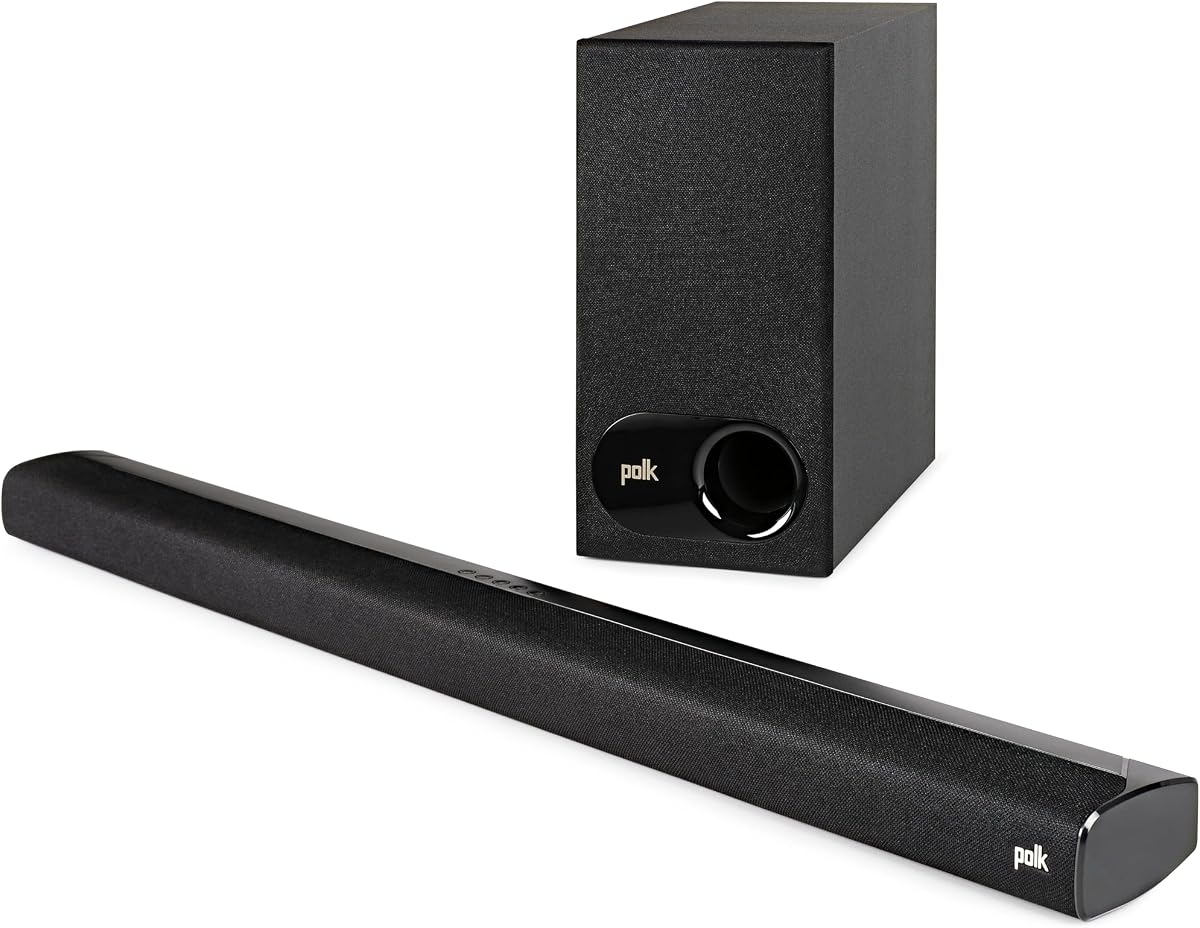
The Polk Audio Signa S2 combines an ultra-slim bar with a wireless subwoofer and holds a 4.4 rating. It is one of the clearest matches for the request because the main enclosure is just over two inches tall, while the included subwoofer supplies the deep bass that cannot realistically come from such a thin cabinet. Five full-range drivers support a fuller main soundbar presentation.
We may earn a commission when you buy through this link, at no additional cost to you.
VoiceAdjust technology is designed to clarify speech and reduce voice delays, while Dolby Digital decoding handles compatible television content. HDMI, ARC optical, and auxiliary connections cover common source needs, and Bluetooth enables wireless music streaming from phones, tablets, and other compatible devices. The package includes HDMI and optical cables, supporting a relatively quick connection after unpacking.
The Signa S2 does not include discrete height channels or rear speakers, and Dolby Digital decoding is distinct from the more advanced Dolby Atmos format used by some competitors. Its surround impression therefore comes from processing and the spread of the front drivers rather than a full multi-speaker spatial array. The included subwoofer also requires available floor space, reducing the benefit of the system's otherwise neat physical footprint.
This is the strongest choice for buyers who specifically want a very slim main bar but do not want to give up separate bass. It is ideal for apartments, condos, and medium-sized rooms where television dialogue remains important and a compact subwoofer can sit discreetly beside furniture. Choose the Signa S2 for a mature feature set, solid rating, and balanced all-in-one package.
The wireless subwoofer resolves the central compromise faced by ultra-thin soundbars. It delivers low-end impact while allowing the bar to remain just over two inches tall and avoid blocking the television's lower edge or infrared sensor.
Polk's VoiceAdjust technology targets the most consistent weakness of compact television speakers: indistinct dialogue. It is particularly valuable for films, broadcasts, and programs that mix quiet conversations with louder effects.
We may earn a commission when you buy through this link, at no additional cost to you.
The TCL S65K is a 5.1-channel home-theater system with a 4.4 rating, and it represents a major step beyond a conventional all-in-one soundbar. It includes a soundbar, wireless surround speakers, and a wireless subwoofer with a 6.5-inch driver. That larger collection of speakers allows genuine surround placement rather than relying entirely on virtual processing.
We may earn a commission when you buy through this link, at no additional cost to you.
Dolby Atmos and DTS:X provide the system with modern spatial-audio support, while Ray Danz technology is intended to expand the soundstage. A built-in center tweeter, center channel, and dedicated surround speakers help dialogue remain clear during busy action scenes. The 6.5-inch subwoofer and Bass Boost mode add low-frequency weight that a narrow bar could not reproduce at the same level.
AI Sonic Auto Room Calibration can tune the system to the room, and a single HDMI cable is presented as the main television connection. Bluetooth adds a separate path for music. The trade-off is obvious: this is a complete system rather than a minimalist bar, so the rear speakers and subwoofer require more placement consideration. Buyers in a very small room may find the full configuration visually and physically expansive.
The S65K is the right choice for viewers who want real rear-channel separation, strong bass, and advanced spatial formats while still benefiting from a low-profile main bar. It is well suited to a dedicated living room, larger bedroom, or gaming setup. Choose it when immersive sound matters more than having only one compact enclosure.
Wireless surround speakers can be positioned around the seating area, creating distinct directional cues that a front-only bar cannot reproduce. Flexible placement makes it possible to account for room shape and the location of the television.
The built-in center channel and tweeter are intended to keep voices anchored and detailed. Combined with Atmos and DTS:X support, the system offers a more complete cinematic design than a basic two-channel upgrade.
We may earn a commission when you buy through this link, at no additional cost to you.
The TCL S55H combines a slim 2.1 soundbar with a wireless subwoofer and carries a 4.4 rating. It is a strong middle ground for buyers who want more impact than an all-in-one bar can offer but do not need the multiple physical surround speakers found in the TCL S65K. The main bar retains the same low-profile dimensions as the S45H.
We may earn a commission when you buy through this link, at no additional cost to you.
The system is rated at up to 220 watts and supports Dolby Atmos and DTS Virtual:X, giving movies and games a more dimensional presentation than a conventional 2.0 bar. The wireless subwoofer handles low rumble and effects while the main enclosure focuses on dialogue and midrange detail. AI Sonic Auto Room Calibration adjusts the balance for the room through the TCL app.
HDMI eARC or ARC, optical, Bluetooth, and AUX connections provide broad compatibility, and the package includes an HDMI cable, remote, and wall-mount kit. The trade-off is that virtual height and surround effects do not create the same directional separation as physical rear speakers. The included subwoofer also measures 7.68 inches wide, 12.60 inches high, and 7.68 inches deep, requiring more space than an all-in-one product.
The S55H is a compelling option for small-to-medium rooms that need stronger bass and more advanced processing than the S45H. It works well for apartments, contemporary living rooms, and game systems where cinematic effects are desired without a full five-piece arrangement. Choose it when the priority is a balanced 2.1 package with wireless subwoofer convenience.
The included subwoofer provides a clearer division of duties than a single compact enclosure: the bar handles voices and midrange content, while the woofer supplies low-frequency effects. That division can make action sequences feel more substantial without forcing a large cabinet into the setup.
AI Sonic tuning allows the system to respond to room acoustics and the listening position. App control is useful for setup and refinement, while the included remote provides a more direct way to adjust common functions afterward.
We may earn a commission when you buy through this link, at no additional cost to you.
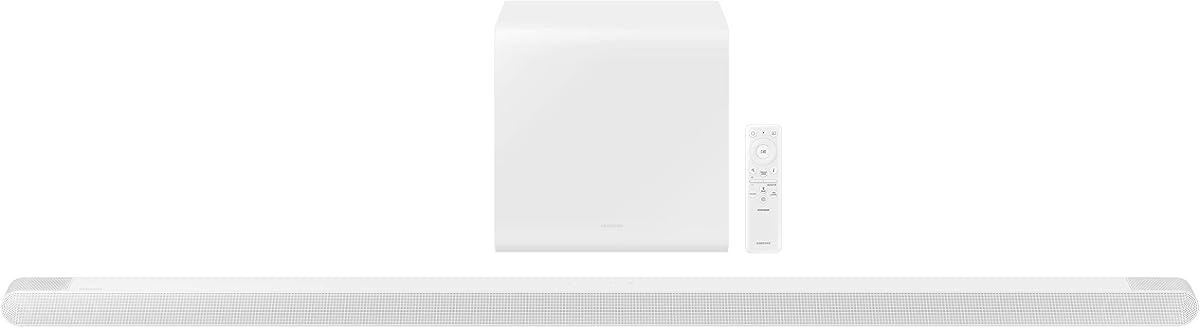
The Samsung HW-S801B/ZA is an ultra-slim 3.1.2-channel soundbar with a 4.0 rating. Unlike two-channel compact bars, it combines three channels, a subwoofer, and two up-firing channels to create a more ambitious spatial presentation. Its wireless Dolby Atmos support allows compatible movie and television content to place sound above and around the viewer without requiring separate rear speakers.
We may earn a commission when you buy through this link, at no additional cost to you.
Q Symphony can synchronize the soundbar with speakers in a compatible Samsung television, while SpaceFit Sound automatically analyzes the room and calibrates upper-range tones. Game Pro Mode uses the up-firing speakers and powerful woofers to create a more enveloping effect for compatible gaming content. AirPlay 2 provides convenient music streaming from compatible iOS devices, and Alexa is built in.
The main challenge is compatibility and setup complexity. Q Symphony requires a compatible Samsung television, and the benefits of advanced features vary by source and room. Although the physical bar is slim, a 3.1.2 system with a subwoofer and up-firing drivers is not as minimalist as a simple two-channel enclosure. Buyers should also check the television's audio and connection capabilities before purchase.
The HW-S801B/ZA is best for Samsung television owners who want premium spatial processing in a narrow main bar. It is a strong fit for movies, supported games, and smart-home control. Choose it for advanced height effects and ecosystem integration, while buyers seeking a simple, fully discrete surround setup should consider a model with dedicated rear speakers.
Two up-firing channels are the defining hardware in the 3.1.2 configuration. They help compatible Atmos and DTS:X content extend above the listening area, creating a more dimensional presentation from a single slim enclosure.
Q Symphony, SpaceFit Sound, Alexa, and AirPlay 2 make the system particularly relevant to compatible Samsung ecosystems. Each feature adds value when the television, phone, and room are properly matched to the hardware.
We may earn a commission when you buy through this link, at no additional cost to you.
The Sonos Beam Gen 2 is a compact premium soundbar with a 4.4 rating and support for Dolby Atmos. Its architecture uses five channels to create a panoramic presentation, with vibrant bass, clear dialogue, and a wider soundstage than a simple all-in-one bar. The understated design is intended to fit beneath a television without overwhelming the room.
We may earn a commission when you buy through this link, at no additional cost to you.
Trueplay tuning adapts the output to the acoustics and placement of the soundbar, while setup requires only two cables according to the supplied information. It can also operate as a full music system when the television is off, streaming music, radio, podcasts, and audiobooks through the Sonos app. Control options include the television remote, Apple AirPlay 2, the app, and voice assistance.
Its most attractive long-term feature is expandability. The Beam can later be joined with compatible Sonos speakers for true surround sound and connected with other compatible devices for multiroom listening. That flexibility is valuable for buyers who may start with a compact bar and expand later. The compact enclosure does not include a separate subwoofer, however, so deep bass still benefits from adding one or using another compatible speaker.
The Beam Gen 2 is the premium pick for buyers who prioritize refined sound, understated styling, smart control, and a strong upgrade path. It is ideal for mixed entertainment use because it works as both a television soundbar and a standalone music system. Choose it when a cohesive ecosystem and future expansion matter more than having a subwoofer or rear speakers in the box.
The Beam is not limited to television sessions. When the screen is off, the Sonos app and supported streaming services turn it into a dedicated music, radio, podcast, and audiobook system.
Compatibility with Sonos rear speakers and multiroom listening allows the initial setup to evolve. Buyers can begin with a compact bar, then add bass or dedicated surround channels when their room and listening demands change.
We may earn a commission when you buy through this link, at no additional cost to you.
The Philips B6309 is a 2.1-channel system with a wireless subwoofer and a 4.1 rating. Its 320-watt maximum power specification is among the highest listed in this roundup, while the main bar remains intended for a compact television setup. The separate woofer adds low-end impact without forcing the bar itself to contain a large bass driver.
We may earn a commission when you buy through this link, at no additional cost to you.
Dolby Atmos and DTS Virtual:X provide virtual three-dimensional effects, while four equalizer modes allow the presentation to be tailored to different content. Dialogue Enhancement focuses attention on voices, and a compact wireless subwoofer handles effects and music. HDMI eARC, optical, audio-in, and USB connections cover several source types, while Bluetooth LE Audio support is intended to improve stability and reduce lag.
Philips EasyLINK adds deeper integration for compatible televisions, particularly Philips Ambilight models. Viewers can change EQ presets and adjust bass and treble from the television remote, while the soundbar can remain the central control point. The trade-off is that virtual processing does not supply the directional separation of physical rear speakers, and not every television or source will expose every feature.
The B6309 suits buyers who want a substantial 2.1 package, modern virtual surround formats, and flexible remote control in a compact arrangement. It is a good match for everyday movies, television, and music, particularly in a small-to-medium room. Choose it for high stated output, wireless bass, and broad connection options rather than a full physical surround system.
The included wireless subwoofer can be positioned away from the main bar, helping bass interact with the room rather than sounding compressed near the screen. Its separation also keeps the bar focused on dialogue and midrange detail.
Four EQ modes, Dialogue Enhancement, DTS Virtual:X, and Philips EasyLINK provide several ways to refine the presentation. Compatible television integration is particularly useful because it reduces the need to switch between separate remotes.
We may earn a commission when you buy through this link, at no additional cost to you.
The best slim soundbar depends on television size, room size, content habits, available connections, and how much the system must grow in the future. Use the following factors to separate a simple upgrade from a full home-theater solution.
A slim soundbar should fit the available shelf or wall space without blocking the television's lower edge, infrared sensor, or status display. Compare both the stated height and depth of the bar, then account for cables and wall-mount brackets. The Bose TV Speaker is just over two inches tall, while several TCL bars are 2.36 inches high, but the difference can still matter in a tightly fitted entertainment center.
A 2.0 bar uses two main channels and is usually the simplest and most compact option. A 2.1 system adds a subwoofer for deeper bass, while a 3.1.2 system introduces height channels. A 5.1 package adds physical surround speakers for more convincing directional separation. Virtual surround processing can widen a front-only presentation, but it should not be treated as equivalent to dedicated speakers placed around the room.
Dialogue enhancement is one of the most useful features for television viewing because it targets the places where compressed or mixed audio often needs help. Bose focuses on vocal clarity through a dedicated mode, Samsung provides Voice Enhance, Polk uses VoiceAdjust, and Philips includes Dialogue Enhancement. Music presets, bass controls, and room calibration can further help users adapt a soundbar to different content and room conditions.
The stated wattage of a soundbar does not by itself determine perceived quality, but it can provide a rough indication of available amplification. Compact models with 80 to 100 watts may suit bedrooms and smaller living rooms, while systems listed at 220 or 320 watts offer more headroom for larger spaces and deeper effects. Room layout, speaker design, subwoofer support, and processing all influence the final result.
HDMI eARC or ARC is the preferred route for compatible modern televisions because it can carry digital audio and allow television-remote control. Optical and auxiliary connections remain useful for older screens or source devices, while Bluetooth handles music rather than replacing a wired television link. Check whether the television's eARC implementation, remote control, and supported formats match the soundbar's specifications.
Some compact bars are designed to work as the beginning of a larger system. Sonos Beam Gen 2 can expand into true surround and multiroom configurations, while the TCL S65K already includes physical surround speakers and a large subwoofer. Other products are more complete as standalone solutions. Expansion can be useful for renters who want a compact first stage, but it should be weighed against the cost and effort of adding components later.
A useful soundbar should be easy to connect and operate. Some packages include HDMI or optical cables, remotes, and wall-mount hardware, while app-based calibration can make room setup more precise. Smart-TV remote integration can reduce clutter, but voice assistants and manufacturer-specific features are only valuable when they work with the television, phone, and streaming services already in the home.
Begin by identifying the best input for your setup. For most modern televisions, connect the soundbar through HDMI eARC or ARC using the included or compatible cable, select the matching television input, and enable the television's speaker or soundbar output. If the soundbar does not respond to the television remote, access the appropriate sound settings and enable control over HDMI or optical input. Older televisions may require optical or auxiliary connections instead.
Place the main bar directly below the television, close enough for clear sound without creating a large gap. Avoid enclosing it inside a tight cabinet unless the manufacturer permits it, since ventilation and the reflection of sound can affect performance. Keep the included subwoofer away from confined corners, leave space around it, and connect wireless rear speakers according to the setup instructions. If room calibration is supported, perform the process in the room's normal listening arrangement.
For care, use the supplied remote or manufacturer app to adjust settings rather than repeatedly changing equalizers on the source device. Keep the bar, subwoofer, and rear speakers away from moisture, direct heat, and heavy dust. Clean exterior surfaces with a dry or lightly damp soft cloth rather than spraying liquid directly onto the equipment, and check cable connections periodically if the sound becomes unstable.
They usually are, because a slim soundbar places larger, better-directed drivers closer to the listening position and often includes dedicated dialogue processing. The improvement can be particularly noticeable for quiet conversations, news broadcasts, and mixed action scenes. Actual results depend on the television's own audio quality, room acoustics, and the soundbar's placement.
It depends on how important deep bass is to you. A 2.0 bar can make dialogue and general effects clearer, while a 2.1 package adds more impact for explosions, music, and action. For a small room, a wireless subwoofer may provide a noticeable upgrade without taking up much space, although users should leave enough room for the cabinet to operate.
Virtual surround is not generally equivalent to physical rear speakers. It can create convincing width or height cues from a compact bar, but it cannot reproduce every direction as independently as speakers placed around the room. Virtual processing is convenient, while discrete surround channels provide more precise localization for compatible content.
It may, but you should check the bar's height, depth, and the television's stand or wall-mount layout. A height of around two inches is often manageable, yet the lowest television edge and infrared sensor still need to remain unobstructed. Also consider the depth required by the power cord and any wall-mounting hardware.
HDMI eARC or ARC is generally the preferred connection for compatible modern televisions because it supports digital audio and may allow control with the television remote. Optical is a reliable alternative and is included or referenced with several of the featured products. AUX remains useful for older or simpler source equipment, while Bluetooth is best for convenient music streaming.
It can, particularly in rooms with unusual furniture, reflective surfaces, or speakers positioned far from the ideal listening location. Models with AI Sonic or SpaceFit features can adjust tonal balance and upper-range behavior to the room. Calibration does not replace proper placement, so setting the system up in its final position remains important.
Yes. Bluetooth is included across the featured range, allowing phones, tablets, and computers to stream music and podcasts. Some models, particularly the Sonos Beam Gen 2, also function as full streaming audio systems with apps and integrated services when the television is off. The quality will depend on codec support and the selected source.
Check the format, television support, source content, and the physical design of the system. Dolby Atmos and DTS:X require compatible content and processing, while HDMI eARC support varies among television models. Also determine whether the height and surround effects are virtual or come from dedicated speakers, because that difference affects placement and realism.
The TCL S45H stands out as the strongest value pick because it combines a low-profile 2.0 enclosure with Dolby Atmos, DTS:X, app-based room calibration, and broad connectivity. The Polk Audio Signa S2 is the most balanced choice for buyers who want a very slim main bar but still desire a separate wireless subwoofer and effective voice controls. For a premium smart-home experience, the Sonos Beam Gen 2 provides refined Dolby Atmos, music streaming, and a clear path to future expansion.
Prioritize dialogue quality, correct physical fit, and the connection method your television supports. A compact 2.0 model is sufficient for a simple upgrade, a 2.1 system is more satisfying when bass matters, and a multi-speaker package provides the strongest rear and overhead effects. Room calibration, voice enhancement, and smart controls are useful additions, but they work best when matched to the room and source material.
Before ordering, compare the current product listing, included accessories, dimensions, and television compatibility. Prices, promotions, and availability can change, and features may vary depending on the selected source or firmware. The most suitable slim soundbar is the one that fits the available space, supports your content, and makes everyday viewing easier to enjoy.