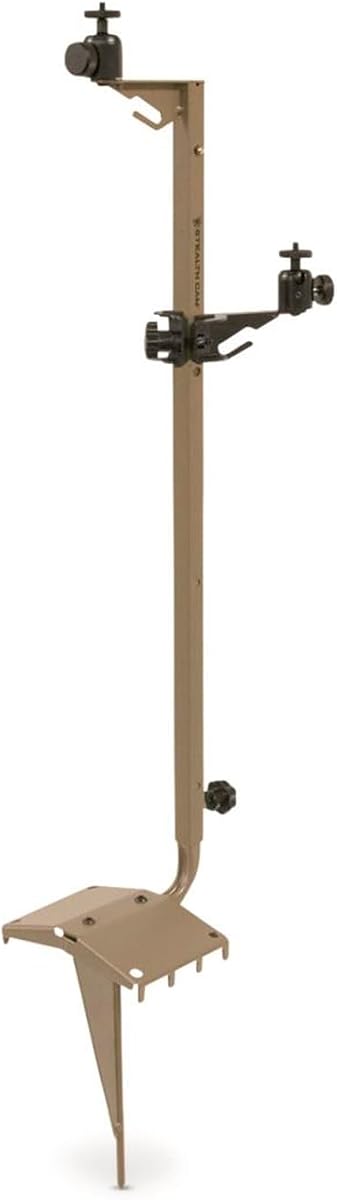
29-to-49-Inch Steel Mount
4.6Editor score
Adjustable 29-to-49-inch height
Dual-device mounting support
Powder-coated steel construction
A trail camera mount pole must place and support monitoring equipment securely while withstanding wind, rain, uneven ground, and repeated outdoor exposure. The most useful models combine a stable ground anchor, adjustable height, durable materials, and flexible positioning so the camera can cover the intended area without frequent adjustment.
This guide compares ten trail camera mount poles across construction, height range, camera compatibility, ball-head movement, anchoring method, portability, and support for dual devices. It covers single-camera stakes, adjustable aluminum stands, heavy-duty steel systems, and dual mounts that can carry cameras and compatible solar panels.
Each recommendation highlights the product's strongest use case, practical limitations, and ideal buyer. Ratings reflect the supplied customer feedback, while product availability and pricing can change over time, so readers should confirm current listing details before making a final purchase.
4.6Editor score

4.1Editor score

5.0Editor score
As an Amazon Associate we earn from qualifying purchases.
The table below compares all ten poles by height, materials, positioning system, anchoring approach, and device support to help narrow the field for different outdoor monitoring needs.


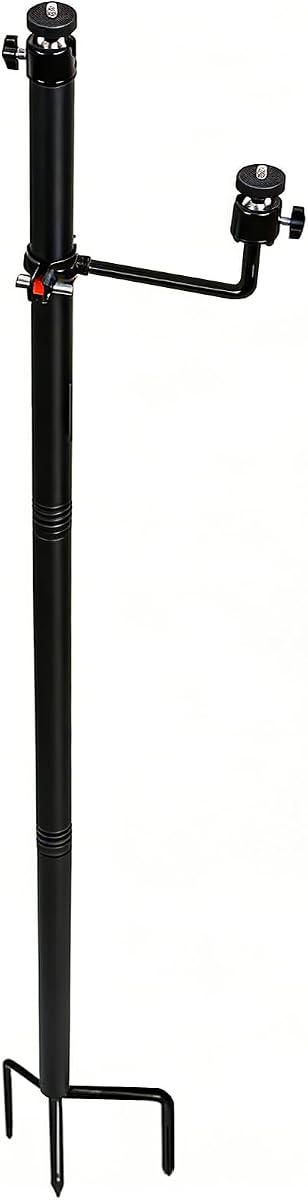

This 57-inch trail camera mount pole is a strong all-around choice for hunters and wildlife observers who want one support to carry more than a single camera. Its 4.1 rating reflects generally favorable customer feedback, while the combination of a rigid steel pole, triangular ground stake, and two swivel ball heads gives it a distinctly versatile design.
We may earn a commission when you buy through this link, at no additional cost to you.
The triangular stake is intended to resist the rocking associated with narrow single-stake anchors. A main ball head supports one device, while a sliding side mount allows a second camera or a compatible solar panel to be positioned at another height. Both heads provide 360-degree swivel movement and tilt control, making it easier to aim equipment toward separate lanes, open areas, or opposing approaches.
The trade-offs are modest for the feature set. A 57-inch pole can be less convenient in dense vegetation than a compact folding stand, and the two-part device arrangement may feel excessive for someone monitoring only one small trail. Firm soil is also preferable because the broad ground stake works best when it can be driven deeply and evenly.
This is a strong recommendation for buyers who want camera-and-panel capability, independent positioning, and a taller field of view from one base. It is less compelling for ultralight backpacking, but for fixed scouting sites it balances stability, adjustability, and straightforward setup particularly well.
The wide triangular ground stake spreads its load across three contact points and is intended to reduce wobble when wind or nearby animals disturb the mounted equipment. This makes the system better suited to open sites where a single narrow spike could rotate or shift.
The independent side mount lets a camera share the pole with another camera or compatible solar panel. Separate ball heads provide the directional control needed when two devices must face different parts of the same hunting area.
We may earn a commission when you buy through this link, at no additional cost to you.
This adjustable steel mount offers one of the strongest overall value combinations in the group. It has a 4.6 rating, the highest among the multi-device steel systems, and combines a useful 29-to-49-inch working height with a modular second mounting position for a camera or solar battery.
We may earn a commission when you buy through this link, at no additional cost to you.
Its powder-coated steel construction is designed to tolerate outdoor weather, while the adjustable kickplate stake helps provide stability in demanding terrain. Each mounting head offers 360-degree multi-pivot movement and 180-degree tilt, allowing users to aim over brush, grass, or shrubs and reposition equipment without moving the entire post.
The primary concern is compatibility wording. The supplied listing specifically mentions Stealth Cam cameras and Solar Pak batteries, although it uses a standard 1/4-inch mounting connection. Buyers using cameras or accessories from other brands should verify thread, adapter, and physical clearance requirements before ordering.
Despite that limitation, the mount is a practical choice for someone who wants adjustable height and flexible positioning without moving to a much larger dual-device system. It is especially appealing for beginning hunters who need a straightforward, compact support for a camera and a small power accessory.
The 29-to-49-inch adjustment range lets a user clear low vegetation or raise the camera above uneven ground. Compared with a fixed six-foot pole, the shorter low position also makes the mount easier to handle during setup.
The second modular mount broadens the system's use beyond a single trail camera. It can support two cameras or a camera and a compatible solar battery, helping users cover more area or expand power options.
We may earn a commission when you buy through this link, at no additional cost to you.
This three-in-one aluminum mount is the most portable option in the roundup. It breaks into three parts, folds for transport, and extends from 40 centimeters to 80 centimeters, making it suitable for users who regularly move cameras between hunting grounds, backyards, gardens, or property observation locations.
We may earn a commission when you buy through this link, at no additional cost to you.
Its 4.2 rating indicates solid customer satisfaction, and the supplied features emphasize quick disassembly, adjustable length, and 360-degree rotation with tilt adjustment. Thick aluminum gives the stand a practical balance of low weight and rigidity, while the standard 1/4-20 connection allows it to accommodate compatible trail cameras, solar panels, or other suitably threaded equipment.
The main limitation is its relatively short maximum height. It will not provide the elevated perspective of a 57-inch or six-foot steel pole, and very tall grass can interfere with the camera's field of view. The listed description also notes that the stand can be folded for hard ground, although a separate hard-surface base is not described.
For mobile hunters and backyard observers who value compact storage over maximum viewing height, this is a convincing pick. It is particularly useful for low-level monitoring, checking garden activity, or temporarily positioning a camera on a compact, removable support.
The three-piece construction reduces the amount of space the mount occupies in a vehicle or carry bag. Users can reposition an entire scouting setup without transporting a tall fixed-length pole.
The head rotates through 360 degrees and adjusts for tilt, allowing the camera to be aimed after the pole is planted. This keeps fine alignment separate from the task of driving the stake into the ground.
We may earn a commission when you buy through this link, at no additional cost to you.
This adjustable ground stake earns the highest rating in the selection and stands out for its ability to work in both soil and hard-ground environments. It can be inserted vertically into grass or soil, or attached horizontally at the base of the pole when a conventional stake cannot be driven into the surface.
We may earn a commission when you buy through this link, at no additional cost to you.
The supplied description identifies lightweight aluminum for the pole, while the product title calls it stainless steel. That inconsistency is worth noting, although the functional benefits remain clear: a detachable two-section pole, a head that rotates 360 degrees, adjustable tilt, and a standard 1/4-20 mounting connection for compatible equipment.
For hard surfaces, the instructions call for a heavy object such as a rock to help hold the horizontal anchor in place. That is less secure than a deeply planted ground stake and may not suit locations exposed to strong wind, animals, or accidental contact. Users should also confirm whether the current package includes the materials needed for their preferred installation.
Despite those caveats, this is the most flexible model for users who move between natural and paved locations. Its perfect 5.0 rating, dual installation method, and easy-to-carry sectioned design make it an excellent choice for property monitoring, backyard observation, and adaptable field setups.
The horizontal anchor option makes the pole usable on concrete and other hard surfaces where a normal spike cannot be inserted. A heavy rock or similar object can provide additional downward force at the base.
The pole separates into two sections for easier transport and compact storage. This is useful when moving between scouting spots without sacrificing the option of an elevated, adjustable camera position.
We may earn a commission when you buy through this link, at no additional cost to you.
This six-foot dual-device pole is designed for hunters who want a higher camera position and room for a camera plus a compatible solar panel or second camera. Its 4.1 rating reflects favorable feedback, and the taller steel construction distinguishes it from compact folding and short adjustable mounts.
We may earn a commission when you buy through this link, at no additional cost to you.
A rigid central pole is paired with a heavy-duty triangular stake intended to reduce wobble in grass, dirt, and uneven ground. The top and sliding side ball heads each offer 360-degree swivel and tilt, so both devices can be aimed independently. A corrosion-resistant protective finish is designed to handle rain, ultraviolet exposure, and impacts.
The trade-off is portability. At six feet, this pole is most practical when transported by vehicle and installed at a semi-permanent scouting location. Its larger footprint and greater leverage also mean the stake must be driven firmly, particularly if the pole will carry two devices or face frequent wind.
This mount is a strong match for open hunting grounds where elevated views help clear nearby vegetation. It is less suitable for ultralight trips, compact gardens, or locations where the equipment must be relocated frequently by hand.
The six-foot height can provide a broader view over grass and low brush than shorter folding stands. That elevation is useful when the aim is to monitor a trail crossing or open approach without vegetation blocking the lens.
Separate ball heads allow a camera and another compatible device to face different directions. The side mount can move vertically, making it easier to cover two elevations or distinct lines of sight.
We may earn a commission when you buy through this link, at no additional cost to you.
This four-pack version of the folding aluminum stand is built for users who need several monitoring positions rather than a single fixed site. The package includes four mounts, each with a 4.2-rated design that extends from 40 to 80 centimeters and rotates through 360 degrees.
We may earn a commission when you buy through this link, at no additional cost to you.
The repeated compact design is useful for establishing a network of cameras around a property, garden, game trail, or hunting area. Each pole folds into three components for storage, while thick aluminum and adjustable ground insertion help provide stability without the weight of a tall steel system.
Its limitations follow from the multi-pack format and compact dimensions. Carrying all four assembled stands between distant locations can be inconvenient, although their folding construction mitigates that issue. The relatively low height may also place the lens closer to ground-level vegetation than a longer steel mount would.
Buyers planning several short-range or low-angle installations will find this especially useful. It is less compelling for a single remote trail where one taller, more specialized pole would be enough.
Four separate poles allow a user to establish several observation points without purchasing individual mounts. This suits property monitoring, garden surveillance, and rotating wildlife observation across a larger area.
Every stand folds into three sections and offers adjustable length and tilt. The compact format makes it easier to keep each unit in a vehicle and deploy it where the season or monitoring priority changes.
We may earn a commission when you buy through this link, at no additional cost to you.
This two-pack heavy-duty mount is the most installation-flexible product in the roundup because it supports both a ground stake and tree, post, wall, or fence attachment. Its 3.5 rating is the lowest in the group, so buyers should weigh the extensive feature set against more limited customer feedback.
We may earn a commission when you buy through this link, at no additional cost to you.
The supplied description identifies high-strength alloy steel and a black oxide finish for resistance to rust, wear, wind, rain, and snow. Dual swivel joints provide 360-degree rotation and 180-degree tilt, while a triple-spike base is designed to resist slipping when the camera is angled. The included straps and screws expand the options beyond freestanding use.
Some listed compatibility claims are broad, including trail cameras, security cameras, solar panels, and action cameras. Users should still verify each device's actual mounting thread and whether its weight or shape is appropriate for the ball head and strap arrangement. The lowest rating also warrants checking recent customer feedback for recurring concerns.
This product is most useful for buyers who need both freestanding and elevated tree-style placements. It is less compelling than the higher-rated options for a single uncomplicated ground stake, but its installation flexibility can justify the added complexity.
Included straps and screws allow the mount to be secured to trees, wooden posts, walls, fences, and poles. That versatility is valuable when a freestanding ground installation is impractical.
The three-spike base creates a broader footprint than a single stake and is intended to remain stable while the mounting head is angled. This is helpful on uneven ground where rotational movement would affect the camera's framing.
We may earn a commission when you buy through this link, at no additional cost to you.
The two-pack aluminum option strikes a practical middle ground between carrying one folding stand and managing a larger multi-pack. Both included poles share a 4.2 rating and feature adjustable length, ground insertion, 360-degree rotation, and tilt control for directing compatible cameras or solar panels.
We may earn a commission when you buy through this link, at no additional cost to you.
The three-piece folding structure is the central benefit. It allows each pole to be collapsed for transport and stored without taking up the space required by a full-height post. Thick aluminum is used for stability, while the standard 1/4-20 connection broadens compatibility with outdoor equipment that uses the same threaded interface.
The maximum height of 80 centimeters is the biggest practical constraint. It may be insufficient when monitoring a steep trail, deep grass, or an area where the camera must look over brush. Users also need to choose appropriate equipment because the listing describes general mounting support rather than a load rating for every camera, panel, or accessory combination.
This mount is a good fit for buyers who want two compact, movable stands for a property or garden. It is less suitable for serious long-range trail monitoring where elevated views and greater ground clearance are the priority.
A pair allows cameras to be placed at different locations or aimed along separate approaches. It also provides a spare that can be moved between sites without interrupting the original installation.
Aluminum keeps the folded package manageable while supporting the adjustments needed for outdoor placement. The design is particularly convenient for users who regularly reinstall their monitoring equipment.
We may earn a commission when you buy through this link, at no additional cost to you.
This six-foot pole is specifically designed to hold a trail camera and solar panel together, making it a logical choice for users building a self-contained outdoor power arrangement. Its 3.8 rating indicates generally positive feedback, though it trails the leading products in customer satisfaction.
We may earn a commission when you buy through this link, at no additional cost to you.
The stand offers a 40-to-72-inch adjustment range, two 360-degree swivel 1/4-20 mounts, and a side arm that moves vertically. Its three steel spikes form a triangular base intended to remain stable over grass, dirt, and uneven ground. A baked enamel finish is included for rust resistance and outdoor durability.
Assembly requires screw-together sections and the included wrench, making the process less tool-free than several competing poles. The steel construction also means this is likely heavier than comparable aluminum models, which may matter for users carrying equipment across remote terrain on foot.
For buyers already planning to pair a camera with a compatible solar panel, the integrated layout is convenient and space-efficient. Those needing the lightest portable option or a completely tool-free setup may prefer a folding aluminum alternative instead.
Two swivel mounts keep the camera and panel together, while the movable side arm helps position the panel toward available sunlight. This arrangement reduces the need for a separate support structure.
The multiple threaded sections create a broad working range. Users can begin lower for setup and raise the camera after the entire assembly is firmly anchored in the ground.
We may earn a commission when you buy through this link, at no additional cost to you.
This two-pack 57-inch system is built for users who want to establish two elevated, dual-device monitoring positions. Its 4.1 rating is consistent with the other heavy-duty steel mounts in the selection, and the package provides two complete pole, stake, and side-mount assemblies.
We may earn a commission when you buy through this link, at no additional cost to you.
Each unit uses a triangular ground stake intended to operate like a tripod and reduce the rocking common to single-stake supports. A main camera head and a vertically sliding side head provide 360-degree swivel and tilt movement, allowing a camera to share the pole with another camera or compatible solar panel.
The primary drawback is transport. Two tall steel assemblies are less convenient than one or a set of compact folding stands, especially for users who frequently change locations. The broad anchors also need enough space to be inserted without striking buried obstacles or rocks.
This is a strong choice for a fixed property, farm, or mature hunting setup that benefits from two elevated posts. Buyers who need only one device at one location may find a single-unit option more economical and easier to manage.
The two-pack supplies matching supports for separate sites, giving an installer a consistent way to position multiple cameras. This is useful for monitoring several approaches around one property or hunting area.
The side mount slides along the pole and locks at different heights. That vertical separation can improve coverage when one device needs a higher angle than the other.
We may earn a commission when you buy through this link, at no additional cost to you.
The right trail camera mount pole depends on where it will be used, what it must support, how often it will be moved, and how stable the terrain is. The following factors help separate basic stakes from versatile dual-device and multi-position systems.
Height determines the camera's viewing angle and how much it can see over grass, brush, and low obstacles. Compact aluminum models extend to roughly 31.5 inches and suit low-angle monitoring, while 49-inch systems offer more clearance. At 57 inches or six feet, the camera can observe a broader ground area and work better on open trails where surrounding vegetation would otherwise block the lens.
A stable pole keeps the camera from shifting, which is important when wildlife approaches or wind acts on the mounted device. Triangular bases, multi-spike anchors, and wide kickplates distribute force better than a narrow single stake. Firm soil provides the best foundation, while loose, wet, rocky, or sloped ground may require choosing a wider anchor or selecting a site where the entire base can be seated evenly.
Most products use a 1/4-20 threaded connection, but the camera's thread, adapter requirements, and physical clearance should be verified before purchase. Users should also check whether the listed camera or solar-accessory compatibility refers to a specific brand. Device weight, connector shape, and the presence of a tripod socket can all affect whether a camera sits securely or moves under wind.
A single camera head keeps the design light and straightforward, while dual-device mounts can support two cameras or pair one camera with a compatible solar panel. Independent ball heads are valuable when the devices must face different directions. They add complexity and weight, however, so buyers should not pay for unused capacity if one camera will always be used alone.
Useful controls include adjustable pole length, 360-degree swivel, and tilt adjustment. Rotation lets the camera face different directions without moving the stake, while tilt helps frame a nearby trail or open approach. A sliding side mount adds a second height position, but it also introduces another locking point that should be checked after installation.
Steel generally offers substantial rigidity and can be appropriate for a fixed installation, while aluminum reduces weight and simplifies transport. Both need attention to coatings and joints. Powder coating, black oxide, corrosion-resistant paint, and baked enamel can help limit weather damage, but exposed fasteners, ground stakes, and moving joints remain important inspection points over time.
Folding or detachable poles are best when moving between hunting areas, gardens, or properties. A three-piece aluminum stand fits into a vehicle more easily than a six-foot fixed post, while sectioned steel designs offer greater height but greater bulk. Buyers should consider not only the packed length but also the weight of multiple poles, stakes, straps, and accessories.
Most ground stakes are designed for soil, grass, or dirt. A model with a horizontal anchor option can also work on concrete or another hard surface when a stake cannot be penetrated, though it may need a heavy object to remain secure. Tree straps, wall screws, and fence attachments offer alternatives, but each attachment method has its own load and stability considerations.
Before assembly, inspect the pole sections, ball heads, side mount, fasteners, and ground stake for damage. Read the included instructions, confirm that the camera's mounting connection matches the 1/4-20 thread, and make sure any solar panel or second device is physically compatible with its assigned head. Assemble the pole and adjustment controls before driving the stake into the ground.
Choose a clear line of sight and a stable patch of soil. Drive the ground anchor evenly so the pole remains vertical, then tighten all locking parts and adjust the camera's swivel, tilt, and height. Aim the lens toward the target area, check that the view is unobstructed, and confirm that the camera cannot rotate or droop under its own weight. For dual setups, position each device independently and ensure their cables can reach without creating a snag hazard.
During regular checks, inspect the ground stake, pole joints, locking knobs, and camera connection. Clear vegetation that blocks the lens or catches the cable, and check whether recent rain, wind, animals, or ground movement have loosened the mount. Clean dirt from moving parts with a dry cloth, rinse off mud when appropriate, and dry the components fully. Inspect protective coatings for scratches or exposed metal and address corrosion before it spreads.
Most of the reviewed poles use a 1/4-20 threaded mounting connection, which is a common interface for trail cameras and compatible outdoor equipment. Even with the same nominal thread, a camera can still require an adapter because of connector design, weight, or clearance. Check both the camera and the mount before installation, and avoid forcing a connection that does not seat correctly.
No. A taller pole can improve visibility over vegetation, but it is also heavier, more difficult to transport, and more exposed to wind. A shorter folding mount may be more suitable for a low-angle garden camera, a temporary deployment, or a user carrying equipment on foot. Choose the height that solves the site's viewing problem without creating unnecessary handling concerns.
Several models in this guide are designed with two independent mounting heads for that purpose. Compatibility still matters: the panel must have a suitable 1/4-20 connection, fit the selected head, and be positioned so it can receive adequate sunlight. The camera should also be aimed independently rather than forced into the same direction as the panel.
Use firm soil, insert the anchor deeply, and make sure all spikes or kickplate points are properly seated. Triangular and multi-spike bases generally distribute force better than a single narrow stake. Tighten the pole and ball-head locks after aiming, inspect the base periodically, and avoid placing the mount where animals, water runoff, or loose soil are likely to shift it.
Most are intended primarily for soil, grass, or dirt. The adjustable stainless ground stake has a horizontal installation method for hard surfaces, although the supplied description says a heavy object such as a rock can help hold it down. Other alternatives include tree straps, wall screws, fences, posts, or a suitable separate base, provided the attachment can safely carry the equipment.
Steel is generally attractive for rigid, fixed installations where maximum support and stability matter. Aluminum is easier to carry and is often preferable for mobile scouting, folding designs, and locations where lower weight is important. The listed materials are not always perfectly consistent across product descriptions, so buyers should inspect the actual package and confirm the current listing details.
Inspect the base and connections whenever checking the camera, and more frequently during wet, windy, or active wildlife conditions. Look for loose knobs, rotating heads, a leaning pole, exposed corrosion, frayed cables, and vegetation blocking the view. Tighten or reposition the assembly as needed, because a minor adjustment at installation can prevent larger problems later.
No. The standard 1/4-20 connection provides broad mechanical compatibility, but some listings specifically mention particular camera or solar-accessory brands. Camera body shape, balance, connector clearance, and weight can also affect fit. Confirm the listed requirements and compare them with your own equipment before ordering.
The 57-inch dual-device mount is the most well-rounded choice for users who value stable anchoring, independent positioning, and the ability to combine a camera with another device. The 29-to-49-inch steel mount stands out for value and strong customer feedback, while the adjustable stainless ground stake offers the most unusual installation flexibility with a perfect rating.
Prioritize the conditions at your monitoring site. Portable aluminum stands suit frequent relocation, tall steel poles provide broader views, and dual-device layouts make sense when you need extra coverage or integrated solar power. Before ordering, verify the camera connection, accessory compatibility, maximum height, anchor design, and included hardware so the mount performs as expected in the field.
Ratings and product configurations can change as customer feedback develops and sellers update listings. Prices also fluctuate, so compare the current offering, package contents, and recent reviews at the time of purchase. A carefully matched mount can provide a more stable and useful camera position for many outdoor monitoring setups.