
Combustion Analyzer, Residential, LCD
4.6Editor score
Residential combustion analysis
Backlit LCD display
Compact field-service design
HVAC diagnostic focus
Our Combustion Analyzer Test Kit guide compares ten options for flue-gas diagnostics, pressure checks, safety readings, portability, and professional HVAC
A combustion analyzer test kit gives HVAC professionals a practical way to evaluate combustion appliances, inspect flue gases, measure pressure, and identify unsafe operating conditions. The most useful instruments balance accurate readings, clear displays, practical probe options, dependable sensors, and accessories that support field service rather than simply adding more functions.
We compared all ten listed products using their stated capabilities, included accessories, fuel compatibility, display design, safety features, sensor provisions, and customer ratings. The guide covers residential and commercial flue-gas analyzers, a live-draft and manometer model, and an automotive combustion leak detector whose testing purpose is distinctly different.
Each review explains what the product is best positioned to handle, along with the limits visible in its supplied information. The first three entries receive the overall awards, while the remaining models provide worthwhile alternatives for different fuel systems, budgets, reporting needs, and service environments. Prices and availability can change, so check current listings before purchasing.
4.6Editor score

5.0Editor score

The comparison below places every included instrument beside the others, emphasizing measurement coverage, supported fuels, reporting features, sensor provisions, and field accessories. Two entries measure combustion-related pressure for HVAC systems, while the Gold Label kit uses a liquid-based method to locate automotive engine leaks.


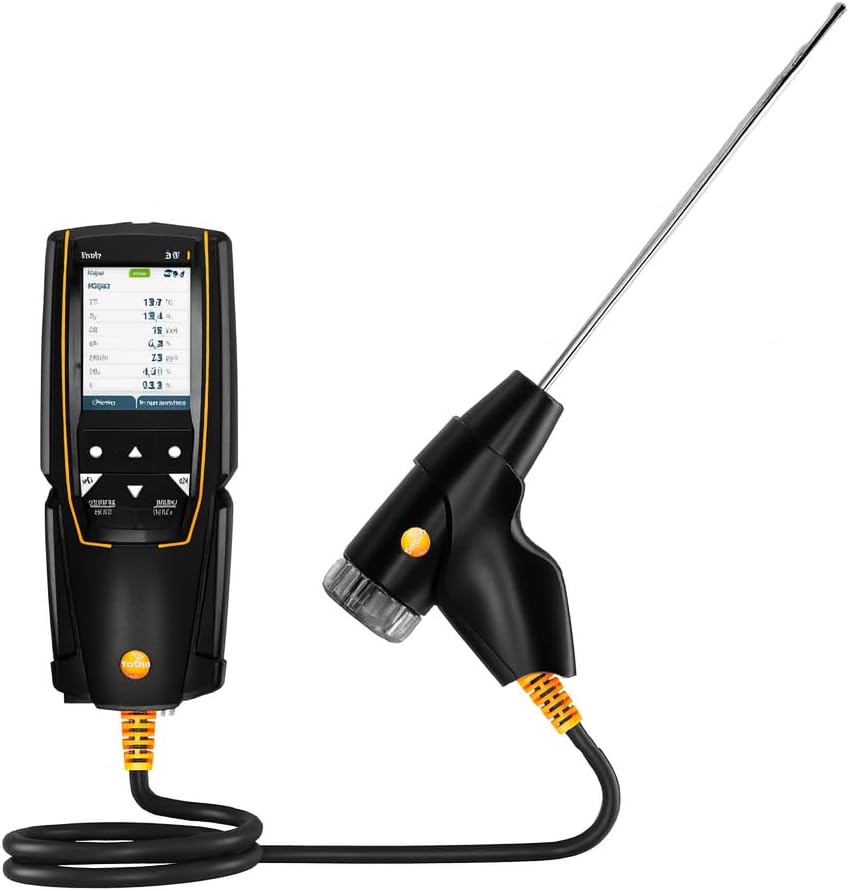
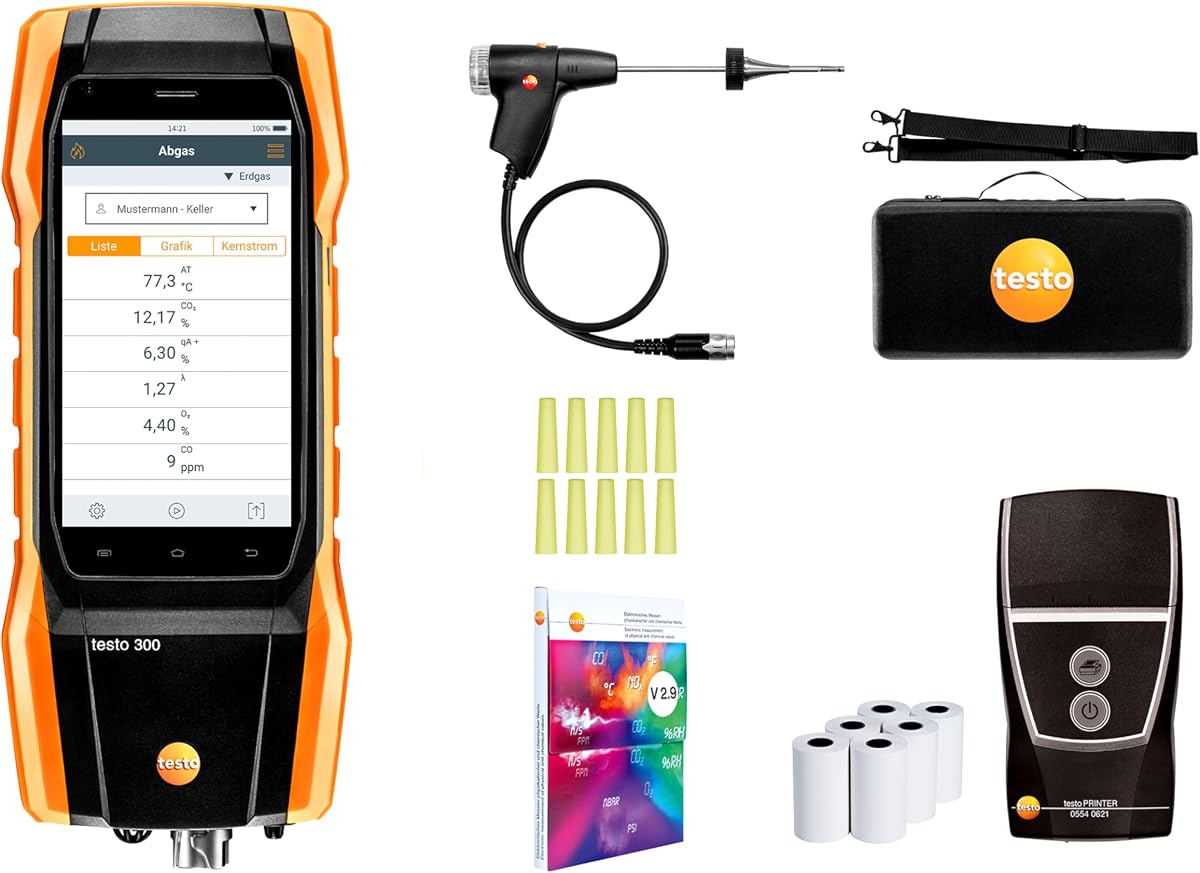


This residential combustion analyzer earns the Best Budget award because it offers a focused starting point for HVAC technicians who need a dedicated instrument without the larger feature set of a commercial analyzer. Its customer rating is 4.6, giving it one of the strongest established ratings in this guide. The built-in LCD is the product's clearest specified feature.
We may earn a commission when you buy through this link, at no additional cost to you.
The most appealing aspect is its apparent simplicity. Residential combustion appliances are the stated target, which should make the analyzer easier to introduce into a service routine than a general instrument loaded with options for unusual fuels. The product listing also identifies it specifically within test instruments for combustion testing rather than presenting it as an automotive leak detector.
The main limitation is transparency. The supplied listing information does not detail sensor specifications, supported fuel types, pressure ranges, included probes, reporting software, or measurement accuracy. That makes it harder to compare with feature-rich competitors on paper. Its California shipping restriction is also significant for technicians or buyers located in that state.
This is the most practical recommendation for a residential HVAC professional who wants a straightforward LCD analyzer and values customer feedback over a long published feature list. Confirm the exact measurements, accessories, probe compatibility, fuel settings, warranty, and shipping eligibility with the seller before ordering.
The residential specialization is meaningful for technicians who mainly inspect furnaces and boilers. A focused instrument can be easier to deploy during routine service calls than a heavily configured commercial analyzer.
The LCD provides a straightforward way to present readings during diagnostics. Before purchase, confirm its size, backlighting, and readability in poor service conditions because the listing gives no further display details.
We may earn a commission when you buy through this link, at no additional cost to you.
The INFICON Flue-Mate is our Editor's Choice and the strongest all-around choice in the group. It carries a 5.0 rating, the highest numerical customer score among the ten products, and combines flue-gas analysis, pressure monitoring, replaceable sensors, mobile reporting, and automatic CO protection in one instrument.
We may earn a commission when you buy through this link, at no additional cost to you.
Its one-screen presentation is particularly useful in the field. Efficiency, oxygen, carbon dioxide, carbon monoxide, and flue-gas temperature appear together, allowing a technician to compare values without navigating through separate screens. A built-in manometer and hose kit expand the scope beyond gas composition to system pressure, while the external water trap helps protect internal electronics and sensors.
The analyzer also supports a modern service workflow. Technicians can save and share reports through the FLUE-Mate app on a phone or tablet, and a QR code provides a quick path to mobile reports. Field-replaceable sensors may reduce the disruption associated with maintenance, while upgradeability to NOx measurement allows the instrument to grow with future needs.
Fuel compatibility is unusually broad, covering natural gas, propane, fuel oil, diesel, wood, coal, biofuel, LPG, butane, bagasse, and B100. That makes the Flue-Mate attractive for diverse service portfolios. It is the best fit for a technician who values reporting, broad fuel support, and integrated pressure diagnostics in one package.
Saving and sharing reports through the mobile app reduces the need to recreate readings manually. The QR workflow is useful when a technician must document a diagnosis quickly at the appliance.
Automatic CO sensor protection and a replaceable sensor design support dependable field use. The external water trap must be checked and maintained correctly to preserve the analyzer's internal components.
Compatibility with numerous conventional and alternative fuels makes this a flexible choice for service businesses. Verify the precise fuel calibration requirements for each appliance type before relying on a reading.
We may earn a commission when you buy through this link, at no additional cost to you.
The Fieldpiece SOX3 combines a 4.3 rating with an automatic pump, a readable triple-line display, and broad fuel configuration. It is a practical analyzer for HVAC technicians who want combustion readings without manually pulling the sample and then work with the instrument while readings are displayed.
We may earn a commission when you buy through this link, at no additional cost to you.
The built-in electric pump draws flue gas automatically, while the magnetic back helps hold the SOX3 in position. That combination is well suited to furnace and boiler diagnostics where the technician needs both hands for the probe and appliance controls. Its triple-line display presents key combustion values clearly without requiring a large touchscreen.
The SOX3 measures flue temperature and oxygen while calculating carbon dioxide, excess air, and combustion efficiency. It supports natural gas, No. 2 oil, and propane out of the box, plus programmable custom fuels. A field-replaceable oxygen sensor stores its calibration data on the sensor itself, helping simplify maintenance and instrument readiness.
The supplied accessories reinforce its service orientation: a thermocouple handle, filter kit, and protective case are included. The main trade-off is that pressure measurement is not stated among its core capabilities. It is a strong choice for technicians prioritizing automatic sampling, efficient combustion calculations, and a comprehensive included accessory set.
The electric pump removes the need to draw samples by hand while the instrument displays results. This makes repeated checks easier and reduces one common source of inconsistent workflow.
Because the oxygen sensor carries its calibration data, a technician can replace it in the field. That design supports faster return to service without treating sensor changes as a bench-only task.
Calculated carbon dioxide, excess air, and efficiency readings help translate raw sensor values into actionable furnace adjustments. Custom fuel options extend the instrument beyond its three standard modes.
We may earn a commission when you buy through this link, at no additional cost to you.
The UEi C161C is a residential combustion analyzer with a large six-line backlit display, heat exchanger testing, two levels of sensor protection, and a case. Those features make it worth considering, but its 3.1 customer rating is the lowest in this comparison and deserves careful attention.
We may earn a commission when you buy through this link, at no additional cost to you.
The six-line backlit display is a meaningful advantage for residential service work because it can show more information at once and remain readable in furnaces, basements, and other dim environments. Heat exchanger testing directly supports a common furnace inspection need, while the two protection levels add an extra safeguard for sensitive components.
UEi Service+ support and an up-to-ten-year warranty with annual recertification are notable ownership features. A warranty can be more valuable than a long specification list when a technician relies on an instrument every week. However, the product data does not enumerate supported fuels, measurement ranges, probe configurations, pressure capabilities, or connectivity.
This analyzer may suit a residential technician who values display capacity, heat exchanger testing, and long-term service support more than a high aggregate customer score. Investigate the meaning of the rating, review recent owner feedback, confirm all required measurement functions, and verify the recertification terms before making it part of your toolkit.
Six backlit lines give the technician room to view multiple results and status information. This is valuable in poorly lit appliance rooms where a compact screen can become frustrating.
The stated warranty and annual recertification framework can reduce uncertainty over the analyzer's working life. Confirm what recertification includes, how service is scheduled, and whether applicable regional coverage affects the arrangement.
We may earn a commission when you buy through this link, at no additional cost to you.
The testo 310 II combines flue-gas analysis, temperature measurement, draft and pressure analysis, and smart app connectivity. Its 3.8 rating places it in the middle of the group, but the supplied feature list makes it particularly relevant to technicians who want connected diagnostics and a complete field package.
We may earn a commission when you buy through this link, at no additional cost to you.
The instrument measures temperature, flue-gas oxygen, draft, flue-gas loss, efficiency, pressure, and carbon monoxide without hydrogen compensation. Ambient CO is also included, expanding its usefulness for furnace and boiler safety checks. The intuitive menus and smart app support allow key parameters to be viewed simultaneously and help move from field readings to digital records.
The complete set includes a rechargeable battery, a calibration protocol for oxygen, carbon monoxide, pressure, and temperature, an 180 mm probe with cone, a silicon pressure hose, five particle filters, and a sturdy case. This is a generous collection of essentials for mobile work, particularly the battery and calibration materials.
The main measurement caveat is that CO is specified without hydrogen compensation, so users should understand how that limitation relates to their target appliances. The rating is not among the strongest, but the combination of app support, pressure accessories, and a full kit makes the testo 310 II a good option for service technicians who favor structured digital workflows.
The smart app allows readings to be considered alongside other information in a connected workflow. It can make service records easier to organize without requiring a separate manual transcription process.
Combining flue-gas, draft, pressure, efficiency, and ambient CO readings helps diagnose several aspects of a heating system in one session. This breadth reduces the need to carry separate instruments for routine evaluations.
The rechargeable battery, calibrated probe, hose, filters, case, and calibration protocol cover several routine needs. The included particle filters are particularly important for protecting sampling components in dirty combustion environments.
We may earn a commission when you buy through this link, at no additional cost to you.
The testo 300 HVAC Kit is a feature-rich residential analyzer with a 4.2 rating, an HD touch display, long-life sensors, and a spare probe. It is built for technicians who want flue-gas, draft, differential-pressure, and ambient CO measurements in a cohesive instrument.
We may earn a commission when you buy through this link, at no additional cost to you.
Its large, structured touch menu presents measurements at a glance, while strong magnets on the back support a secure, hands-free position. The CO and oxygen sensors have a stated life expectancy of up to six years and cover a measurement range up to 4,000 ppm for carbon monoxide.
The package includes the main unit, a basic flue-gas probe, spare dirt filters, a rugged hardshell case, and easyHeat software. That combination supports both field use and later review. Unlike the printer-equipped testo package in this list, this version focuses on software-based results rather than immediate paper output.
Its 4.2 rating is solid but not exceptional. A technician who values touch navigation, a strong accessory bundle, and the spare probe should give it serious consideration. Those who routinely produce printed customer reports may prefer the alternative testo 300 kit with printer, while first-time users should confirm the ease of the menu workflow.
The rear magnets let the analyzer remain positioned while the technician manipulates the probe or appliance controls. This is useful when reaching into a cramped furnace cabinet.
The stated sensor life expectancy can lower maintenance frequency when the instrument is handled and maintained properly. Actual longevity remains dependent on usage, exposure, and calibration practices.
easyHeat software adds a digital layer for organizing combustion work. Technicians who regularly produce printed reports should compare it with the printer-equipped testo 300 configuration.
We may earn a commission when you buy through this link, at no additional cost to you.
The testo 300 Printer Kit stands out for its wireless printer, spare thermal paper, probes, filters, and easyHeat software. Its 3.7 rating is moderate, but for a technician who values immediate paper reports at the appliance, the integrated printing workflow is more meaningful than many extra meter functions.
We may earn a commission when you buy through this link, at no additional cost to you.
The same large HD smart touch display found on the related testo 300 package provides a clear, structured measurement menu. Strong rear magnets support hands-free operation, and the long-life oxygen and carbon monoxide sensors cover central residential diagnostic requirements.
This configuration also includes a retrofittable NO sensor. That upgrade path allows a technician to add nitrogen oxide measurement without replacing the entire analyzer. The included probes and filters support immediate field use, while the printer produces results without requiring a separate device or later report export.
The trade-offs are size, carried accessories, and a rating below several alternatives. Printed documentation is especially useful when a technician must leave a report for a customer, property manager, or another crew member. This is a compelling choice for report-oriented service businesses, although technicians wanting a lighter software-driven setup may prefer the related kit without the printer.
The wireless printer allows a technician to produce a physical record immediately after completing a combustion check. The inclusion of spare thermal paper helps prevent a simple consumable from interrupting the workflow.
The retrofittable NO sensor creates a path toward more complete emissions analysis. It is a useful option for technicians whose service requirements may expand beyond basic oxygen and carbon monoxide readings.
The printer, probes, case, sensors, and paper make this a fuller package than a basic handheld analyzer. That completeness is useful, although technicians who travel with minimal equipment should consider the added bulk.
We may earn a commission when you buy through this link, at no additional cost to you.
The Gold Label Combustion Leak Detector Kit is an automotive engine testing product, not an HVAC flue-gas analyzer. Its 4.4 rating is strong, and its stated purpose—detecting combustion leaks in engine blocks and testing suspected head gasket failures—makes it a useful addition to an automotive diagnostic toolbox.
We may earn a commission when you buy through this link, at no additional cost to you.
The liquid-based system provides a clear visual indication when combustion gases enter the test fluid. The kit is advertised as supporting more than 100 tests and includes 18 ounces of fluid. That makes it accessible to professional mechanics and do-it-yourself vehicle owners who need a straightforward way to narrow down internal combustion leaks.
Clear instructions and an easy-to-use design are important benefits for a diagnostic method that many first-time users may not have used before. The product can help technicians identify the need for further investigation, saving time compared with replacing components without first narrowing down the source of the leak.
It should not be compared directly with flue-gas analyzers because it does not report oxygen, carbon monoxide, carbon dioxide, efficiency, draft, or appliance pressure. It is best suited to automotive engine block and head gasket diagnosis. Buyers searching for a combustion analyzer test kit for an HVAC system should choose one of the electronic flue-gas instruments in this guide instead.
The liquid test turns internal combustion pressure into a visible response, allowing rapid screening of an engine block. It is especially useful when a vehicle has symptoms associated with a possible head gasket failure.
The stated capacity of more than 100 tests and the included fluid supply support repeated shop use. Proper fluid handling and storage remain important because the kit uses a liquid-based diagnostic medium.
This product does not substitute for a combustion analyzer when diagnosing a furnace, boiler, or vent system. Its correct role is screening automotive engines for internal combustion leaks.
We may earn a commission when you buy through this link, at no additional cost to you.
The Fieldpiece CAT85K2 combines combustion analysis, live draft measurement, a built-in manometer, and an integrated printer. Its 3.8 rating is midrange, but the ability to cover gas readings and pressure-related checks in one instrument gives it a clear technical identity.
We may earn a commission when you buy through this link, at no additional cost to you.
Live draft provides a direct view of draft behavior during testing, while the built-in manometer supports pressure measurements that might otherwise require a separate gauge. Combining those functions with combustion analysis can streamline diagnostics of fuel-burning appliances and connected venting systems.
The integrated printer is a practical field feature. A technician can produce documentation without carrying a separate printer, and the instrument's broader measurement role may justify its size for professional service work. It is also the only product in this list whose supplied description explicitly places live draft, manometer, and printing together.
The published product information is brief, so specific supported fuels, sensor ranges, display characteristics, probe specifications, and included accessories are not established here. Those details should be confirmed before purchase. The CAT85K2 is best for a professional who specifically values live draft, integrated pressure measurement, and printed output in a single combustion analyzer.
Watching draft behavior during an operating test can help a technician evaluate changes in real time. That makes the CAT85K2 relevant for services where combustion and pressure performance must be judged together.
A built-in manometer reduces the need to carry another pressure instrument for routine checks. Verify hose compatibility, range, and pressure-unit settings before using it on a specific system.
Integrated printing can produce a customer record during the visit. The benefit is strongest for technicians whose service process consistently requires paper documentation.
We may earn a commission when you buy through this link, at no additional cost to you.
The testo 300 Commercial Analyzer Kit is our Best Premium selection for service businesses that want a commercially oriented configuration, installed oxygen and carbon monoxide sensors, and immediate printed reports. Its long-life sensor emphasis and field-upgradable NO option distinguish it from simpler residential analyzers.
We may earn a commission when you buy through this link, at no additional cost to you.
This is the professional kit for work involving commercial heating systems or more demanding service environments. The included printer means the user can document results during the appointment, while the O2 and CO sensors provide the foundation of routine combustion analysis without requiring those components to be selected separately.
Field upgradeability for NO measurement adds long-term flexibility. Instead of discarding an entire instrument when nitrogen oxide readings become necessary, a qualified technician can add that capability to the platform. The model number shown in the title, 0564 3004 93, also gives buyers a specific configuration to confirm with the seller.
No numerical customer rating was supplied, so this recommendation rests on the stated commercial configuration rather than a score comparison. The available details are also limited, making it important to verify supported fuels, measurement ranges, probe options, calibration procedures, warranty, and included accessories. It is best for commercial service operations that value printing and sensor expansion.
The commercial analyzer configuration gives service businesses a more specialized foundation than a basic residential meter. Confirm the exact equipment and workflow needs before choosing it for a mobile HVAC team.
Oxygen and carbon monoxide sensors are installed in the kit, while NO capability can be added in the field. This creates a practical path from standard diagnostics to expanded emissions analysis.
The included printer supports professional records during the service visit. Confirm paper compatibility, print clarity, stored-report options, and power arrangements for your particular workflow.
We may earn a commission when you buy through this link, at no additional cost to you.
The right combustion analyzer test kit depends on the appliances, fuels, measurements, and reports your service business handles. Use the following factors to separate residential convenience, commercial capability, connected reporting, pressure testing, and automotive diagnostics before making a purchase.
Most HVAC combustion analyzer test kits are electronic flue-gas instruments designed for furnaces, boilers, and other fuel-burning appliances. They measure gas composition, temperature, draft, pressure, efficiency, or a combination of those values. The Gold Label entry is fundamentally different: it uses liquid to help diagnose internal combustion leaks in automotive engine blocks and suspected head gasket failures. Buying an automotive block tester for furnace work, or an HVAC analyzer for engine repair, would create an obvious mismatch.
First identify the equipment you actually service. Residential HVAC users should prioritize furnace and boiler measurements, while commercial operations may need broader fuel compatibility, durable accessories, and formal report generation. Automotive technicians should choose the engine leak kit only when their workflow specifically requires combustion pressure to be shown in fluid.
A useful analyzer should provide every measurement required by your inspection or commissioning process. Common combustion readings include oxygen, carbon monoxide, carbon dioxide, flue-gas temperature, draft, differential pressure, ambient carbon monoxide, excess air, efficiency, and flue-gas loss. Some models calculate values from sensor inputs, while others emphasize direct pressure checks or live draft.
Look for an instrument that covers the complete diagnosis rather than one that merely displays a single gas value. If you regularly test ambient CO alongside furnace readings, for example, a model measuring both is more useful than one limited to flue-gas composition. Check whether CO readings include hydrogen compensation, and confirm the temperature and pressure ranges required for the systems you service.
Fuel support determines whether an analyzer can perform accurate calculations for a given appliance. The products in this guide range from standard natural gas, propane, and oil support to broad lists that include diesel, wood, coal, biofuel, butane, LPG, bagasse, and B100. Custom fuel programming can further extend the usefulness of some instruments.
Do not assume that a product displaying a fuel name supports every appliance using that fuel without appropriate calibration. Verify the manufacturer's instructions, fuel presets, probe configuration, and any region-specific requirements. For a business servicing unusual appliances, broader compatibility and field-selectable custom fuels may matter more than a touchscreen or printer.
Sensors determine much of an analyzer's accuracy, maintenance burden, and operating life. Field-replaceable oxygen and carbon monoxide sensors can reduce downtime, while automatic CO protection, external water traps, multiple protection levels, and replaceable filters help protect sensitive components. Some listed sensors have stated life expectancies of up to six years, but actual performance depends on exposure, handling, storage, and calibration.
Ask whether calibration data travels with a replacement sensor and whether routine maintenance can be completed in the field. Also consider how condensate and combustion debris are trapped. A water trap that protects the electronics is valuable, provided the technician knows how to inspect, empty, and reinstall it correctly.
Displays range from a standard residential LCD and a triple-line Fieldpiece screen to a six-line backlit UEi display and large HD touchscreens. More visible lines can make simultaneous readings easier, while touch menus may speed navigation once the user learns them. Neither format is automatically superior; the best interface is the one a technician can interpret quickly under real service conditions.
Consider lighting, gloves, screen visibility, menu depth, and whether a physical control is preferable. Touchscreens can streamline graph-like review but may require more attention in dusty environments. Verify how readings are grouped, how alarms or warnings appear, and whether the display can show both combustion and pressure information without cumbersome navigation.
Printed documentation can make it easy to hand a customer a record at the completion of a visit. The testo 300 Printer Kit and Fieldpiece CAT85K2 include printers, while the testo 300 Commercial Analyzer Kit is specifically configured with one. For technicians who prefer digital files, the FLUE-Mate supports smartphone and tablet reports through its app, and easyHeat software is included with the related testo 300 residential package.
Consider the entire reporting process rather than choosing a printer automatically. Printed output may suit property managers and service customers who want a tangible record, whereas app-based sharing may be more convenient for offices that process work digitally. Verify print consumables, paper compatibility, wireless operation, report layout, and whether software is included.
A technically capable meter is less useful if the necessary sampling hardware is missing. Some packages include a basic flue-gas probe, spare probe, pressure hose, particle filters, dirt filters, thermocouple handle, and hard case. Others list important accessories without spelling out every item, so buyers should request a complete packing list rather than assume a probe or hose is present.
Match accessories to the work. Pressure-capable analyzers need the correct hose and connection method, while combustion probes must suit the appliance and fuel. Filters, connectors, cases, batteries, and calibration tools all affect daily workflow. A complete bundle may be more valuable than a long list of functions that cannot be used without additional equipment.
Feature count should not be the only basis for choosing a kit. A residential technician conducting routine furnace checks may benefit more from a compact display and automatic pump than from NO sensor expansion. A commercial service business may prioritize fuel range, printed records, replaceable sensors, and pressure instrumentation. An automotive technician needs an entirely different diagnostic method.
Review warranty and recertification terms as well as immediate features. Long-term support, available calibration, replacement sensor logistics, and a clear maintenance schedule can influence the true value of an instrument over years of use. Buy the configuration that fits recurring work, not the largest feature list shown in a listing.
Begin by reading the analyzer's manual, identifying every probe, hose, filter, sensor, and accessory, and confirming that the instrument is calibrated for the fuel and appliance being tested. Inspect the probe and connections for damage, check the water trap or condensate management component, and make sure the filter condition is appropriate. Verify that the selected fuel mode matches the equipment before taking readings.
Follow the manufacturer's startup sequence and place the probe in the location specified for that appliance and combustion system. Allow readings to stabilize, record the required values, and avoid moving the probe or appliance controls unnecessarily during a test. For pressure measurements, confirm the hose is correctly seated and connected, and use the correct range and unit. Treat unusually high carbon monoxide or unexpected draft as a reason to stop and investigate rather than a value to normalize automatically.
After the job, allow the instrument and probe to cool as directed, disconnect the sample line, empty and reinstall any water trap correctly, and replace dirty filters according to the manual. Keep the unit in its case and away from excessive heat, moisture, impact, and corrosive conditions. Schedule calibration and sensor maintenance on a regular basis and maintain records showing which fuel settings, accessories, and calibration procedures were used for each service.
A useful HVAC kit commonly measures oxygen, carbon monoxide, carbon dioxide, flue-gas temperature, draft, and sometimes differential pressure. Depending on the instrument, it may also calculate excess air, combustion efficiency, and flue-gas loss. Choose a model that covers the readings required by your appliances and inspection process rather than assuming every analyzer includes the same functions.
Yes, but only when the manufacturer supports each fuel through the appropriate preset or custom configuration. Some models cover natural gas, propane, and oil, while others include diesel, wood, coal, biofuels, butane, and other fuels. Accurate readings also depend on using the correct probe, calibration method, and fuel settings for the appliance.
No. The Gold Label kit in this guide uses fluid to help detect internal combustion leaks in automotive engine blocks and suspected head gasket failures. An HVAC combustion analyzer electronically measures flue-gas composition, temperature, draft, pressure, and related values. The two products serve different diagnostic categories and are not interchangeable.
Draft generally refers to the pressure difference created by the combustion and venting process. Differential pressure is the measured difference between two points in a system and may be used for equipment, filter, or pressure-related diagnostics. An analyzer with both capabilities can connect combustion readings to pressure behavior, but the correct hose placement and test procedure depend on the manufacturer and appliance.
It depends on your reporting workflow. A printer is convenient for producing a customer or property-manager record during the visit, while smartphone app reporting or desktop software may be more convenient for digital service systems. Consider paper costs, print clarity, wireless reliability, and whether your business already standardizes on physical reports before adding printer-equipped models.
Replacement timing depends on the sensor manufacturer, operating conditions, exposure, calibration results, and the service history of the instrument. Some listed sensors have stated life expectancies of up to six years, but that should not be treated as a universal replacement schedule. Recalibrate according to the manual, watch for drift, and replace or service sensors when specified or when readings become suspect.
At minimum, a technician needs the correct combustion probe, suitable particle or dirt filters, an approved sample hose when pressure testing is required, and a protective case. Some packages also include spare probes, thermocouple handles, calibration protocols, batteries, printers, and software. Check the exact packing list because accessories differ among otherwise similar analyzer models.
It may provide several useful readings, but commercial service can require broader fuel support, formal documentation, more demanding pressure capabilities, and accessories intended for varied equipment. Review measurement ranges, supported fuels, probe compatibility, reporting features, and warranty coverage. A commercial analyzer is generally the safer choice when those requirements are part of routine work.
The Residential LCD Analyzer is the budget-oriented option for technicians seeking a straightforward residential instrument, while the INFICON Flue-Mate is the most complete all-around recommendation thanks to its one-screen readings, built-in manometer, replaceable sensors, mobile reports, and broad fuel compatibility. The testo 300 Commercial Analyzer Kit takes the premium position because its commercial configuration includes long-life sensors, a printer, and a field-upgradable NO option.
Prioritize the measurements, fuels, reporting process, and accessories your work actually requires. Automatic pumps can speed residential furnace checks, large displays can improve readability, pressure tools can broaden diagnostics, and printed or app-based reports can support a formal service process. Field-replaceable sensors and clear maintenance procedures deserve serious consideration because they affect long-term usability rather than just day-one convenience.
Finally, confirm the exact kit contents, calibration status, probe compatibility, warranty, shipping eligibility, and current listing details before buying. Product configurations can change, and prices and availability fluctuate over time. The right combustion analyzer test kit is the one that fits your appliances, workflow, and service standards, not simply the model with the longest specification list.
