
HP 17 Inch Ryzen 5
4.7Editor score
32GB DDR4 memory
1TB PCIe NVMe storage
17.3-inch FHD IPS display
Wi-Fi 6 connectivity
A laptop for web development needs to handle code editors, browsers, containers, design tools, and local servers without slowing down a productive workflow. The right balance of processor power, memory, storage, display quality, and connectivity matters more than any single specification. This guide covers practical options for students, professionals, and beginners.
The products were compared using the supplied processor, memory, storage, display, operating system, connectivity, and feature details. The list includes large business laptops, compact models, premium systems, and less demanding configurations, with attention to keyboard comfort, port selection, screen real estate, and day-to-day versatility. Every recommendation reflects published product information rather than personal testing.
Each review explains who benefits most from the configuration and where compromises may appear. The top three picks represent the strongest balance of value, performance, and premium capability. Pricing and availability can change, so check the current listing and confirm specifications before purchasing, especially when upgrades or marketplace configurations may vary.
4.7Editor score

4.4Editor score
4.3Editor score
As an Amazon Associate we earn from qualifying purchases.
The comparison below highlights each laptop's processor, memory, storage, display, and principal development-oriented strengths, making it easier to compare machines built for very different budgets and workloads.




This HP 17-inch business laptop combines a familiar Ryzen 5 platform with a large Full HD anti-glare display, making it an accessible option for web developers who value workspace over maximum portability. Its 4.5 rating reflects a generally positive user response, while the supplied features emphasize everyday productivity, video calls, and document work.
We may earn a commission when you buy through this link, at no additional cost to you.
The 17.3-inch panel is the defining advantage. It provides room to keep an editor, browser preview, terminal, and documentation visible at the same time, which can reduce the constant window switching associated with frontend development. The brushed full-size keyboard and numeric keypad suit long typing sessions, while the 720p camera and digital microphones support online meetings and collaborative work.
Windows 11 and Office 365 for the Web make the package immediately relevant to a new developer. Copilot is included for organizing tasks, summarizing information, and drafting content, although AI assistance does not replace sound development practices. The 16GB of memory and 512GB SSD should handle ordinary code editing and a moderate number of browser tabs, but heavier container work may call for more memory or storage.
Choose this model if you want a large, straightforward development display without moving to a premium workstation. It is particularly suitable for students, remote workers, and developers who work primarily with websites, documentation, and office applications. For sustained builds, multiple virtual machines, or large local projects, compare it with a 32GB configuration before buying.
The large anti-glare display is especially useful when testing responsive layouts because it provides more room for side-by-side code and browser views. Its Full HD resolution also keeps familiar dimensions for web previews, although a higher-resolution panel would offer finer text and design detail.
Windows 11, Office 365 for the Web, a numeric keypad, webcam, and microphones create a useful general-purpose setup. The Ryzen 5 processor and SSD should keep common editor and browser workflows responsive, provided memory-intensive parallel tools are used judiciously.
We may earn a commission when you buy through this link, at no additional cost to you.
The Intel Core 7-240H version of the Lenovo Laptop V15 targets developers who need more memory than a standard office configuration. Its 32GB of DDR5 RAM is particularly useful for browser-heavy testing, multiple services, containerized environments, and large projects, while the 1TB PCIe NVMe drive provides generous room for repositories and dependencies.
We may earn a commission when you buy through this link, at no additional cost to you.
Connectivity is a major strength. USB-C with Power Delivery and DisplayPort, HDMI, two USB-A ports, Ethernet, Wi-Fi 6, and Bluetooth 5 create a versatile development desk. The V15 can support two external 4K monitors at 60Hz without a dock, making it possible to separate code, documentation, browser testing, and communications across multiple screens.
Windows 11 Pro adds useful administrative features, including BitLocker, Remote Desktop, and device management, while the 15.6-inch Full HD anti-glare display offers a more portable footprint than a 17-inch model. The trade-off is that the included screen may feel modest beside larger competitors, particularly for responsive design work. The disclosure also notes resealing and separate warranty coverage for upgraded memory.
This is a strong recommendation for programmers, IT students, and small-business users who value memory, storage, and connectivity. It is less compelling if your priority is the largest possible built-in display or a highly premium chassis. Verify the listing details and warranty terms, then ensure your preferred development environment is compatible with the hardware and included Windows edition.
With 32GB of DDR5 memory, this V15 has room to run an editor, browser with many tabs, and local services concurrently. That headroom is valuable for full-stack development and can reduce pressure to close applications when several tools are active.
The combination of HDMI and DisplayPoint-capable USB-C enables a productive extended workspace without requiring a docking station. Ethernet is also useful when development over a wired network is faster or more dependable than Wi-Fi.
We may earn a commission when you buy through this link, at no additional cost to you.
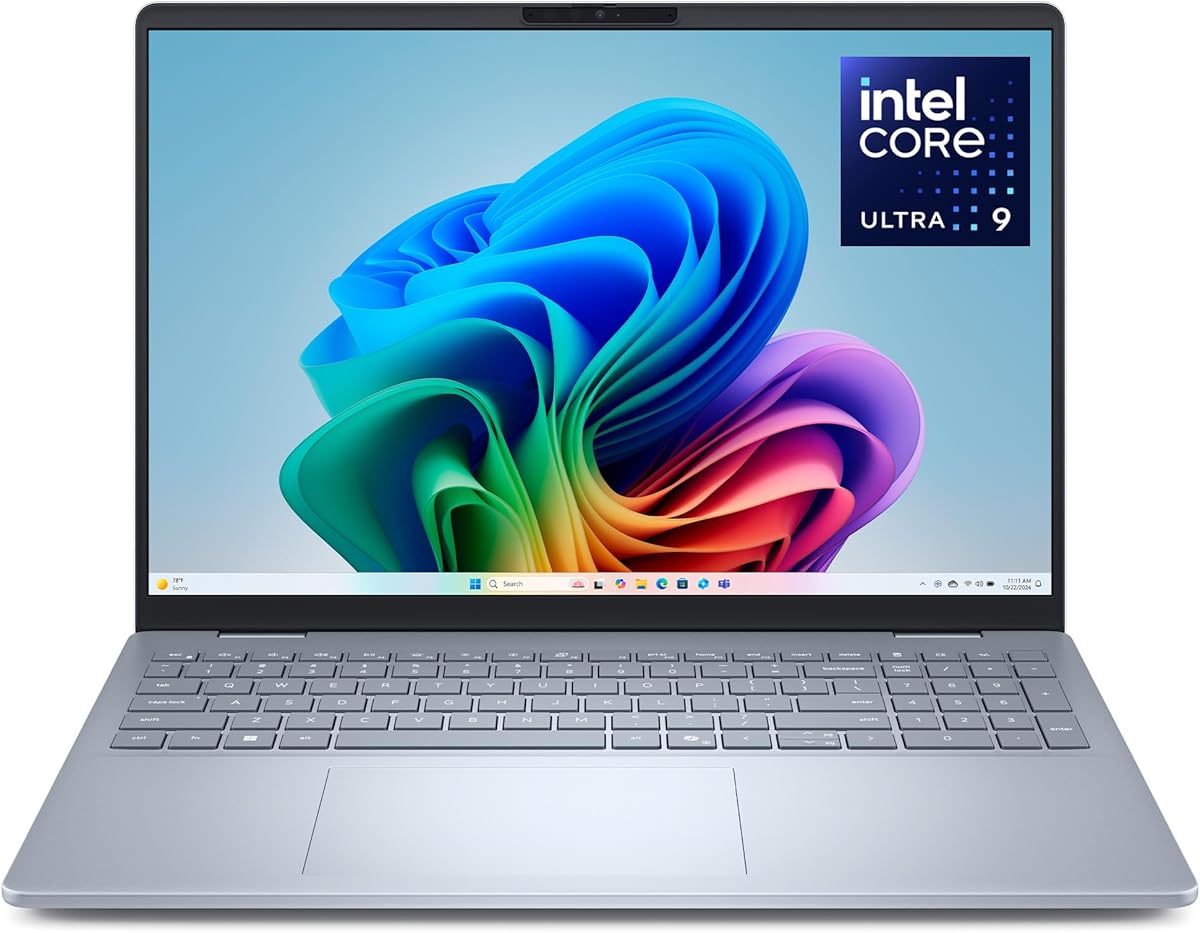
The Dell 16 Plus is the premium choice in this guide, combining an Intel Core Ultra 9 288V processor with 32GB of memory and a large 16:10 display. Its 4.3 rating indicates solid user reception, while the product information emphasizes scalability, efficient AI performance, collaboration, and a premium aluminum design.
We may earn a commission when you buy through this link, at no additional cost to you.
The expansive 16:10 screen is the key creative advantage. Its taller aspect ratio can provide more vertical working area for code, browser previews, design tools, and documents, while still allowing multiple windows to remain open. Dell describes the system as a scalable AI platform, which is relevant for developers using modern productivity features and intelligent code assistance.
The 32GB memory configuration provides ample room for modern development tools, and Dell's support is a meaningful addition. One Year Onsite Service can help resolve covered hardware issues at the user's home, office, or chosen location when remote assistance is insufficient, reducing the inconvenience of carrying the laptop to a service center.
Pick the Dell 16 Plus if you want a premium screen, contemporary processor platform, and generous memory for sophisticated development or creative work. It is particularly attractive to professionals who regularly move between coding, visual design, and collaboration. Buyers should review the final port selection and full configuration details because the supplied listing focuses more on performance, display, and service than on every connector.
The QHD+ 16:10 display gives developers more usable area than a conventional 16:9 panel of similar size. That extra height helps when an editor sits beside a browser preview or when responsive layouts need vertical reference space.
Onsite service can be more convenient than repeated remote troubleshooting for eligible hardware problems. It is a premium support feature that adds convenience, although software troubleshooting and issues outside the limited hardware warranty may follow a different process.
We may earn a commission when you buy through this link, at no additional cost to you.
This HP 17-inch laptop stands out for the combination of a 4.7 rating, 32GB of memory, a 1TB NVMe drive, and a large IPS display. It is one of the most balanced options for developers who want desktop-like screen space and strong multitasking ability without stepping into a premium workstation category.
We may earn a commission when you buy through this link, at no additional cost to you.
The Ryzen 5 7430U is a six-core processor capable of handling coding, browsing, streaming, productivity applications, and everyday business tasks. More importantly for larger development stacks, 32GB of DDR4 memory gives browsers, editors, and local services room to coexist. The 1TB PCIe NVMe storage supports fast bootups and application loading.
Its 17.3-inch Full HD IPS anti-glare panel offers sharp detail and enough area for split-screen development. Wi-Fi 6, Bluetooth 5.4, USB-C, HDMI, multiple USB ports, a numeric keypad, and a Copilot key round out the productivity features. The physical privacy shutter, dual microphones, stereo speakers, lift-hinge keyboard, HP Fast Charge, and claimed battery life up to nine hours improve daily usability.
This is an excellent choice for students, professionals, and remote workers who need ample memory and a big screen. It may be less ideal for frequent travelers because 17-inch laptops trade portability for workspace. For a developer buying mainly for code, browser testing, databases, and collaboration, its balanced specifications make it a particularly compelling choice.
The 32GB memory allocation is the headline feature, giving modern browsers and concurrent development tools more room to operate. It makes the configuration especially useful for students running local databases, preview servers, and multiple open applications.
The lift-hinge keyboard, enlarged touchpad, anti-glare IPS display, and physical camera shutter are practical features for long work sessions. Fast Charge also helps reduce downtime when the battery is low between meetings or classes.
We may earn a commission when you buy through this link, at no additional cost to you.
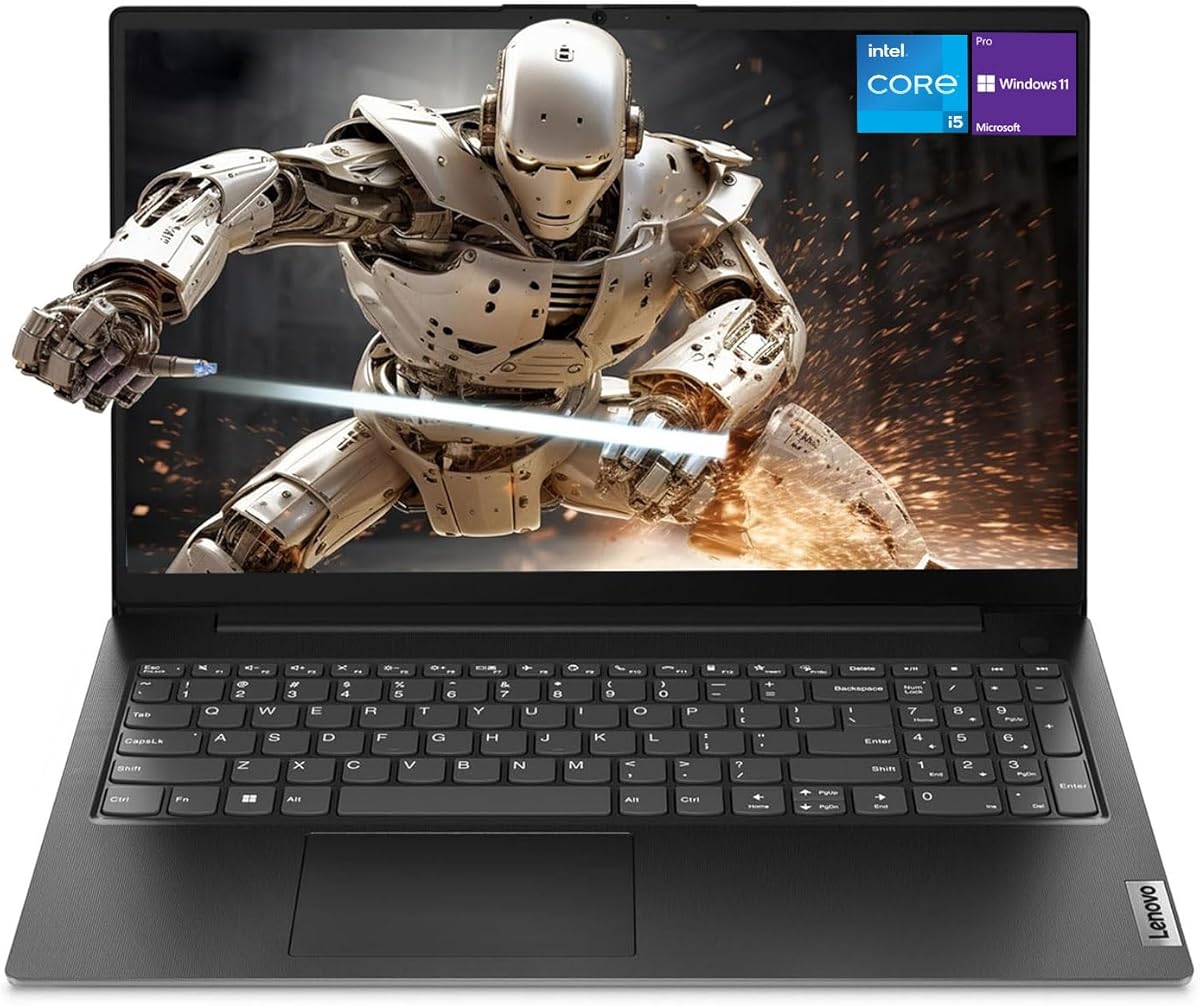
The Lenovo V15 Gen 4 offers a familiar middle ground for web development, combining an Intel Core i5-13420H processor with 16GB of memory, 512GB of SSD storage, and a 15.6-inch Full HD display. Its 4.3 rating suggests broadly satisfactory performance for business, study, and development work.
We may earn a commission when you buy through this link, at no additional cost to you.
The processor provides eight cores and 12 threads with a maximum turbo frequency of 4.6GHz, a useful foundation for code compilation, browser testing, and multitasking. The 15.6-inch form factor is easier to carry than the larger 17-inch alternatives while still offering enough screen space for an editor and a browser preview.
Connectivity includes USB-A, USB-C, HDMI, RJ45 Ethernet, a headphone and microphone combination jack, a webcam, Wi-Fi, and Bluetooth. A dedicated numeric keypad is unusual on a compact laptop and useful for spreadsheet-heavy workflows. Windows 11 Pro adds multitasking layouts and the management features expected in a business notebook.
The principal limitation is the 16GB memory allocation. It should support learning, frontend work, documentation sites, and ordinary full-stack projects, but heavy virtualization or numerous simultaneous services may benefit from more memory. The 512GB drive also requires conscious project organization, especially when dependencies, container images, and media assets accumulate. It remains a sound conventional choice for everyday coding.
The Core i5-13420H provides a useful mix of cores and turbo performance for common development tasks. It works well for a code editor, browser testing, documentation, and lighter local server environments.
RJ45 Ethernet, HDMI, and a mix of USB ports make it straightforward to connect to a wired network, external display, and peripherals. The numeric keypad adds flexibility for developers who also spend time reviewing data tables.
We may earn a commission when you buy through this link, at no additional cost to you.
The ThinkBook 16 Gen 7 is the most complete development laptop in this group, combining a Ryzen 7 7735HS processor, 32GB of DDR5 memory, and 1TB of NVMe storage. Its 4.4 rating and extensive feature set position it as a strong all-round recommendation for programmers, designers, students, and small-business professionals.
We may earn a commission when you buy through this link, at no additional cost to you.
The Ryzen 7 processor can run from 3.20GHz up to 4.75GHz, providing ample performance for professional applications, data processing, content creation, and demanding multitasking. Paired with 32GB of DDR5, it leaves ample memory for browser testing, virtual meetings, and multiple development tools. The fast 1TB drive supports quick access to repositories, assets, and dependencies.
The 16-inch FHD+ IPS display provides a roomy 1920 by 1200 workspace with integrated Radeon 680M graphics. Two USB-C ports, two USB-A ports, HDMI 2.1, RJ-45 Ethernet, and an SD card reader form a strong peripheral selection. The system can expand to three monitors through HDMI and the dual USB-C connections, which is exceptional for a laptop of this class.
A backlit keyboard improves low-light comfort, while the integrated fingerprint reader provides convenient secure login. The Full HD webcam suits online collaboration, and Windows 11 Pro adds familiar management capabilities. Choose this ThinkBook if your workflow includes programming, streaming, conferencing, creative applications, or a multi-monitor desk and you want the benefits of 32GB memory without moving to a premium price tier.
Supporting three external displays turns the laptop into the center of a flexible coding desk. Developers can dedicate screens to code, responsive previews, documentation, and communication while keeping the built-in display available for a mobile-status view.
The Ryzen 7 7735HS, 32GB of DDR5, and 1TB NVMe drive cover the common needs of a modern full-stack developer. The configuration also suits design tools, streaming applications, and collaboration platforms without demanding a separate desktop.
We may earn a commission when you buy through this link, at no additional cost to you.
The AMD Ryzen 5 7520U Lenovo V15 is an efficient, highly rated option for everyday web development. It pairs a 4.7 rating with 16GB of DDR5 memory, 512GB of PCIe NVMe storage, and Windows 11 Pro, giving beginners and regular coding users a capable baseline without a large workstation.
We may earn a commission when you buy through this link, at no additional cost to you.
The Ryzen 5 7520U and Radeon 610M graphics are designed for efficient productivity, while DDR5 and the NVMe drive support responsive application loading and smooth multitasking. The 15.6-inch Full HD anti-glare display reduces reflections and provides a practical size for an editor, browser, and terminal arranged in manageable windows.
The V15 supports two external 4K displays at 60Hz through HDMI and USB-C without a docking station. USB-C also provides data transfer, Power Delivery, and DisplayPort 1.2, while two USB-A ports, HDMI, Ethernet, and an audio jack cover conventional accessories. Wi-Fi 6, Bluetooth 5, and a webcam with a physical privacy shutter make it suitable for remote work and learning.
Choose this model for websites, front-end projects, scripting, coursework, documentation, and general office work. Sixteen gigabytes is sufficient for a focused coding workflow but less generous than 32GB alternatives when running many browser profiles, containers, and virtual machines simultaneously. The 512GB drive is sensible for focused projects, and its performance-oriented memory and connectivity make it a compelling everyday option.
The V15's Ryzen 5 platform is well suited to responsive editing, web browsing, spreadsheets, and video meetings. Fast DDR5 and NVMe storage help keep routine development interactions from feeling sluggish.
Supporting two 4K monitors makes the laptop useful for a more elaborate desktop arrangement. That flexibility is helpful for split-screen coding, browser inspection, and connecting an existing workspace without a dock.
We may earn a commission when you buy through this link, at no additional cost to you.
The Lenovo 2026 business laptop is an accessible option for students and newcomers who need Windows 11 Pro, a Full HD display, and the essentials of web development. Its Intel N150 processor and 8GB of DDR5 memory make it best suited to lightweight coding, website building, and productivity rather than intensive local development.
We may earn a commission when you buy through this link, at no additional cost to you.
The quad-core N150 has burst speeds up to 3.6GHz and is described as dependable for everyday tasks, office applications, multitasking, and web-based work. The inclusion of DDR5 and PCIe NVMe storage improves the baseline efficiency of an entry-level notebook, while the listed storage configuration includes an external drive for additional files.
Its 15.6-inch Full HD anti-glare display is suitable for prolonged document and code work, and the port selection includes USB-C with Power Delivery and DisplayPort, HDMI, USB-A 3.2, and Ethernet. A webcam with a physical privacy shutter, Dolby Audio speakers, and Windows Copilot round out the collaboration features. Windows 11 Pro adds Remote Desktop, encryption, and device-management tools.
This laptop makes sense for learning HTML, CSS, JavaScript, Git, and lightweight framework development while also handling classes, documents, and remote work. It is not the best match for large monorepositories, complex local databases, intensive virtualization, or professional design workloads. Within a lighter learning or office context, however, the 4.6 rating and practical connectivity create a useful package.
The N150 and 8GB memory configuration are sufficient for browser-based development tools, code editors, terminal exercises, and documentation. It gives learners access to the complete development workflow without paying for workstation-class specifications.
Windows 11 Pro, Ethernet, a privacy-shutter webcam, and external display support make the system useful beyond coding exercises. It can function as a compact office computer for coursework, documentation, and collaborative work.
We may earn a commission when you buy through this link, at no additional cost to you.
The Dell 15 Business Touchscreen combines a ten-core Intel Core i7-1355U processor with 32GB of RAM, a 1TB PCIe SSD, and a touch-enabled Full HD display. Its 3.7 rating is the lowest in this group, so potential buyers should consider both the strong specification sheet and the less emphatic user feedback.
We may earn a commission when you buy through this link, at no additional cost to you.
The Core i7-1355U has 10 cores and 12 threads with turbo speeds up to 5.0GHz, making it suitable for demanding multitasking, office workloads, video conferencing, and development applications. The 32GB memory is a major strength for developers running browsers, code editors, containers, and local services at the same time, while the 1TB drive provides ample project space.
The 15.6-inch anti-glare touchscreen supports gestures, scrolling, document annotation, and a more interactive experience than a standard laptop panel. Windows 11 Pro, Copilot, Office 365 for the Web, an FHD webcam with a privacy shutter, a microphone mute button, Wi-Fi 6, Bluetooth, USB-C, and HDMI support daily productivity and communication.
Dell ExpressCharge is another useful feature, with the listing describing a rise from zero to 80 percent in approximately 60 minutes and productivity of up to eight hours. This model is best for developers who value memory, a responsive processor, and touch interaction. The lower rating makes it less compelling as an obvious first choice, but the underlying hardware remains well suited to intensive multitasking.
Thirty-two gigabytes of RAM is the defining development advantage, allowing several applications and browser-heavy workflows to remain open. The Core i7 processor and fast SSD add enough responsiveness for ordinary professional work.
The touchscreen adds an intuitive way to navigate interfaces, sign documents, and scroll through reports. ExpressCharge can be valuable for professionals who need a quick top-up between appointments or classes.
We may earn a commission when you buy through this link, at no additional cost to you.
The Lenovo 15.6 FHD laptop is the most portable option here, weighing 3.42 pounds with a slim 0.70-inch profile. It is designed for developers who need a secondary coding machine, a travel companion, or a lightweight setup for writing, browsing, and light project work rather than intensive local builds.
We may earn a commission when you buy through this link, at no additional cost to you.
Its Intel N150 quad-core processor reaches up to 3.6GHz, while 8GB of LPDDR5-4800 memory supports everyday browsing, document editing, streaming, and light productivity. The 128GB of UFS 2.2 storage offers quick boot and application access, and the bundle includes a 500GB portable external hard drive for additional files and projects.
The 15.6-inch 1920 by 1080 display has an 88 percent screen-to-body ratio and anti-glare coating for extended viewing. Dolby Audio-enhanced stereo speakers support calls and media, while a physical privacy shutter protects the 720p camera when it is not in use. Two USB-A ports, USB-C with Power Delivery and DisplayPort, HDMI, an SD card reader, and a headphone jack provide solid connectivity.
Wi-Fi 6 and Bluetooth 5.2 keep the system connected, and MIL-STD-810H testing supports its durability positioning. This laptop is best for a coding curriculum, lightweight web projects, writing, and travel productivity. Developers should keep the limited internal storage in mind and use the included external drive for larger repositories. It is a useful companion, but not a substitute for a higher-powered development workstation.
The low weight and thin profile make this laptop easier to carry between classes, meetings, and workspaces. A Full HD anti-glare display remains useful for reviewing code and running a basic browser preview on the move.
The bundled external drive offsets the limited internal capacity for many casual users. USB-C, HDMI, USB-A, and an SD card reader provide ways to move files, attach peripherals, and extend the workspace.
We may earn a commission when you buy through this link, at no additional cost to you.
The best development laptop balances CPU speed, memory, fast storage, a readable display, and dependable connectivity. The right balance depends on whether you are learning basic frontend skills, running full-stack applications, working with large repositories, or combining development with design and content creation.
The processor affects compilation speed, responsiveness, multitasking, and the ability to run local services or virtualized environments. A recent Core i5, Core i7, Core 7, Ryzen 5, or Ryzen 7 provides a stronger foundation for sustained development than an entry-level Intel N-series chip. More specialized workloads, including intensive compilation, virtualization, and data processing, benefit further from a Core Ultra 9 or another high-tier processor.
RAM determines how comfortably an editor, browser, terminal, database, and local server can run together. Sixteen gigabytes is a practical minimum for modern web work, while 32GB provides much better headroom for browser testing, multiple services, containers, and professional applications. Memory cannot generally replace faster CPU work, but it prevents the operating system and browser from becoming the bottleneck when many tools are active.
Fast SSD storage shortens boot times, application launches, project loads, and installs of development dependencies. NVMe drives are the preferred choice for modern laptops. Capacity matters because node modules, package caches, container images, virtual machines, design assets, and Git repositories can occupy substantial space. A 512GB drive is adequate for focused work, while 1TB is more comfortable for varied projects and installed developer tools.
Developers routinely divide the screen among an editor, browser preview, terminal, and documentation. A 15.6-inch display is portable and still workable, a 16-inch panel offers a better balance of workspace and mobility, and a 17.3-inch screen provides generous room but weighs more. Resolution and IPS quality also influence text clarity, color work, and comfortable extended viewing, so a sharp anti-glare panel is valuable for long sessions.
A modern USB-C port with DisplayPort and Power Delivery can support a productive external-monitor arrangement, while HDMI and USB-A ports remain important for peripherals. Ethernet is beneficial for stable network access and remote development. Some models support two or three external displays without a dock, which can materially improve workflow by separating code, previews, documentation, and communications.
Windows 11 Pro provides useful administrative and security tools such as Remote Desktop, BitLocker, and device management, while Windows 11 Home is suitable for many individual developers. Office 365 for the Web and Copilot can support documentation, collaboration, and administrative tasks. Before buying, check whether the required IDE, local server, container platform, or design application runs natively on the selected operating system and hardware.
Long coding sessions place greater importance on keyboard quality, trackpad accuracy, display comfort, and webcam quality than casual use may suggest. Full-size keyboards with numeric pads are useful, while lift-hinge designs, backlighting, stereo speakers, microphones, and physical camera shutters can improve daily productivity. Battery claims should also be considered, although real runtime varies with screen brightness, wireless activity, and workload.
A development laptop must still function as a portable computer. Screen size, weight, thickness, and battery life determine how easily it moves between home, office, school, and meetings. Large 17-inch models provide workspace but demand more space in a bag. Premium support can also matter: the Dell 16 Plus includes one year of onsite service, and manufacturer or upgraded-memory warranties should be reviewed carefully.
Begin by installing current browser, code editor, version-control, runtime, and package-manager updates that your project requires. Organize repositories and large dependency folders on the NVMe drive, keep system utilities updated, and use a project-specific environment rather than installing every global package. Configure backups for code, configuration files, and important local databases before beginning substantial work.
Create a clean screen layout for development. Use the built-in display for the editor and documentation, then connect an external monitor for browser testing, responsive previews, or API tools. A single external display reduces the need to alternate between small windows, while multiple displays help when monitoring a frontend, backend logs, and communication tools simultaneously. Use Ethernet for large dependency installs and stable remote sessions when practical.
Protect the machine with regular system updates, cautious browser extensions, reputable security software where appropriate, and enabled account protection. Clean vents, avoid blocking cooling openings, and use a stable surface during long compiles. Keep the battery partially charged when the laptop is continuously plugged in, periodically cycle it if manufacturer guidance recommends it, and back up local development data before major operating-system changes.
Sixteen gigabytes is a practical minimum for modern web development because browsers, editors, terminal tools, and local servers can quickly consume substantial memory. Thirty-two gigabytes is preferable for full-stack projects, containerized development, multiple virtual machines, or heavy browser testing. The storage requirement is less demanding than the memory requirement, so a fast SSD can make a 16GB configuration feel responsive within a focused workflow.
Intel N-series processors are suitable for learning HTML, CSS, JavaScript, Git, lightweight frameworks, documentation work, and browser-based tools. They are less appropriate for intensive compilation, large local projects, virtual machines, and simultaneous backend services. If you expect to move beyond introductory exercises, a Core i5, Core i7, Core 7, Ryzen 5, or Ryzen 7 provides a safer performance margin.
A 15.6-inch laptop prioritizes portability while still providing a usable Full HD workspace. A 16-inch display offers a better compromise between screen area and mobility, while 17.3-inch models are useful for developers who want more built-in workspace and can accept the added bulk. External-monitor support can make a smaller laptop behave like a much larger desk setup.
It can be enough for focused projects, a code editor, an operating system, and selected tools. However, dependencies, container images, virtual machines, media assets, and multiple repositories can fill a 512GB drive quickly. A 1TB drive is more comfortable, and developers with limited internal storage can use an external SSD for selected project folders while keeping operating-system tasks on the internal drive.
Windows 11 Home supports many common programming tools and is adequate for many individual learners and developers. Windows 11 Pro adds functions such as BitLocker, Remote Desktop, and advanced device management that can benefit professional environments and managed business computers. Choose the edition based on your software and administration needs rather than assuming the more capable edition is always necessary.
Yes, and an external monitor can provide more space for an editor and browser preview than the built-in display. Check whether the laptop uses USB-C DisplayPort, full-featured HDMI, or both, and confirm the supported resolution and refresh rate for each output. Several models in this guide support dual external 4K displays, while the ThinkBook 16 G7 supports three-monitor expansion.
Most website development, application coding, documentation, and version-control work does not require a dedicated graphics card. Integrated graphics can handle common code editors, browsers, design applications, and media playback. A stronger GPU becomes more relevant for 3D web graphics, advanced rendering, game development, machine learning workloads, or other specialized creative tasks.
Install only the runtimes, frameworks, and global tools your projects require, and keep project dependencies organized locally. Use a modern browser with limited extensions, an efficient editor, and current version-control software. Additional RAM, a fast NVMe drive, and an external display can improve workflow more noticeably than unnecessary software or visual customization. Back up local repositories and databases regularly.
The Lenovo ThinkBook 16 G7 is the most complete all-around recommendation because it combines a capable Ryzen 7 processor, 32GB of DDR5 memory, 1TB NVMe storage, a large FHD+ IPS display, and excellent multi-monitor support. The HP 17 Inch Ryzen 5 stands out as the best budget-oriented value, particularly for users who prioritize 32GB of memory, a large display, and fast storage.
The Dell 16 Plus is the premium selection for buyers who want an expansive 16:10 display, a Core Ultra 9 platform, 32GB of memory, and onsite service. Prioritize the processor, memory, and storage that match your actual workload, but do not overlook the keyboard, display, ports, and long-term comfort. Lightweight learners may prefer a smaller Lenovo configuration, while experienced full-stack developers should give 32GB and multi-monitor support greater weight.
Product configurations, ratings, and availability can change, and marketplace listings may involve upgraded or resealed systems with separate warranty terms. Before buying, confirm the exact processor, memory, storage, display, operating-system edition, ports, and coverage on the current Amazon listing. Comparing those details against your development stack will lead to a more dependable long-term choice.