GE Relax LED
4.6Editor score
Soft white 800-lumen output
Dimmable for adjustable comfort
Enhanced color and contrast
Compare the best light bulbs for eye strain, including brightness, color temperature, dimming, blue-light reduction, and flicker-free performance.
Light bulbs for eye strain should make reading, working, and relaxing feel more comfortable rather than simply adding brightness. The right choice depends on glare, flicker, color rendering, dimming performance, and whether you need daylight clarity or a softer evening atmosphere.
This guide compares ten LED and amber light bulbs using the specifications and product information supplied for each model. It covers standard A19 and A21 bulbs, dimmable fixtures, blue-light-reducing options, and lower-output amber bulbs designed for bedrooms, nurseries, and nighttime reading.
Each review highlights the product's strongest eye-comfort features, practical trade-offs, and ideal placement in the home. Product selections and specifications can change over time, so shoppers should verify compatibility and current availability before purchasing.
4.6Editor score
4.5Editor score

4.5Editor score
This side-by-side comparison organizes the ten bulbs by light output, color temperature, dimming, blue-light reduction, and intended room use, helping readers compare general-purpose eye-comfort lighting with amber sleep bulbs.


The Sylvania Reduced Eye Strain A19 LED is a well-rounded general-purpose bulb for anyone building a comfortable home lighting setup. It carries a 4.4 rating and combines 800 lumens of soft white light with a frosted A19 design, fully dimmable operation, and a stated focus on glare- and flicker-free illumination.
We may earn a commission when you buy through this link, at no additional cost to you.
Its 2700K color temperature produces a warm atmosphere suited to living rooms, dining areas, and bedside lighting. The 90 CRI specification supports more accurate color definition than many basic LEDs, while dimming gives users an easy way to reduce brightness as conditions change. Instant-on behavior also avoids the warm-up delay associated with some older technologies.
The main limitation is that 2700K is intentionally warm and may not provide the crisp visual contrast some readers prefer during demanding daytime work. Buyers using a wall dimmer should also confirm compatibility. Even with those considerations, the combination of soft output, dimmability, 90 CRI, and a four-bulb pack makes this a flexible choice for many rooms.
This is the recommendation for shoppers who want one straightforward bulb that can handle everyday reading, relaxing, and general illumination. It is especially useful in lamps where a softer glow and adjustable brightness are more important than the cooler appearance associated with task lighting.
The 2700K soft-white output creates a welcoming tone for evening spaces, while the 800-lumen output is still useful for reading and routine household tasks. Full dimming makes it possible to lower the light when sharper brightness is unnecessary.
The frosted construction and stated glare- and flicker-free performance are the product's most important eye-comfort features. Its 90 CRI also helps colors appear more vivid and natural.
We may earn a commission when you buy through this link, at no additional cost to you.
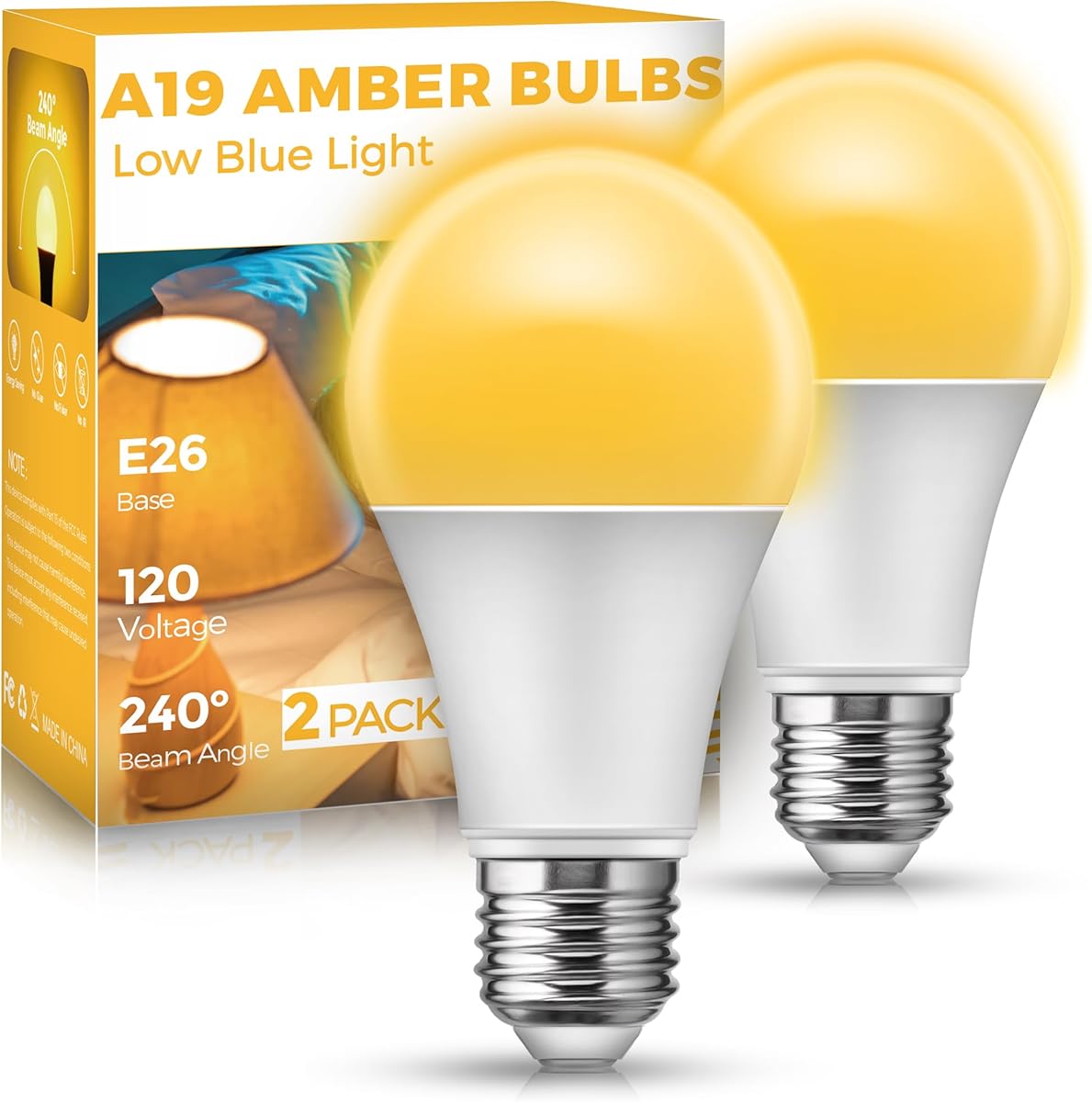
The JandCase Sleep Light Bulb is designed primarily for evening use, when a softer, low-blue-light environment is more desirable than conventional daylight illumination. It has a 4.5 rating and combines a 1900K color temperature with a stated 99.9% reduction in blue spectrum light.
We may earn a commission when you buy through this link, at no additional cost to you.
Despite its sleep-focused positioning, the bulb produces 750 lumens, enough for visible bedside, reading, nursery, or ambient lighting. The product information specifically describes the output as soft, with no glare or flicker, making it a practical option for people who want more illumination than a tiny night light without exposing themselves to a cooler white beam.
Its amber character is both its strength and its limitation. It creates a relaxing atmosphere and is better suited to winding down than to detailed daytime work, while households seeking bright, neutral task lighting should look elsewhere. The E26 base is broadly useful, but existing fixture shape and socket requirements should still be confirmed.
For bedrooms, nurseries, reading nooks, and evening lamps, this is a focused solution. It is especially appealing to readers who are more concerned about reducing blue-light exposure at night than maximizing brightness or color temperature flexibility.
The very warm 1900K spectrum creates the gentle, amber atmosphere associated with evening relaxation. The stated blue-light reduction supports the bulb's intended use as a sleep-oriented alternative to bright white lamps.
At 750 lumens, the bulb offers enough output for bedside navigation and casual reading. Its standard E26 socket makes it easier to use in common table lamps and fixtures without specialized hardware.
We may earn a commission when you buy through this link, at no additional cost to you.
The Sylvania Reduced Eye Strain A21 LED stands out as the brightest model in this guide, delivering 1600 lumens from 15 watts. Its 4.5 rating, 5000K daylight color, and 90 CRI make it a strong candidate for home offices, craft areas, kitchens, and other spaces where crisp visibility matters.
We may earn a commission when you buy through this link, at no additional cost to you.
The eye-strain positioning is tied to glare- and flicker-free illumination, while the frosted A21 form helps soften the appearance of the light source. Full dimming is valuable because it allows a bright task bulb to operate at a more relaxed level when needed rather than being limited to one fixed intensity.
The tradeoff is that a 1600-lumen daylight source can feel intense, particularly in the evening, and the A21 shape is larger than the standard A19. Its performance also depends on using it in a fixture that accommodates both the bulb's dimensions and the electrical load of a 15-watt LED. For larger, brighter rooms, however, the output is the clear advantage.
Choose this option when you want substantial coverage and daylight clarity but still value dimming. It is less appropriate for a small bedside fixture or anyone who consistently wants a soft, warm glow throughout the day.
The 1600-lumen output provides ample illumination for larger rooms and detailed household activities. Its 5000K color temperature supports a crisp, energetic environment suited to daytime use.
Dimmability makes the bulb easier to live with than a fixed-output fixture. Users can dial down the daylight intensity during quieter periods without replacing the bulb with a different color temperature.
We may earn a commission when you buy through this link, at no additional cost to you.
The eight-pack version of the SYLVANIA Reduced Eye Strain A19 is primarily attractive to households that want to replace several old incandescent bulbs at once. It holds a 4.3 rating and supplies 800 lumens per bulb with a warm 2700K color temperature.
We may earn a commission when you buy through this link, at no additional cost to you.
The 9-watt LED output is a familiar 60-watt replacement, while instant-on performance avoids waiting for the light to reach full brightness. The product is also described as mercury- and lead-free and as producing no harmful ultraviolet or infrared radiation, making it a conventional upgrade for living rooms, dining rooms, and nightstands.
Its 2700K output is intentionally relaxed rather than task-focused, and the product information does not emphasize the same glare- and flicker-free claims found in the newer Reduced Eye Strain line. That does not negate its practical strengths, but shoppers with a specific sensitivity to flicker may want a more explicitly eye-comfort model.
This bulb is best for broad household replacement, especially when multiple rooms or fixtures need a consistent warm-white LED. Buyers should assess the 11,000-hour lifespan and confirm that the listed features meet their individual comfort priorities.
Eight bulbs in one pack simplify upgrades across several fixtures. That makes the product practical for new installations, renovations, or replacing a group of aging incandescent bulbs.
The 2700K soft-white output suits relaxed spaces such as living and dining rooms. Its 800 lumens provide a conventional level of brightness for everyday needs.
We may earn a commission when you buy through this link, at no additional cost to you.
The Philips Ultra Definition A19 differentiates itself with a stated CRI of 95, making it especially interesting for people who care about natural-looking colors. Its 3.7 rating is the lowest listed here, but the product also carries recognized eye-comfort positioning, including a flicker-free claim and compliance with Philips EyeComfort criteria.
We may earn a commission when you buy through this link, at no additional cost to you.
The bulb provides 800 lumens at 8 watts with a 2700K soft-white color. Dimmability allows the output to move from practical task brightness toward a warmer, more relaxed level, while the clear lens creates a crisp appearance that may be desirable in visible fixtures.
The lower rating means the overall customer experience has not been as consistently favorable as the leading products in this list. It is also worth considering whether a clear bulb is visually preferable to the frosted alternatives. The high CRI and dimming remain meaningful advantages for display-heavy, decorative, or detailed household lighting.
This is a good pick for readers who put color accuracy and clean dimming behavior near the top of their list. It may be less compelling for someone prioritizing a large pack, amber evening light, or the highest customer rating.
The CRI95 specification is the defining feature. It helps colors appear more faithful, which can make artwork, food, décor, and skin tones appear more natural under indoor lighting.
The product is explicitly described as flicker-free and dimmable. Together, these attributes give users two ways to make the light feel less harsh: improve the quality of the source and lower the output.
We may earn a commission when you buy through this link, at no additional cost to you.
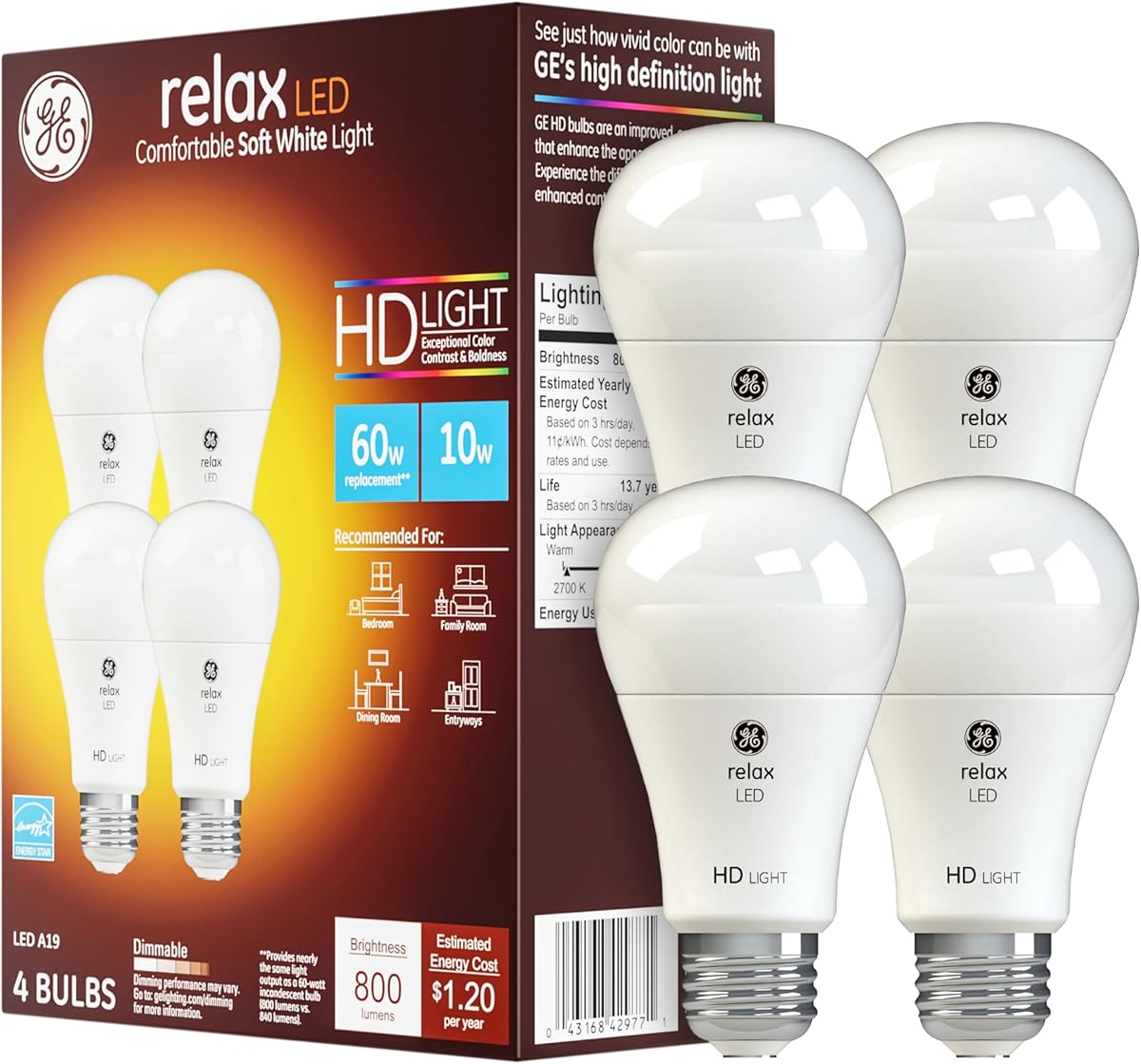
The GE Relax LED A19 is an easy recommendation for readers seeking a popular, well-reviewed soft-white bulb. Its 4.6 rating is the highest customer rating among the ten products, and its feature set emphasizes enhanced color, contrast, and comfortable illumination.
We may earn a commission when you buy through this link, at no additional cost to you.
Each bulb delivers 800 lumens while using 10 watts, making it a 60-watt replacement in the traditional sense. It is dimmable with most dimmer switches, a useful feature in living rooms, family rooms, dining rooms, and bedrooms where changing the light level improves flexibility.
The 10-watt draw is slightly higher than the 8-watt output of some alternatives, and the soft-white color is not as bright or crisp as a daylight option. The product's strength is its balanced feature set: the strong rating, enhanced color presentation, dimming, and long rated life all make it a low-friction choice.
Choose the GE Relax when a cozy atmosphere, solid customer feedback, and straightforward dimmable LED performance are the priorities. It is particularly suitable for households replacing several 60-watt incandescent bulbs without wanting a complicated specialty product.
A 4.6 rating gives this model a favorable customer history within the group. Its soft-white output and dimming controls fit everyday routines rather than a single specialized use.
GE describes these bulbs as delivering bolder color and stronger contrast than standard LEDs. That can make a noticeable difference in decorated rooms, artwork, and everyday objects.
We may earn a commission when you buy through this link, at no additional cost to you.
The Amber Sleep Light Bulbs 1800K is built for low-intensity nighttime illumination rather than general room lighting. Its 4.5 rating, 300-lumen output, and 3-watt power draw make it a gentle option for bedside tables, nurseries, and low-wattage night-light situations.
We may earn a commission when you buy through this link, at no additional cost to you.
The bulb's 1800K amber spectrum and stated 99.99% blue-light blocking are its central selling points. The product information also says it operates without flicker, glare, UV light, or blue-light stimulation, making it attractive for late-night reading and children’s rooms.
The main trade-off is brightness. At 300 lumens, it cannot replace a main ceiling fixture or support most detailed daytime work, and it is non-dimmable. Buyers also need to note the A15 shape, E26 base, and stated dimensions before ordering.
This is a targeted solution for people who want a quiet, warm glow without a bright white beam. It works best in a dedicated night-light or bedside fixture, where its low output is an advantage rather than a limitation.
The 300-lumen output is deliberately restrained, reducing the abrupt brightness that can accompany a regular ceiling light at bedtime. Its warm amber color supports a calmer atmosphere.
This is an A15-style bulb with an E26 base, and the supplied information gives exact dimensions. Checking the fixture and lamp shade prevents an avoidable fit issue.
We may earn a commission when you buy through this link, at no additional cost to you.
The Neporal Amber Sleep Light Bulbs offer a middle ground between a conventional task bulb and a small night light. They produce 800 lumens in a 1800K amber spectrum, retain a 4.5 rating, and come in a four-bulb pack for bedrooms or nurseries.
We may earn a commission when you buy through this link, at no additional cost to you.
The product information states that the bulbs block 99.96% of blue spectrum light and describe the warm orange glow as relaxing in the evening. It also highlights flicker-free, glare-free operation and CRI above 80, which helps the bulbs provide useful visibility without the cooler tone of conventional white LEDs.
Because the output is fixed and the color is strongly amber, this set is not the right choice for daytime color-critical tasks. It is also different from the dimmable amber options in this guide. Its strengths are dedicated evening reading, bedside lighting, nursery lighting, and creating a visibly warm environment.
For a household seeking bright enough amber light to read comfortably in bed, this is one of the most practical selections. It is especially useful when the goal is to reduce evening blue-light exposure while retaining more light than a 300-lumen night-light bulb.
The 800-lumen output gives the bulbs more capability than a small night light. This makes them suitable for bedside reading and other evening activities that require more than a faint glow.
The 1800K orange finish creates a distinctly sunset-like atmosphere. The stated blue-light blocking and absence of flicker or glare reinforce the product's eye-comfort positioning.
We may earn a commission when you buy through this link, at no additional cost to you.
The Maelsrlg Sleep Light Bulb combines one of the warmest color temperatures in the guide with useful dimming control. It has a 4.4 rating, a 1600K amber output, and 710 lumens from 8 watts, making it a flexible evening-lighting option.
We may earn a commission when you buy through this link, at no additional cost to you.
Its dimmable range is listed from 100% down to 10%, allowing users to move between casual reading and a low glow without changing fixtures. The product is also described as flicker-free with soft illumination, directly addressing common visual-comfort concerns in reading and bedside environments.
Because the minimum is 10% rather than a complete off position, shoppers who need true blackout at the switch should account for that. The very warm 1600K color also makes the bulb unsuitable for neutral daytime work, and it will visibly change the mood of a room.
This bulb is a good fit for readers who want a sleep-oriented light with more control than a fixed amber lamp. It is especially appropriate in a bedroom, nursery, hallway, or reading fixture where low evening output and a dimmer are both valuable.
The 10% to 100% dimming range gives the bulb a broader comfort advantage than a fixed-output amber bulb. It can support both active reading and a low nighttime glow.
The standard A19 form and E26 base make this a familiar option for common table lamps and fixtures. The four-bulb pack is useful for equipping several sleeping or reading areas at once.
We may earn a commission when you buy through this link, at no additional cost to you.
The Amber Sleep Light Bulb Dimmable is the lowest-output model here, but that limitation is central to its purpose. It uses just 1.5 watts, is equivalent to a 15-watt incandescent bulb, and carries a 4.5 rating for shoppers seeking an extremely subdued night light.
We may earn a commission when you buy through this link, at no additional cost to you.
The most notable feature is its claimed 0% to 100% dimming range. That allows the light to disappear completely when the desired level is off, offering more control than many dimmable bulbs that retain a visible minimum output. The 1800K amber light is also described as 99.9% free of blue spectrum light.
This is not a bulb for illuminating a room or handling desk work. Its output is best suited to bedside navigation, nursery feeding, a children's reading lamp, or a quiet lounge area. Compatibility with most LED dimmers and its E26/E27 base help broaden its usefulness, though the A15 shape should be checked.
Choose this option when minimizing both nighttime brightness and energy use is the goal. For brighter bedside reading, the Neporal or Maelsrlg alternatives offer more light, while this model wins on fine dimming control and exceptionally low consumption.
The stated ability to dim to zero provides a more complete nighttime experience. It can remain installed while disappearing completely when a bright source is no longer wanted.
At 1.5 watts, the bulb is designed for long periods of intermittent nighttime use. Its efficiency also suits users who want a small light in a child's room or bedside lamp without operating a full-output fixture.
We may earn a commission when you buy through this link, at no additional cost to you.
Comfort depends on the entire lighting setup, not a single bulb specification. Consider brightness, spectrum, dimming, glare, base compatibility, and the room's time-of-day use before choosing a replacement.
Lumens describe the total light a bulb produces, while the room size and fixture determine how much of that output reaches your eyes. A standard 800-lumen A19 is often useful for a single table lamp or medium-size room, while the 1600-lumen A21 provides stronger coverage for larger spaces or task areas. Eye comfort does not automatically mean choosing the brightest option available.
Choose output that matches the fixture and activity. A bedroom reader may prefer 300 to 750 lumens at low settings, whereas a kitchen work area may need closer to 800 or 1600 lumens.
Lower Kelvin values create warmer, more amber light, while higher values provide cooler daylight illumination. The 1800K and 1900K bulbs in this guide are suited to winding down, while 2700K soft white works well in many living spaces and 5000K daylight supports bright daytime tasks.
Match the color temperature to the room's function. Warm light is generally more relaxing in the evening, while cooler light can improve visibility and create a more alert atmosphere during the day.
Dimmability gives you a powerful eye-comfort control: reduce brightness when a task ends or the environment changes. Products range from full dimming to a stated low range of 10% or a complete 0%, and some amber bulbs are not dimmable at all.
Check the existing dimmer switch and bulb compatibility before installation. More dimming control is useful only when the fixture and dimmer support the selected bulb.
Flicker can create an uncomfortable sensation even when a bulb seems bright enough on paper. Glare similarly becomes more noticeable when a clear bulb or bright source sits directly within the field of vision. Products with stated flicker-free or glare-reduced performance can help, but a frosted finish and proper positioning are also important.
Prefer products that explicitly address both source quality and diffusion. Avoid looking directly into a visible LED when a softer shade or indirect placement can provide the same useful illumination.
Amber bulbs reduce the cooler blue portion of the spectrum and are intended for evening environments. This is different from ordinary warm-white LEDs, which may still include some blue light. If eye discomfort is mainly connected to late-night screen use and overhead lighting, an amber option may be particularly relevant.
Choose blue-light-reducing bulbs for bedtime and nurseries, not as a substitute for balanced daytime illumination. Confirm the claimed reduction and color temperature, and consider dimming for additional control.
The color rendering index indicates how faithfully a light source displays object colors. A CRI of 90 or 95, as offered by some of the general-purpose bulbs here, can make décor, artwork, food, and skin tones appear more natural. Lower CRI values remain perfectly usable for many households but may look less vibrant.
Prioritize a high CRI when color accuracy matters. For simple ambient lighting, compatibility, dimming, and glare reduction may be more influential than the difference between two otherwise similar CRI ratings.
A19 is the familiar standard shape, A21 is larger, and A15 is a smaller format often found in compact and decorative fixtures. Base type is equally important: E26 is the common North American medium base, while E27 appears in the compatibility information for some amber products.
Measure or identify the existing bulb before ordering. Also check whether a shade conceals the bulb, since a clear bulb may be visible in an exposed fixture.
A four-bulb pack is convenient for equipping a primary room or several bedside lamps, while an eight-bulb pack can cover a larger home. A single specialty bulb makes more sense when replacing a night light in one location. Pack quantity does not change bulb quality, but it affects convenience and replacement planning.
Count the fixtures you intend to update before selecting a pack. Also consider whether different rooms need warm, daylight, or dimmable light instead of using one type throughout the home.
Begin by matching each bulb to its fixture, confirming wattage limits, socket type, shape, and dimmer compatibility. Turn off the power before installation, screw the bulb in without forcing it, and restore power only after the connection is secure. For a new eye-comfort setup, replace one lamp at a time so you can evaluate the new light in familiar surroundings.
Position your main reading light beside or slightly behind the page rather than directly in the line of sight. Use a shade or frosted bulb to soften the source, lower the brightness when possible, and reserve brighter daylight bulbs for daytime tasks. Amber bulbs work best at low output and in the final hours before sleep, while dimmable bulbs provide the most flexible transition.
Dust bulbs and fixtures periodically, and avoid switching a bulb on and off for very brief intervals when a longer operating period is practical. Replace a bulb if it flickers inconsistently, shows discoloration, or no longer performs as expected. For dimmable models, use a compatible LED dimmer and consult the fixture or switch instructions if the bulb does not dim smoothly.
The best light bulb for eye strain depends on the space and the time of day. A dimmable, low-glare LED with a comfortable color temperature is versatile for general use, while amber bulbs are better for bedtime and nurseries. Choose enough lumens for the task without making the lamp brighter than necessary.
Amber bulbs can be more comfortable in the evening because they emit less blue spectrum light and create a warmer atmosphere. They are especially useful near bedtime, but their strong orange appearance makes them less appropriate for daytime color-critical work. General-purpose soft-white LEDs are more versatile.
Yes, dimming can help by lowering brightness and reducing the contrast between the light source and the surrounding room. It is especially helpful in living rooms and reading areas where full output is unnecessary. For best results, use a bulb and dimmer that are designed to work together.
Reading light should be bright enough to make the page clear without glaring into your eyes, and the right level depends on the fixture, shade, and distance. The products here range from a subtle 300 lumens to 1600 lumens, with 710 and 800 lumens offering versatile middle-ground output for many lamps.
Frosted bulbs diffuse light and can make a visible source feel softer, while clear bulbs may provide a crisper appearance and stronger sparkle. Either can be comfortable when positioned correctly and used with a suitable shade. The Philips Ultra Definition model in this guide is clear, whereas several Sylvania options are frosted.
Lighting may reduce glare and visual discomfort, but a bulb cannot address every cause of headaches. Evening amber lighting can complement a screen-use routine by reducing cool light exposure, while balanced daytime lighting and dimmable control make the room easier on the eyes. Persistent headaches should be discussed with a qualified healthcare professional.
A neutral-to-cool bulb such as the included 5000K daylight option can support visibility and alertness during daytime work. Color preference and room brightness also matter, so dimming is valuable. For evening use, a warm 2700K bulb may be easier on the eyes as the day winds down.
Check the dimmer's label for LED compatibility and consult the bulb manufacturer's guidance. A bulb may illuminate but flicker, buzz, or fail to reach its lowest setting when used with an incompatible switch. Replacing the switch or choosing a non-dimmable bulb can resolve some installation issues.
The strongest all-around option is the Sylvania Reduced Eye Strain A19 for its combination of 800 lumens, 2700K soft white light, 90 CRI, and full dimming. The GE Relax A19 stands out for its strong customer rating and straightforward general-purpose comfort, while the Sylvania A21 offers the highest output for brighter daytime spaces.
Prioritize the factors that match your routine: glare and flicker control for screen-heavy rooms, dimming for flexibility, lower output for bedtime, and amber color for evening environments. Matching the base and bulb shape to the fixture is just as important as selecting a comfortable spectrum, and no single bulb must serve every room.
Before ordering, confirm the fixture's wattage limit, dimmer type, socket, and physical space. Product details, ratings, and availability can change, so shoppers should review the current listing and compare current options before making a final purchase.