
HP 15.6-inch FHD Touchscreen Laptop
4.0Editor score
32GB multitasking memory
Fast 1TB NVMe storage
Responsive Full HD touchscreen
A laptop for day trading must react quickly, display charts clearly, and remain dependable through long sessions of research, order placement, and market monitoring. Screen quality, processor capability, memory, storage, and network performance all influence the experience, while portability matters when trading away from a fixed desk.
This guide compares ten laptops using the supplied specifications, ratings, displays, processors, memory, storage, connectivity, and intended uses. It covers affordable everyday models, business-oriented systems, and a high-performance ROG gaming machine to help traders identify the compromises and capabilities that matter most.
The list highlights the HP 17-inch business laptop as the strongest all-around option, the HP touchscreen with 32GB RAM as a well-equipped multitasker, and the ASUS ROG Strix G16 as the premium performance choice. Product configurations and prices can change, so verify the current listing and specifications before buying.
4.0Editor score

4.5Editor score

4.4Editor score
As an Amazon Associate we earn from qualifying purchases.
The comparison below highlights display size, processor class, memory, storage, and key trading-relevant features across all ten laptops, from compact everyday systems to a high-performance gaming model.



This HP 17-inch business laptop combines a spacious Full HD display, a Ryzen 5 processor, 16GB of RAM, and a 512GB SSD in a design aimed at productivity. Its 4.5 rating reflects a strong general-purpose package, while the large screen and numeric keypad make it particularly practical for traders who keep charts, news, watchlists, and order windows visible at the same time.
We may earn a commission when you buy through this link, at no additional cost to you.
The anti-glare 17.3-inch panel is one of its most useful day-trading traits. A matte surface can reduce distracting reflections in a bright room, while the extra screen area gives a chart-heavy workspace more breathing room than a compact 14-inch display. The Ryzen 5 CPU and 16GB of memory provide a sensible foundation for a browser with many tabs, a charting platform, a communications app, and routine office tasks running together.
Its main compromise is the balance between screen size and mobility. A 17.3-inch laptop is less convenient in cafés, airports, and crowded work areas, and 512GB may eventually feel limited if a user stores large historical datasets, trading-platform files, or extensive media. These are reasonable constraints for a desk-oriented setup, though, particularly compared with the more premium high-performance alternative.
This is the best overall laptop for day trading for users who want a dedicated screen without paying for a gaming-class machine. It should suit active traders, students learning to trade, and professionals who want a large workspace for research. Verify that the listed Windows 11 and Office 365 for the Web setup meets your application and software-account requirements before purchase.
The 17.3-inch Full HD display gives traders room to arrange a main chart, secondary chart, watchlist, news feed, and order ticket without reducing every pane to a tiny rectangle. The anti-glare finish is also practical for traders who work in offices or at home under varied lighting.
The full-size keyboard and dedicated 10-key numeric pad are useful for portfolio calculations and rapid data entry. Windows 11, built-in Copilot functions, and Office 365 for the Web add general productivity tools without distracting from the core trading workflow.
We may earn a commission when you buy through this link, at no additional cost to you.
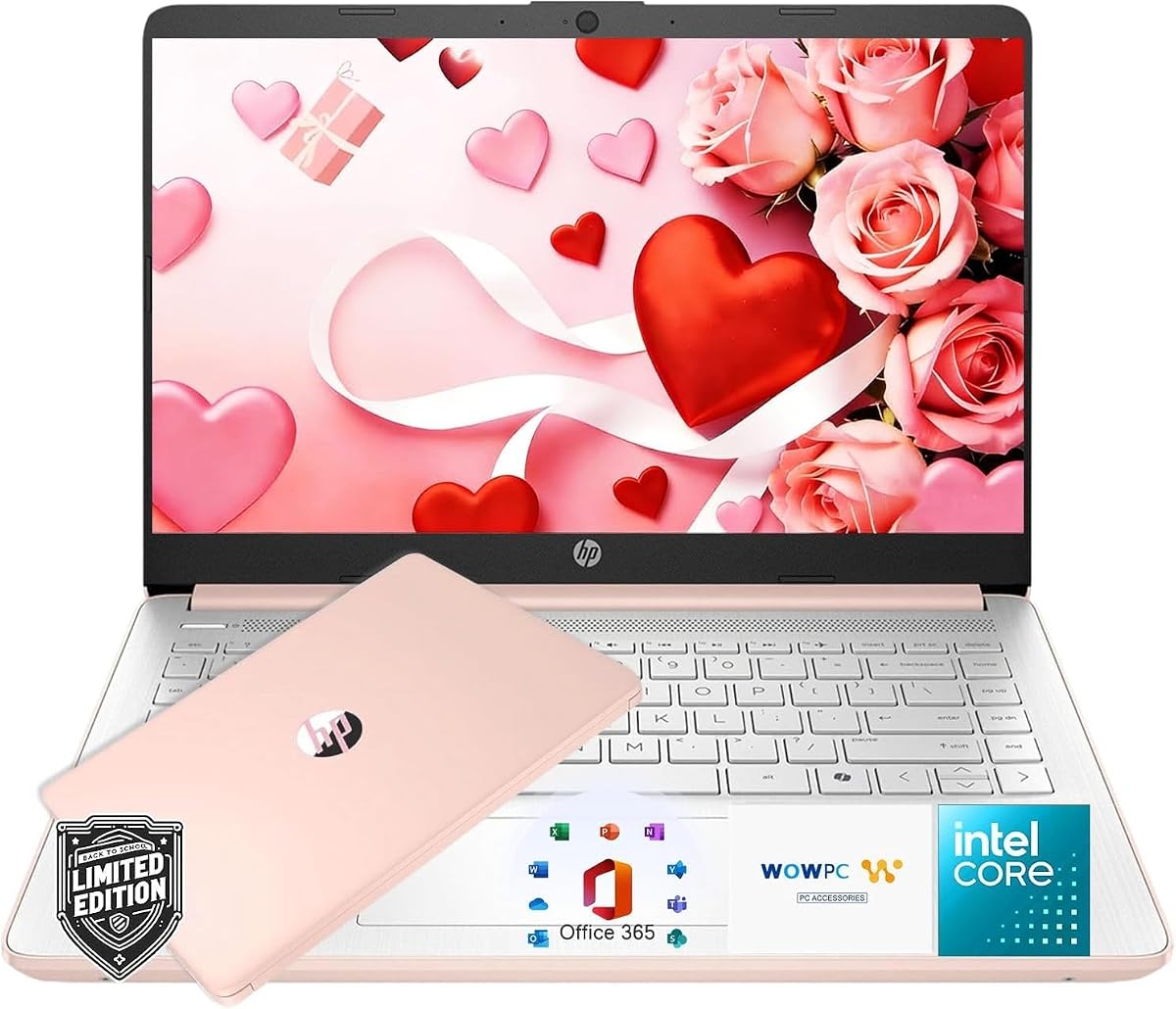
The HP 15.6-inch FHD Touchscreen is an unusually well-equipped configuration for a trading laptop, pairing 32GB of RAM with a 1TB NVMe SSD and an AMD Ryzen 7 7730U processor. Its 4.0 rating is respectable rather than exceptional, but the supplied specifications make it compelling for users who keep numerous charts, browser tabs, research windows, and communication tools open at once.
We may earn a commission when you buy through this link, at no additional cost to you.
The processor's eight cores and 16 threads are designed for demanding multitasking, while the generous memory capacity reduces the likelihood of memory pressure when a trading platform, spreadsheet, video meeting, and research browser are active together. The 1TB drive also provides more room for chart templates, downloaded files, and application data without forcing an immediate storage upgrade.
A Full HD IPS touchscreen adds flexibility that many trading laptops do not offer. The listed wide viewing angles can make it easier to share a screen with another person or interact with a touch-oriented interface, although most chart platforms still work best with a mouse and keyboard. Battery-life figures are workload-dependent, so traders should not assume the advertised maximum will persist under continuous chart and network use.
This laptop best suits a budget-conscious trader who values memory and storage over a gaming-grade display or dedicated graphics. The port lineup—USB-C, two USB-A ports, HDMI 1.4, and a headphone and microphone combination jack—also makes it easier to connect external monitors and trading peripherals. It is a strong recommendation for long-term ownership because 32GB of RAM and 1TB of storage provide useful headroom.
Thirty-two gigabytes of RAM is the standout feature. It allows traders to preserve a memory-heavy setup with many tabs and programs, reducing the need to close research resources simply to preserve responsiveness.
The 1TB NVMe SSD gives local storage a performance advantage over slower alternatives, while USB-C and HDMI connectivity make it straightforward to add a larger trading monitor. Multiple USB-A ports can support a mouse, backup drive, and other peripherals.
We may earn a commission when you buy through this link, at no additional cost to you.
The Aurant 15.6-inch laptop combines an AMD Ryzen R5 processor, 8GB of RAM, and a 128GB SSD in a portable Windows 11 Home design. Its supplied 5.0 rating is the highest among the products in this guide, although the modest memory and storage configuration should be considered alongside that positive customer feedback.
We may earn a commission when you buy through this link, at no additional cost to you.
The Ryzen R5 is described as an eight-thread, four-core processor with a 2.00GHz base frequency and up to 3.60GHz boost speed. That is sufficient for charting, browser-based research, spreadsheets, and messaging. The included backlit full-size keyboard and independent numeric keypad are especially useful for traders who often work in dim environments or enter numerical data quickly.
Its 15.6-inch high-definition display is the main weakness for intensive chart analysis because it offers fewer pixels than the Full HD alternatives in this roundup. The 128GB SSD also leaves relatively little room for a growing collection of trading files. Users with substantial data requirements would need to manage storage carefully or use cloud and external storage solutions.
Despite those limitations, the 1.6-kilogram weight, 5G Wi-Fi, Bluetooth 4.2, and broad port selection make this a practical mobile option. It is best for a beginner, a lightweight charting setup, or a trader who values a numeric keypad and portability more than a high-resolution display. The fingerprint unlock also adds a practical layer of access security.
At 1.6 kilograms, this laptop is easier to carry than larger business systems. The 15.6-inch screen still provides a useful workspace, making it a middle ground between a compact netbook and a full-sized desk replacement.
Two USB 3.0 ports, HDMI, a 3.5mm audio jack, and a microSD slot cover many trading needs. A user can connect a mouse and external monitor while retaining access to removable storage and audio equipment.
We may earn a commission when you buy through this link, at no additional cost to you.
The ASUS ROG Strix G16 brings desktop-inspired performance to a large-screen laptop, with an Intel Core i7 14650HX processor, NVIDIA GeForce RTX 5060 graphics, 16GB of DDR5 memory, and a 1TB PCIe Gen 4 SSD. Its 4.4 rating and 16-inch FHD+ display make it the premium selection here for traders who want fast graphics, a smooth high-refresh screen, and substantial processing headroom.
We may earn a commission when you buy through this link, at no additional cost to you.
The 165Hz 3ms display is the standout for market watching. A higher refresh rate can make scrolling through news, zooming across charts, and switching between windows feel more responsive than on a standard 60Hz panel. The 16:10 aspect ratio also provides additional vertical space, which is valuable when arranging a chart above a watchlist or order panel.
This is much more hardware than a typical chart viewer requires, and that brings trade-offs. A gaming-style chassis may be larger and less discreet than a business laptop, while the RTX 5060 and i7 processor can create more heat and consume more power. The ROG cooling system, including an end-to-end vapor chamber, tri-fan design, and Conductonaut extreme liquid metal, is intended to manage sustained performance.
The Strix G16 is best for traders who also perform demanding creative work, run visualization-heavy tasks, or simply want a fast machine with a high-refresh display. Stealth Mode can turn off the RGB lighting for a more professional appearance. For basic chart placement and order entry, less expensive models are sufficient, but this configuration delivers the strongest performance-oriented package in the list.
The 165Hz panel makes fast navigation and chart zooming feel more immediate. Its FHD+ resolution and 16:10 ratio create a useful desktop area for keeping charts, watchlists, and order-entry tools visible without relying exclusively on an external monitor.
The Core i7, RTX 5060, DDR5 memory, and PCIe Gen 4 storage provide ample resources for heavy multitasking. Dedicated graphics can also benefit charting programs, video review, and other visually demanding workflows beyond ordinary text-based trading tools.
We may earn a commission when you buy through this link, at no additional cost to you.
The HP OmniBook 3 offers a large 17.3-inch Full HD IPS display, AMD Ryzen 3 30 processing, 8GB of LPDDR5 memory, and a 512GB NVMe SSD. With a 4.5 rating, it is a strong option for traders who prefer a big workspace and long advertised battery life without moving into the premium gaming-laptop class.
We may earn a commission when you buy through this link, at no additional cost to you.
Its 178-degree wide viewing angles make the large panel practical for shared analysis or a multi-screen desk. Radeon 610M integrated graphics should support standard business and charting applications, while NVMe storage provides quick access to locally stored data. Eight gigabytes of memory is adequate for a focused setup, though intensive browser use with many simultaneous platforms can approach the practical limit.
The listed battery figure reaches up to 14 hours and 15 minutes, and HP Fast Charge is said to restore the battery from zero to 50 percent in approximately 45 minutes. Actual trading workloads—continuous charts, web calls, and a bright display—may produce different results. The integrated Radeon 610M is also not intended for demanding professional 3D or GPU-accelerated workflows.
This model makes sense for a home-office trader who values screen area, storage, wireless standards, and battery convenience over maximum processing power. It is also a reasonable general-purpose machine for market research, charting, email, and financial education. Users running especially memory-heavy software should monitor usage and consider whether 16GB would provide a safer long-term margin.
The large FHD IPS display makes it easy to divide the workspace between a main chart, watchlist, news, and order entry. Wide viewing angles are helpful when the laptop is used on a desk and the screen must remain legible from different positions.
Wi-Fi 6 and Bluetooth 5.4 support contemporary wireless peripherals and network access. HP Fast Charge is useful for a trader who needs to add substantial battery quickly between sessions.
We may earn a commission when you buy through this link, at no additional cost to you.
The HP 14-inch laptop prioritizes mobility with a slim 0.71-inch profile, a weight of 3.24 pounds, and a compact anti-glare display. It includes an Intel N150 processor, 4GB of DDR5 memory, 128GB of storage, and 1TB of cloud storage. Its 4.5 rating is solid, but the memory specification limits its suitability for extensive multitasking.
We may earn a commission when you buy through this link, at no additional cost to you.
The processor's four cores and four threads, with boost capability up to 4.4GHz, are suitable for web-based charts, news, spreadsheets, messaging, and remote access tools. The anti-glare 250-nit display provides a practical surface for use in different environments. Its 14-inch size also makes it considerably easier to carry than a full-size 17-inch business notebook.
The 4GB RAM and 128GB SSD are the decisive limitations. A trader who runs numerous browser tabs, a heavyweight charting platform, several communication tools, and video calls may notice slower performance. Cloud storage helps with file access, but it does not replace local memory and cannot fully compensate for limited application headroom.
This is a good lightweight option for a trader who works primarily from a browser, travels frequently, and maintains a modest application workload. It may also work well as a secondary travel computer while a larger primary station handles intensive research. Those seeking heavier chart analysis should favor a model with at least 16GB of memory and more capable processing.
The 3.24-pound weight and 0.71-inch profile make the HP easy to place in a backpack and use at temporary desks. Its portability is more useful for a mobile trader than the large-screen benefits of the 17-inch models.
USB-C, USB-A, HDMI, and a headphone and microphone combination jack cover common trading connections. The HDMI port is particularly relevant for traders who want to use a larger external chart display.
We may earn a commission when you buy through this link, at no additional cost to you.
The HP 2026 Essential Laptop is a compact, connected everyday computer built around an Intel N150 processor, 4GB of LPDDR5 memory, and 128GB of UFS storage. Its 4.4 rating is favorable, and the inclusion of Wi-Fi 6, Bluetooth 5.4, USB-C display output, HDMI, and a card reader gives it a more versatile connection profile than many basic laptops.
We may earn a commission when you buy through this link, at no additional cost to you.
The processor supports browsing, email, document editing, streaming, and light productivity applications, making it adequate for a simple remote-trading setup. AI Noise Reduction can make conference calls clearer by filtering competing background voices, while the 720p camera supports virtual meetings. These features help a trader who combines market work with remote collaboration.
Its 14-inch HD display has a listed resolution of 1366 by 768 and 250 nits of brightness. That is adequate for basic research but less ideal than Full HD when interpreting fine chart details. The 4GB of memory and relatively small UFS drive also limit long-term flexibility, making the system better for focused tasks than complex, always-open trading environments.
The HP 2026 Essential is a practical option for a beginner or a trader who needs a compact second device. Its connectivity is good for a simple setup, and the stated battery figures cover video playback, mixed use, and wireless streaming, although real trading sessions will vary. It is best paired with disciplined application use and, ideally, an external Full HD monitor.
Wi-Fi 6 is designed to improve performance and reliability in congested wireless environments. Bluetooth 5.4 makes it convenient to pair a wireless mouse, keyboard, or headset without occupying a USB port.
The USB-C port supports DisplayPort 1.2, while HDMI 1.4b provides another route to an external display. These options can overcome the limitations of the built-in HD panel when the user needs more chart detail.
We may earn a commission when you buy through this link, at no additional cost to you.
The Lenovo 15.6-inch FHD Business Laptop balances portability, display quality, and memory more effectively than many entry-level alternatives. It includes an Intel N150 processor, 8GB of LPDDR5 memory, 128GB of UFS 2.2 storage, Wi-Fi 6, and a 15.6-inch Full HD display. Its 4.5 rating supports its position as a well-rounded general-purpose option.
We may earn a commission when you buy through this link, at no additional cost to you.
Full HD resolution offers more chart detail than the 1366-by-768 HP Essential panel, while 8GB of memory provides more breathing room than the 4GB configurations in the list. The four-core, four-thread N150 is still an entry-level processor, so the best results will come from a focused trading software setup rather than an excessive number of demanding background applications.
Its 250-nit anti-glare display, 720p camera with privacy shutter, and low-blue-light certification are useful for extended work. The 3.42-pound weight and 17.9mm thickness preserve portability, and the stated MIL-STD-810H testing adds confidence for routine mobile use. On the other hand, 128GB of local storage can become restrictive if the user caches large files.
This Lenovo is a good recommendation for a beginner, commuter, or remote worker who wants Full HD clarity and 8GB of memory in a light chassis. It also offers a useful USB-C port with power delivery and DisplayPort 1.2, making an external monitor easy to add. Traders using sophisticated local software or large data histories should consider more storage and memory.
The 1920-by-1080 panel is one of the most important distinctions between this model and basic HD alternatives. It offers finer detail for candlesticks, indicators, and dense watchlists while retaining a portable 15.6-inch format.
Two USB-A ports, USB-C with DisplayPort 1.2 and power delivery, HDMI, an SD card reader, and an audio jack create a flexible desk setup. A mouse, backup drive, and external monitor can be connected without excessive adapters.
We may earn a commission when you buy through this link, at no additional cost to you.
The HP New Everyday Slim is designed around mobility, convenience, and essential computing rather than intensive performance. It includes an Intel N150 processor, 4GB of memory, 128GB of storage, 1TB of cloud storage, Windows 11, and Microsoft 365. Its 3.3 rating is the lowest listed here, so buyers should examine customer feedback carefully and confirm that the software workload is appropriately light.
We may earn a commission when you buy through this link, at no additional cost to you.
The 3.24-pound Natural Silver chassis is easy to carry, and the listed battery performance reaches up to 11 hours of video playback or 7.5 hours of wireless streaming. Real trading use may differ because continuous charts, browser activity, and screen brightness can increase consumption. The 720p camera with temporal noise reduction and dual-array microphones is useful for market briefings or team calls.
Only 4GB of memory and 128GB of local storage constrain intensive multitasking. A lightweight browser-based platform with several tabs should be more manageable than a large local charting suite combined with extensive data downloads. The 14-inch display also provides less workspace than the larger HP models, although its slim design improves portability.
This model is most appropriate for a lightweight trading notebook used away from a main desk, for learning platform operation, or for occasional chart review. It is less suitable for a trader who wants the main workstation to run every research and execution tool simultaneously. A lower-rated product can still be useful, but only when its limitations align with the buyer's needs.
The slim, lightweight construction makes this a sensible travel companion. It can be carried easily to a different location and used for review, planning, and lower-intensity market monitoring without the burden of a full-size desktop replacement.
The camera's temporal noise reduction supports clearer calls, while the included Microsoft 365 and cloud storage help with documents, spreadsheets, and collaboration. These features are more relevant to research and communication than to high-end market graphics.
We may earn a commission when you buy through this link, at no additional cost to you.
The HP Everyday Slim Laptop is a straightforward Windows 11 machine built around an Intel N150 processor, 4GB of RAM, and a 128GB SSD. It carries a 5.0 rating in the supplied data, Microsoft 365, and an emphasis on battery life and portability. Those qualities make it a credible option for basic chart viewing and market research when heavy local workloads are not required.
We may earn a commission when you buy through this link, at no additional cost to you.
The HP True Vision 720p camera with temporal noise reduction and dual-array microphones can support clearer virtual meetings. A full-size keyboard, dedicated Microsoft Copilot key, and multi-touch HP Imagepad offer a conventional everyday-computer experience. The long battery-life positioning is useful for traders who spend time in meetings, travel, or monitor markets away from a permanent desk.
The primary concern is the 4GB memory capacity. It leaves less room for many simultaneous browser tabs, complex charting programs, and other demanding applications. The 128GB SSD may also require careful file management. Since the supplied information is relatively limited, prospective buyers should review the complete current listing, including display resolution, weight, port details, and warranty terms.
This laptop is best for a beginner, a lightweight browser-based trading setup, or a secondary portable device rather than a primary high-intensity workstation. Its five-star rating is encouraging, but the specification sheet is ultimately more important for day-trading suitability. A buyer who can add 8GB or 16GB of memory, if the hardware supports it, may gain useful longevity.
The design emphasizes familiar Windows tools, cloud-oriented productivity, and a straightforward interface. It works best for traders whose main requirements are chart access, research, order review, and communication rather than intensive local computation.
Temporal noise reduction and dual-array microphones can improve clarity during remote market discussions. The dedicated Copilot key provides quick access to AI-assisted research and writing tools included through Windows.
We may earn a commission when you buy through this link, at no additional cost to you.
Day-trading laptops should balance display quality, processing speed, memory, storage, network reliability, and portability. The right configuration depends on how many charts and applications you run, whether your platform is browser-based, and how often you trade away from a desk.
Chart readability depends on more than screen size. Full HD resolution provides enough detail for indicators, candlesticks, and multi-panel workspaces, while 1366 by 768 is acceptable for basic review but less comfortable when examining fine price levels. A larger 16-inch or 17.3-inch display can hold a main chart, watchlist, news feed, and order ticket at once without shrinking every pane.
Choose Full HD or better if chart analysis is central to your work. For frequent multi-chart trading, favor at least 15.6 inches, and consider an external monitor if the laptop is too small. Anti-glare finishes can also improve visibility under bright room lighting.
The processor manages chart redraws, browser tabs, data feeds, spreadsheets, and order-entry software. Ryzen 5, Ryzen 7, and Core i7 systems offer more headroom than basic Intel N-series chips, which are better suited to light browsing and straightforward office applications. A faster CPU can improve responsiveness when several resource-intensive programs are open.
For a dedicated trading workstation, choose a current midrange processor or better. If your activity consists mainly of remote platform access and light research, an entry-level chip may be adequate, provided you keep the application count controlled.
Memory is one of the most important specifications because trading users often maintain live charts, news, research tabs, messaging applications, and risk-management spreadsheets simultaneously. Eight gigabytes can support a focused setup, while 16GB provides a more comfortable margin. The 32GB configuration in this guide is especially suitable for heavy browser use, multiple platform windows, and other demanding background processes.
Aim for at least 16GB when possible if the laptop will remain open throughout the trading day. Check whether the model has replaceable or upgradeable memory before purchasing, especially with thin laptops whose memory may be soldered to the motherboard.
NVMe storage is considerably better suited to trading than a slower drive because it improves boot time, application loading, and access to locally stored chart data. Capacity still matters: 128GB can fill quickly with platform files, historical data, backups, and media, whereas 512GB or 1TB gives the system more breathing room.
Choose 512GB as a sensible starting point for regular local use. Consider 1TB when storing extensive histories or multiple platforms. If the selected laptop has only 128GB, use cloud storage carefully and maintain a disciplined file or backup routine rather than allowing the system drive to remain nearly full.
A trading laptop must maintain a stable connection to brokerage and data services. Wi-Fi 6 is a strong choice for crowded or modern networks, while Wi-Fi 7 offers a newer connection option in the ASUS ROG Strix G16. The quality of the router, network congestion, and service-provider uptime can matter as much as the wireless standard.
Prefer Wi-Fi 6 or better and use a wired Ethernet connection when available for a fixed desk. Keep router firmware current, position the access point well, and maintain a separate connection for critical communications so ordinary household downloads do not interfere with a trading session.
Battery life determines how freely you can monitor markets away from an outlet. All-day endurance is useful for mobile traders, although advertised maximums usually reflect light or standardized activity rather than a full day of bright-screen charts and continuous data feeds. Fast charging can be especially valuable before a market session.
A model with at least eight advertised hours of mixed use is a practical starting point. Test the actual trading workload after arrival, keep a charger nearby for long sessions, and adjust display brightness and background applications to preserve operating time.
Trading setups often benefit from a larger external display, a wired mouse, a backup drive, and occasionally a second screen. USB-A, USB-C with DisplayPort, and HDMI provide the most useful combination. Look for at least two USB-A ports so a mouse and storage device can remain connected while another display is in use.
The HP 15.6-inch touchscreen, Lenovo business laptop, and HP 2026 Essential are particularly well equipped for external displays. Confirm that the USB-C port supports video output rather than assuming every USB-C connection can drive a monitor.
Trading does not always occur at a home desk. A lightweight notebook can be more valuable than a faster but bulky system for a trader who changes locations or works remotely. Screen size, weight, keyboard comfort, and battery life should be balanced rather than optimized in isolation.
Choose a portable 14-inch model for frequent travel, a 15.6-inch model for a balance of workspace and mobility, and a 16-inch or 17.3-inch model for a stationary multi-chart desk. For premium systems, cooling and build quality help sustain performance during long sessions.
Begin by configuring Windows updates, security controls, power settings, and your trading platform before the market opens. Create separate browser profiles for market data, research, and communication if that improves focus. Sign in to required services, verify two-factor authentication, and confirm that alerts are audible and visible. Arrange the chart, watchlist, news, and order-entry windows according to your actual workflow rather than saving them only after a session begins.
During the trading day, close unnecessary applications and avoid CPU-heavy background tasks such as large video exports, local backups, or excessive browser sessions. Keep the laptop connected to reliable power and use Ethernet or a stable Wi-Fi 6 or Wi-Fi 7 connection. Save work frequently, but do not let storage reach its limit, and make sure the system has enough free space for temporary platform and market-data files.
For long-term care, clean the vents and keyboard gently, keep liquids away from the machine, and use a stable surface for the largest gaming or business laptops. Update the operating system and applications regularly, back up important research and settings, and inspect the battery and charger for damage. If performance slows down, close excess tabs, confirm that storage has adequate free space, and restart the system before changing hardware.
Eight gigabytes can support a focused setup with a charting platform and a limited number of browser tabs. Sixteen gigabytes is a better target for active traders running charts, news, spreadsheets, messaging tools, and live data feeds simultaneously. Thirty-two gigabytes provides additional headroom for heavy multitasking, although it costs more and may be unnecessary for remote-only trading.
An Intel N150 can handle web-based charts, research, email, documents, and relatively light trading software. It is best suited to users with a modest application workload and no demanding local analysis. Traders using large data histories, intensive charting, video, or many simultaneous platforms should consider a Ryzen 5, Ryzen 7, or Core i7 system.
A 15.6-inch Full HD display is a practical minimum for traders who want a clear chart and a reasonable amount of workspace. Sixteen-inch models offer more room, while 17.3-inch screens are especially useful for multiple panels. A 14-inch laptop may be better for portability, but an external monitor can provide the chart space that the built-in display lacks.
A gaming laptop is not required for standard chart viewing and order entry. It becomes more relevant when you run GPU-intensive visualization tools, perform advanced local analysis, or want a very high-refresh display and premium processing power. The ASUS ROG Strix G16 is a strong performance machine, but many traders can get adequate results from a less expensive business laptop.
An SSD is strongly preferable because it improves startup time, application launches, and file access. Capacity matters as much as speed: 128GB can be restrictive, 512GB is a sensible starting point, and 1TB is convenient for local data and multiple platforms. Cloud storage can help with files, but it does not replace adequate local space for applications and temporary data.
Yes, and a larger external display can improve chart visibility considerably. The best models in this guide include HDMI, while several also support DisplayPort through USB-C. Confirm the laptop's display-output compatibility, use a monitor with the desired resolution and refresh rate, and adjust operating-system scaling so chart labels and interface elements remain readable.
Battery life matters most when you trade away from a fixed desk or attend calls from different locations. Even a system with a good advertised runtime may consume more power with bright charts, continuous data feeds, and video calls. For critical full-day use, keep a reliable charger nearby and use a wired network connection when available.
Windows 11 is a practical choice because it supports contemporary security, browser-based trading platforms, and widely available trading applications. Confirm that your broker's platform supports Windows and that any required secure-login hardware has compatible drivers. The included Office and Microsoft 365 tools are useful for research but should not be confused with brokerage software.
The HP 17 inch Business Laptop is the strongest overall recommendation because it balances a large anti-glare Full HD display, 16GB of memory, a Ryzen 5 processor, a numeric keypad, and practical business features. The HP 15.6-inch FHD Touchscreen stands out as the best budget-focused pick for traders who need 32GB of RAM and 1TB of storage, while the ASUS ROG Strix G16 leads the premium group with a Core i7, RTX 5060 graphics, and a smooth 165Hz display.
Prioritize the workload you actually run. Full HD resolution, 16GB of memory, and at least 512GB of fast storage form a practical baseline for many active traders. Light users can get by with a compact N150 system, and demanding users should look toward a stronger processor, more memory, a high-refresh screen, and effective cooling. Reliable network equipment and thoughtfully arranged displays matter just as much as the internal hardware.
Before buying, confirm the current configuration, display specifications, ports, operating-system terms, warranty, and compatibility with your trading platform. Product listings and prices change, and marketplace information can differ between variations. Use the guide to identify the right performance level, then check the live listing to make sure the selected model actually provides the specifications you need.