
Monster Go Magnetic 3×3
4.7Editor score
Forty-eight internal magnets
Pre-lubricated and tensioned
App-assisted solving guidance
Our 3x3 Speed Cube guide compares ten popular models for beginners, competitors, collectors, and everyday puzzle fans.
A 3×3 Speed Cube is a compact twisty puzzle designed for quick turns, smooth operation, and satisfying problem-solving. The best choice depends on whether you prioritize beginner-friendly handling, competitive adjustability, magnetic control, durable construction, or the lowest accessible cost.
We compared all ten featured cubes using their supplied specifications, ratings, construction details, tuning systems, magnetic features, and intended users. The guide covers traditional and magnetic designs from GAN, Rubik's, MoYu, D-FantiX, and Monster Go, including beginner models and premium flagships.
Each review reveals what makes a particular cube useful, from easy tension settings and anti-pop structures to advanced magnetic guidance. Rankings reflect the supplied information and should be treated as a practical shortlist rather than a substitute for trying a cube in person. Prices and availability change.
4.7Editor score

4.8Editor score

3.9Editor score
This side-by-side overview compares construction, magnetic control, tuning, intended experience, and practical strengths across ten 3×3 Speed Cube options.



The GAN 356 M combines a 4.8 rating with one of the most versatile feature sets in this guide. Its visible magnets, GES+ elastic system, plastic core, anti-scratch surface, and classical corner feet create a well-rounded speed cube for beginners learning fast turns and experienced solvers refining their setup.
We may earn a commission when you buy through this link, at no additional cost to you.
The most prominent strength is magnetic control. Strong internal magnets help the layers settle into position accurately, which can make quick sequences more consistent. GES+ provides two distance slots that alter elasticity without requiring the complicated process of replacing springs or moving multiple components. This makes the cube approachable for someone who wants personal control without a deep technical background.
Its mechanical design also supports long-term use. Honeycomb surfaces lower friction and help retain lubricant, while the corner feet are designed to preserve corner-cutting performance and reduce popping and twisting. The anti-scratch exterior is useful for regular handling, and the plastic core provides a familiar foundation for a mid-range magnetic GAN cube.
This is the strongest all-around recommendation for most buyers because it balances control, adjustability, and everyday practicality. It is particularly attractive to a beginner who wants stable magnetic pieces or an intermediate cuber who wants meaningful tension choices without moving into the flagship tier. Serious competitors may still prefer more granular magnetic and tension adjustments.
Visible magnets help guide pieces toward alignment during quick turns. That extra assistance can reduce missed positions and make repeated algorithms feel more consistent, particularly for a solver still learning efficient finger movements.
The two-distance GES+ design allows users to explore looser or tighter elasticity by pushing and twisting the adjustment system. It offers meaningful personalization without requiring a full cube rebuild.
We may earn a commission when you buy through this link, at no additional cost to you.
The GAN 356 RS earns a 4.6 rating and stands out for a stable numerical core, an easy GES adjustment system, and a smooth stickerless design. It is a refined take on the GAN 356 R family, drawing on the popularity of the original 356 S while updating the internal architecture for improved control.
We may earn a commission when you buy through this link, at no additional cost to you.
The numerical core and GES system work together to make the cube stable and controllable. Users can tune the feel by hand, which is useful when a cube arrives too tight, too loose, or otherwise inconsistent with a personal turning preference. Honeycomb contact points are intended to smooth the corner interaction and help lubricant last longer.
This cube lists corner-cutting ability of 55 degrees in one area and 30 degrees in another, indicating attention to both fast turning and controlled alignment. Its seamless contact surfaces and screw-and-snap joint structure are also described as fall-apart friendly, useful for younger users or anyone who tends to open a cube during adjustments.
The GAN 356 RS is a strong fit for learners and recreational solvers who want a stickerless cube without magnets. It is less attractive for competitors who depend on magnetic guidance, but its balance, hand tuning, and classic GAN construction make it a dependable general-purpose choice.
The upgraded numerical core supports consistent alignment and control. For regular practice, that predictable behavior can be more valuable than an advanced magnetic system that must be adapted to the solver's style.
The GES system lets users change the internal feel by hand. This keeps maintenance straightforward and provides an approachable route into learning how cube tension affects speed and control.
We may earn a commission when you buy through this link, at no additional cost to you.
The GAN 356 ME Frosted has a 4.7 rating and combines a magnetic mechanism with the most explicitly granular tension system among the more approachable GAN models. Its GES Pro+ system provides 12 settings across four elasticity levels and three axle distances, giving users clear control over the cube's feel.
We may earn a commission when you buy through this link, at no additional cost to you.
Forty-eight transparent magnetic capsules are embedded throughout the mechanism. According to the supplied information, they improve stability and accuracy while producing clean feedback as pieces move into place. This design is especially relevant to fast solving, where magnetic alignment can support cleaner turns and more dependable piece registration.
The Wing-Shape Core 2.0 is designed to keep turns straight and vertically aligned. Honeycomb and slide contact-face textures are intended to retain lubricant and reduce friction, supporting a smooth, controllable experience over repeated use. Together, these details suggest a cube that can adapt as the user's technique improves.
This is an excellent recommendation for a beginner or intermediate solver who values guided tuning but does not need the extreme configurability of a flagship model. The main compromise is complexity: twelve combinations and several internal systems require more attention than a simple traditional cube, even though the tuning process is described as beginner-friendly.
The 48 visible capsules create a defined physical response when pieces approach alignment. Users can feel more directly where the magnet system is influencing the cube and use that feedback to improve sequencing.
Four elasticity levels and three axle distances create a useful progression path. A beginner can begin with a stable setup and make incremental changes as control and speed improve.
We may earn a commission when you buy through this link, at no additional cost to you.
The Rubik's Magnetic Speed Cube has a 4.7 rating and gives buyers access to magnetic alignment within the familiar Rubik's Cube format. Its stickerless construction, pre-lubricated mechanism, stronger core, and speed-focused mechanism make it appealing to both first-time buyers and solvers familiar with the classic puzzle.
We may earn a commission when you buy through this link, at no additional cost to you.
The magnets help pieces align during fast turning, reducing the chance that a sequence feels uncertain. Because the cube comes pre-lubricated, it does not need assembly or a basic lubrication routine before the first solve. This makes it a convenient option for children, students, office workers, or anyone who wants to begin immediately.
The supplied information gives fewer internal details than the GAN reviews, with no specific tension system or numerical adjustment range listed. That is the primary tradeoff for buyers who want to customize the mechanism. The broader appeal comes from its straightforward magnetic design, reliable core, and recognizable stickerless appearance.
Choose this model when you want a magnetic cube with a familiar Rubik's identity and minimal setup. It is particularly well suited to beginners and casual speedcubers, while advanced competitors may prefer a product offering more explicit control over tension and magnetic behavior.
The magnetic mechanism keeps pieces working together during rapid turns. This support is useful for beginners who may not yet produce the consistent alignment required to solve at speed.
Pre-lubrication reduces setup before the first use. Combined with a straightforward 3×3 layout, it creates a low-friction entry point for new solvers.
We may earn a commission when you buy through this link, at no additional cost to you.
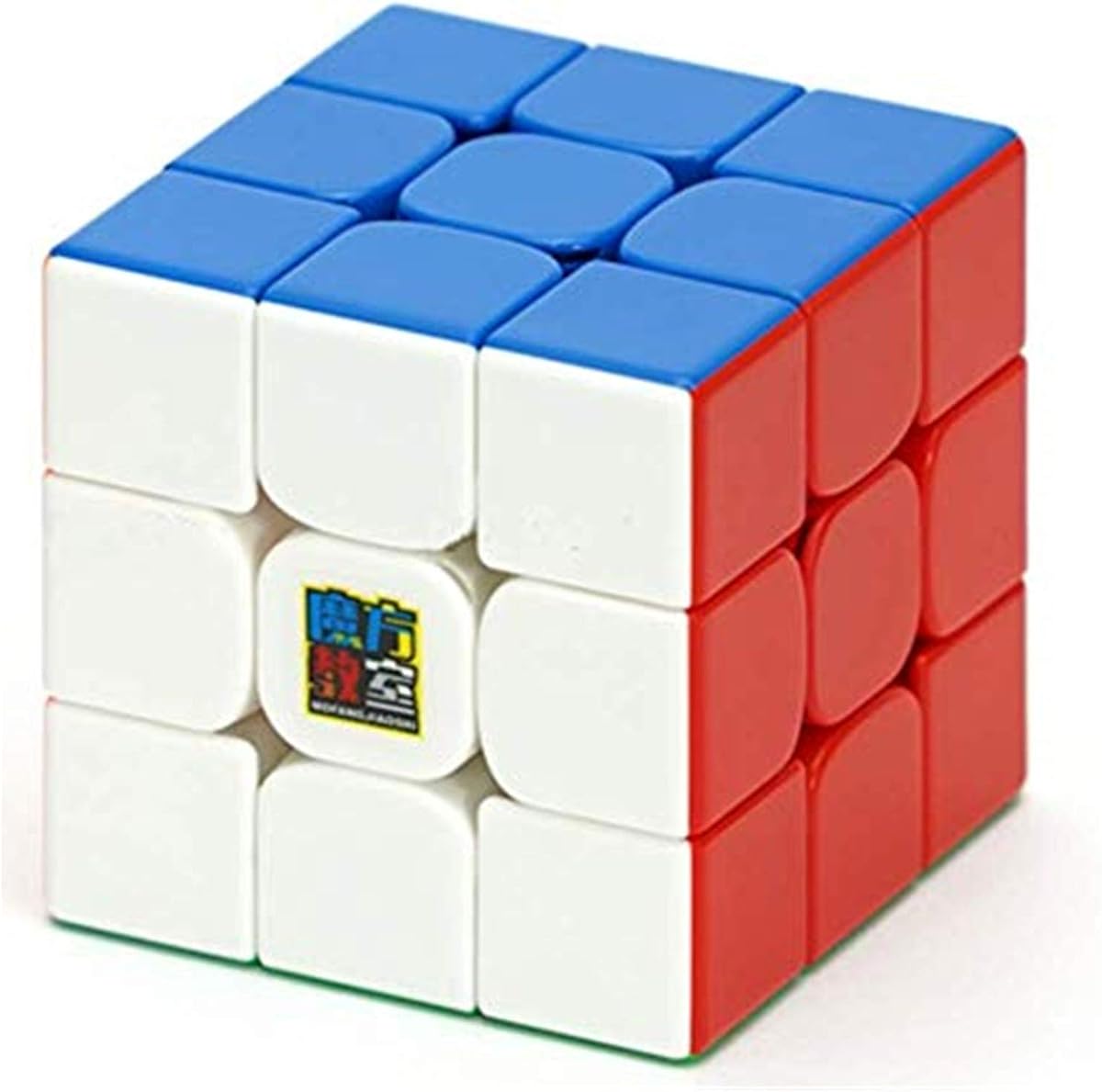
The Monster Go Magnetic 3×3 combines a 4.7 rating with a notably accessible feature set. Its 48 internal magnets, stickerless 56 mm format, and pre-lubricated, factory-tensioned construction make it one of the most approachable magnetic speed cubes in this guide.
We may earn a commission when you buy through this link, at no additional cost to you.
For beginners, the magnetic mechanism supplies useful piece guidance without requiring an advanced setup routine. The CubeStation mobile app can photograph all six sides and calculate a solution, offering a structured way to learn the puzzle rather than relying only on trial and error. The app is especially relevant for younger users or anyone who wants a guided first solve.
Monster Go states that the cube uses eco-friendly plastic without phthalates or lead, and every unit is tested, lubricated, and tensioned before packaging. Those production claims support the idea of a convenient first cube. The trade-off is that the listing does not describe advanced numerical tuning, extensive magnetic adjustment, or premium internal architecture.
This is the top budget recommendation for someone who wants a magnetic 3×3 and value without an intimidating setup. It should serve casual players, students, and beginning solvers well. As the user advances, however, they may eventually want more control over tension, magnet strength, and cube geometry.
The CubeStation app turns photographs of the six faces into a step-by-step solution. That support can shorten the gap between taking a cube apart and learning a reliable solving method.
Pre-lubrication and factory tension mean the cube is ready for play. This convenience is valuable for gifts, classrooms, and anyone who wants a working puzzle without an initial adjustment session.
We may earn a commission when you buy through this link, at no additional cost to you.
The Rubik's Original 3×3 carries a 4.7 rating and preserves the puzzle experience that has defined the format since 1980. It has six colored faces with nine squares apiece and the familiar objective of rotating the cube until every face forms one solid color.
We may earn a commission when you buy through this link, at no additional cost to you.
This simplicity is its strongest selling point. There is no magnetic system or advanced tension interface to understand, making it a natural choice for children, classroom activities, casual puzzle time, and anyone who wants the traditional 3×3 challenge rather than a competition-focused speed setup.
The toy also serves as a hands-on fidget option for settings such as classrooms, offices, or airports. The product information highlights benefits involving strategic thinking, hand-eye coordination, and STEM learning, while the repetitive turning action provides a constructive outlet during quiet periods.
The trade-off is performance sophistication. It does not list magnetic assistance, numerical tension settings, or advanced corner-cutting features. For a learner who simply wants to solve a classic Rubik's Cube, those omissions are advantages because they keep the experience understandable. Speed-focused cubers should move to a magnetic or more modern model.
The six-color, one-color-per-side objective is easy to understand and difficult to master. That clear challenge makes the cube suitable for family play, self-directed learning, and shared classroom exercises.
Turning the cube gives restless hands a focused activity. It can be especially useful during quiet breaks when a more conventional fidget toy might not provide the same puzzle-solving structure.
We may earn a commission when you buy through this link, at no additional cost to you.
The D-FantiX Cyclone Boys 3×3 earns a 4.6 rating and offers a traditional speed-cube package with adjustable tension, pre-lubrication, and anti-pop design. Its 56 mm size and lightweight ABS construction make it comfortable for both children and adults learning or practicing speed turns.
We may earn a commission when you buy through this link, at no additional cost to you.
The product information emphasizes stability, good corner cutting, reduced locking, and less frequent twisting. Anti-pop technology helps contain pieces during vigorous use, while adjustable tension lets users alter the feel according to their strength and experience. These features can support faster practice without requiring a magnetic mechanism.
D-FantiX describes the cube as suitable for beginners and professional players, including competition use. That range reflects the cube's focus on traditional performance: smooth turning, control, and a repeatable setup rather than magnetic assistance. The absence of magnets means it will not actively pull pieces into alignment during a fast sequence.
This is a practical recommendation for someone who wants a light, serviceable traditional cube with user-adjustable tension. Its main advantages are straightforward handling and stable construction, while its main limitation is that it offers fewer advanced personalization features than the GAN flagships in this list.
An adjustable internal setup allows users to tune the cube for their preferred feel. This is useful for children developing finger strength as well as adult solvers who know their preferred tension.
Anti-pop construction and reduced twisting address two common issues in traditional cubes. Those features help keep the puzzle together and predictable during repeated speed sequences.
We may earn a commission when you buy through this link, at no additional cost to you.
The MoYu RS3 M 2020 has a 4.7 rating and delivers factory-installed magnets in a stickerless 3×3 built around a reworked mechanism. It is positioned as an economical magnetic speed cube that can provide control comparable to more costly premium options without demanding extensive modification.
We may earn a commission when you buy through this link, at no additional cost to you.
MoYu's dual adjustment system gives users two ways to tune the cube, while the factory magnet installation avoids the work of adding magnets manually. Rounded corner pieces are described as improving coordinate movement and corner cutting, helping the puzzle feel smoother as a solve progresses.
The stickerless design replaces traditional stickers with ABS plastic, which the listing says helps prevent fading, peeling, and sticker-related cheating. An anti-stick design is intended to reduce viscosity and preserve smooth movement. This combination of magnets, rounding, and a cleaner internal structure makes the RS3 M attractive to speedcubers who value consistency.
The principal compromise is age. The 2020 model predates the more elaborate tuning and magnetic systems found in newer GAN models, and the supplied description does not advertise granular magnet-strength adjustment. It remains a compelling choice for value-focused magnetic performance, especially for users moving up from a basic plastic cube.
Factory-installed magnets provide alignment support immediately. This makes the cube easier to enjoy as a speed cube without first opening the pieces and adding magnetic hardware.
Optimized rounded corners improve how adjacent pieces coordinate during a turn. The intended result is smoother movement and better corner-cutting behavior in a fast solve.
We may earn a commission when you buy through this link, at no additional cost to you.
The beginner-oriented 3×3 with stand and tutorial has a 4.4 rating and focuses on making the first solving experience accessible. It is designed for children aged six and older, first-time solvers, classrooms, and anyone who wants a smooth puzzle without a complicated setup process.
We may earn a commission when you buy through this link, at no additional cost to you.
Its selling point is immediate usability. The cube is described as smooth, quiet, and ready to use, with no assembly or initial setup required. Stickerless construction prevents the peeling and fading associated with sticker-based cubes, helping the colors remain visually clear during repeated use.
The listing also highlights smooth corner cutting and natural turns for beginners. That matters because an overly stiff cube can make early learning frustrating, while a loose cube can lose control. Although the listed rating is lower than those of the other products, the design priorities align well with first-time users rather than experienced competitors.
This is the most sensible choice for a young child, classroom reward, party favor, or adult who wants an uncomplicated desk puzzle. It is not designed to compete with magnetic or highly adjustable speed cubes. Its bundled tutorial and stand add useful structure, but long-term hobbyists may eventually prefer a model with more advanced construction.
Smooth turning and easy corner cutting reduce the physical barrier to learning. The goal is to keep attention on recognizing patterns instead of fighting a stiff or poorly controlled cube.
The included tutorial gives beginners a path into solving, while the stand provides a convenient display position. Together they make the product practical for classrooms, gifts, and shared household use.
We may earn a commission when you buy through this link, at no additional cost to you.
The GAN 17 MagDrive has a 3.9 rating, the lowest in this list, but it is also the clearest premium flagship. Its celestial magnetic-dynamic system, 196 magnets, spherical orbit structure, full-turn navigation, and extensive tuning options target serious cubers who value precision above simplicity.
We may earn a commission when you buy through this link, at no additional cost to you.
The magnetic system combines a single core with three described realms to provide continuous guidance through turns and angles. An omni-support spherical orbit structure combines external support with internal alignment, intended to lock pieces together while preserving controlled movement. This is a notably different level of magnetic engineering from a standard 48-magnet cube.
Customization is the defining feature. The cube provides 72 tension settings and separate adjustment for corner and edge magnetic strength, allowing users to move between strong and light magnetic effects. That granularity can help advanced solvers refine control for different techniques, although it also creates a more involved setup process than a conventional beginner cube.
The 3.9 rating should be considered alongside the product's specialist positioning. It is not our choice for a child or first-time buyer, but it is the leading premium recommendation for enthusiasts, collectors, and competitors who want extensive control. Buyers should be comfortable with a more sophisticated mechanism and changing preferences over time.
The 196-magnet celestial system provides detailed guidance throughout each turn. Its goal is continuous control that remains effective from different angles during fast sequences.
Seventy-two tension combinations and separate corner and edge magnetic adjustment provide exceptional control. These options suit cubers who understand how changes in setup affect turning speed, stability, and piece alignment.
We may earn a commission when you buy through this link, at no additional cost to you.
The right 3×3 Speed Cube depends on your experience, preferred turning feel, and interest in customization. Use the following factors to narrow the field before making a final selection.
A magnetic cube uses magnets to help pieces align during fast turns. Models such as the GAN 356 M, GAN 356 ME Frosted, Rubik's Magnetic Speed Cube, Monster Go Magnetic 3×3, MoYu RS3 M 2020, and GAN 17 MagDrive can make sequences feel more consistent, especially for beginners. A non-magnetic cube offers a lighter, simpler experience and may appeal to users who prefer traditional handling or want to avoid magnetic components.
Choose magnetic control if you value alignment and are moving toward faster solving. Choose a traditional model if you want fewer mechanisms and a more classic puzzle experience.
Fast turning requires more than low friction. A useful cube should cut corners cleanly, avoid unwanted twisting, and keep pieces aligned without becoming difficult to hold. Specifications mentioning honeycomb contacts, slide textures, corner rounding, and anti-stick designs all contribute to the intended feeling of control. The strongest cube for one solver may feel unstable to another because hand strength and technique differ.
Prioritize smooth corner cutting and predictable alignment. These qualities are usually more valuable to a developing solver than a headline feature that does not match the user's handling style.
Tension determines how tightly the pieces meet and how readily the cube returns to shape. The GAN 356 M uses two distance slots, the GAN 356 RS supports hand tuning, the GAN 356 ME offers 12 combinations, and the GAN 17 MagDrive provides 72 settings. The D-FantiX also has adjustable tension. More settings offer finer experimentation, but they can also increase setup complexity.
Beginners should favor a small number of understandable adjustments or a cube that arrives properly set. Advanced cubers may appreciate broad customization if they enjoy experimenting with their setup.
Look for a plastic core, anti-pop feet, robust joints, and surfaces designed to withstand repeated handling. Stickerless construction eliminates concerns about peeling or fading and produces a cleaner color pattern. The D-FantiX and Monster Go listings specifically emphasize tested or pre-tensioned construction, while several GAN models focus on stability and reduced popping. Long-term durability also depends on how the cube is stored and cleaned.
Prefer solid plastic construction, secure joints, and an anti-pop design. A stickerless body also simplifies long-term appearance compared with a cube that relies on applied stickers.
A 56 mm cube is a familiar size for many speedcubers and children, while some modern models vary slightly in dimensions and weight. Larger pieces can feel easier to grip, whereas smaller or heavier designs may suit solvers with faster finger movements. Magnetic cubes often feel more substantial because of their internal hardware. Because dimensions and weight can vary by model, check the current listing and consider what feels comfortable in your hand.
For a first cube, a standard-size model with an easy grip is usually the safest choice. For an experienced solver, size and weight are matters of personal preference and may influence turn speed.
A well-lubricated cube turns more smoothly and resists the gritty feeling that can develop with age. The Monster Go and Rubik's Magnetic Speed Cube arrive pre-lubricated, and the D-FantiX is also supplied pre-lubricated. Other models use honeycomb or specialized contact surfaces intended to retain lubricant and reduce friction. New cubes may feel different after their first sessions as lubricant spreads and settles.
Pre-lubricated models are convenient for immediate use. If you want to maintain long-term smoothness, plan to inspect and care for the mechanism according to the manufacturer's instructions.
A beginner cube should be understandable without advanced setup. The original Rubik's Cube, the beginner model with a tutorial, and the app-supported Monster Go are more approachable. Advanced models focus on detailed tuning, magnetic strength, and competition practice. Accessories such as a stand, tutorial, or app can be valuable for a child or gift purchase, but they cannot replace durable mechanics or a comfortable turning feel.
Match complexity to experience. Buy advanced customization when you understand the difference between tension, elasticity, corner cutting, and magnetic control.
Begin with the center pieces, then identify the white, yellow, red, orange, blue, and green reference colors. Build the first cross by aligning four matching edge pieces around one center, then finish that cross before adding corners. Keep your turns controlled and use the cube's natural resistance to understand how each layer moves rather than forcing the mechanism.
For faster solving, practice one short algorithm repeatedly and maintain a consistent viewing angle. A magnetic cube may help pieces align during rapid turns, but it still requires accurate recognition and finger placement. If you have just started, use a tutorial method until the basic sequences become familiar, then gradually reduce the amount of explanation you rely on.
Store the cube away from moisture, extreme heat, and heavy impact. Clean sticky or dirty surfaces gently according to the manufacturer's instructions, and avoid forcing a piece that will not turn. If a cube feels loose, tight, or misaligned, consult its tuning guidance rather than repeatedly twisting the mechanism. Periodic careful use and proper storage help preserve both performance and appearance.
A magnetic cube can be easier for beginners because the magnets help pieces align during faster turns. That assistance may reduce missed positions and make sequences feel more satisfying. However, a smooth non-magnetic model with adjustable tension can also be beginner-friendly. Consider the preferred handling style and whether the added magnetic weight feels comfortable.
Corner cutting occurs when the pieces of one layer can turn far enough to pass slightly beyond the normal boundary of the adjacent layer. A useful amount of corner cutting supports fast turns by reducing the need to stop every movement precisely. Excessive cutting can make the cube difficult to control, so the best level depends on the solver's technique.
Not always. Several featured models arrive pre-lubricated, tensioned, or both, so they can be used immediately. Other cubes benefit from checking tension and elasticity, particularly if they feel unusually tight or loose. Beginners can start with the default setup and make only small adjustments as their technique develops.
GES refers to GAN's Elastic System, with different models offering different levels of adjustability. The GAN 356 M has two distance slots, the GAN 356 RS supports hand tuning, and the GAN 356 ME Frosted offers 12 combinations. More settings allow finer experiments, while fewer settings are generally easier for a new solver to understand.
Stickerless cubes avoid the peeling, fading, and lifting that can affect applied stickers, so their colored plastic is usually easier to maintain visually. Durability still depends on the plastic, internal core, and how the cube is used. Inspect the pieces periodically and avoid exposing the cube to excessive heat or moisture.
Yes, children can solve a 3×3, and models such as the beginner cube with a tutorial or Monster Go with app guidance are specifically suited to that goal. Start with the first layer or cross, work on consistent notation, and use short practice sessions. An adult can still supervise and encourage progress without taking over the puzzle.
A magnetic cube can help with alignment during fast turns, but competition suitability also depends on stability, corner cutting, weight, and personal setup. Advanced premium models provide more extensive tuning, while economical magnetic models can be good for learning. Practice with the same cube you plan to use in timed sessions.
A new cube may feel different as lubricant spreads, the mechanism settles, and your fingers become familiar with its geometry. Check that no piece is caught and that the tension has not changed. If the cube remains inconsistent, follow the manufacturer's cleaning and adjustment guidance rather than adding lubricant automatically.
The GAN 356 M is the strongest all-around recommendation because it combines magnetic stability, accessible GES+ tuning, smooth contact surfaces, and anti-pop features in a balanced package. The Monster Go Magnetic 3×3 is the top budget choice for beginners who want ready-to-use magnets and app guidance, while the GAN 17 MagDrive stands apart as the premium option for enthusiasts seeking extensive magnetic and tension customization.
Most buyers should prioritize comfortable handling, reliable corner cutting, and an appropriate level of adjustability. Traditional cubes remain excellent for learning and relaxed play, mid-range magnetic models suit users developing faster techniques, and flagship systems reward experienced cubers who enjoy precise setup changes. The right choice depends on the user rather than on features alone.
Check current prices, availability, package contents, and seller information before ordering, because all of those details can change. Reviews and ratings are also useful signals, but a 3×3 is tactile by nature. If possible, handle the intended model in person or review recent owner feedback for comments about tension, weight, and durability.