
5-in-1 Presence Sensor LWR02
4.3Editor score
Combines radar, PIR, and climate sensors
Matter over Thread ecosystem support
Long-lasting rechargeable or battery operation
Our Mmwave Human Presence Sensor guide compares 10 radar options for detection range, connectivity, power, lighting, placement, and smart home compatibility.
Mmwave human presence sensors use radar to identify people even when they sit, sleep, read, or otherwise remain still. Unlike a conventional PIR motion sensor, the best unit can maintain an occupied status between larger movements, making it especially useful for lighting, climate, security, and energy-saving automations.
The ten products in this guide were compared using the specifications and feature details supplied for each model. Coverage includes Wi-Fi, Zigbee, Matter over Thread, ESPHome, multi-sensor, battery-powered, rechargeable, and wired options, with attention given to detection range, environmental sensing, installation, and ecosystem compatibility.
Each review highlights the most useful reason to consider a particular sensor, along with its practical limitations. The three featured picks cover affordable DIY, well-rounded Home Assistant, and feature-rich premium choices, while the complete ranking evaluates all ten models. Prices and availability can change, so verify current listings before buying.
4.3Editor score

4.4Editor score

5.0Editor score
The comparison below places the ten sensors side by side by radar technology, connectivity, power method, and room-level sensing. Use it to narrow the field by ecosystem, installation constraints, detection style, and the amount of environmental data each model provides.



The Akamatis Litos v3 is a well-rounded mmWave human presence sensor for Home Assistant users who want more accurate lighting and room-control automations. Its 4.4 rating reflects a favorable balance of capabilities, and the supplied details emphasize a useful combination of 24GHz radar, Wi-Fi connectivity, adjustable sensitivity, and an integrated VEML7700 ambient light sensor. Unlike a basic PIR model, it is designed to detect both movement and stationary objects.
We may earn a commission when you buy through this link, at no additional cost to you.
The HLK-LD2401 radar is specified to cover motion and stationary occupants indoors up to 20 feet, while the compact Seeed XIAO ESP32-C3 and external antenna support a more reliable Wi-Fi connection. The light sensor adds practical context for automations that should activate only when a room is both occupied and dark. Its light-permeable front panel is not merely decorative: it allows ambient light to reach the sensor while maintaining a subtle appearance suitable for visible installation.
This model is best suited to people who already maintain Home Assistant. It comes pre-flashed with ESPHome, removing the need to manually flash firmware or begin with a blank configuration. That convenience does not erase the ecosystem requirement: an existing Home Assistant installation and basic familiarity are still necessary. The design is not a Matter or Zigbee product, and its 2.4GHz Wi-Fi connection means it will not join a network that only permits the 5GHz band.
The Litos v3 is a strong first choice for a homeowner who wants reliable still-person detection, daylight-aware lighting, and a streamlined ESPHome experience without constructing a module from components. It is especially attractive in bedrooms, living rooms, offices, and other occupied spaces where conventional motion timeouts are inconvenient. For users starting a new smart home or preferring a broad standards-based ecosystem, a Matter over Thread or Zigbee model may be easier to adopt.
The integrated VEML7700 light sensor allows an automation to consider both occupancy and ambient brightness. That combination is valuable for rules that switch lights on only when a person enters a dark room rather than activating them whenever the room is entered.
Ready-to-use ESPHome firmware removes several common DIY barriers. Users can connect to the device hotspot, provide their Wi-Fi credentials, and begin configuring entities without manually flashing the controller.
We may earn a commission when you buy through this link, at no additional cost to you.
The SONOFF SNZB-06P24 is especially compelling when a room contains multiple activity areas and you want the sensor to ignore less relevant zones. Its 3.8 rating may be modest, but the supplied specifications describe a capable 24GHz radar presence sensor with zone positioning, self-learning calibration, and ambient light measurement. It is built for smart lighting, security, and broader scene automation rather than simple motion alerts.
We may earn a commission when you buy through this link, at no additional cost to you.
Up to seven configurable zones can be enabled or disabled within a 4-meter range and 110-degree field of view. This makes it possible to concentrate sensitivity around a sofa or desk while ignoring a corridor, window, or another area prone to interference. Detection Calibration learns the environment and filters repetitive disturbances from appliances, pipes, or airflow, which can improve stability in real homes and offices.
The trade-offs center on setup and coverage. A Zigbee hub is required, even though the sensor can work with Home Assistant, SmartThings, and Alexa ecosystems. Its stated 4-meter range is less expansive than the 6-meter ranges advertised by several competing devices. The self-learning behavior should also be treated as a helpful filter rather than a guarantee that every fan, curtain, or vibrating surface will be ignored.
This is a strong recommendation for users who prioritize selective detection and light-aware automations over maximum reach. The model is particularly useful in living rooms, work areas, and bedrooms where a carefully defined presence zone is more valuable than broad coverage. Buyers should confirm that their preferred Zigbee coordinator and automation platform can expose the advanced zone and calibration settings they intend to use.
Seven independently configurable zones offer a practical level of spatial control. The ability to ignore a high-traffic passage while focusing on seating or work areas can make lighting automations more precise and less disruptive.
The self-learning system adapts to recurring background movement. This is useful in rooms with fans, pipes, or other regular disturbances, although exceptionally strong or repetitive motion may still require a narrower zone.
We may earn a commission when you buy through this link, at no additional cost to you.
This generic-titled mmWave Zigbee presence sensor offers a practical mix of distance reporting, illuminance measurement, and flexible mounting. Its 4.0 rating sits in the middle of the group, while the feature details emphasize better still-person detection than a typical PIR sensor and compatibility with Zigbee2MQTT, Tuya gateways, and Home Assistant.
We may earn a commission when you buy through this link, at no additional cost to you.
The 24GHz radar is described as detecting both moving and stationary people, with faster response and more accurate distance detection than the comparison made to 5.8GHz radar. That distance information can support more granular automations than a simple binary occupancy state. The product also supplies illuminance, detection distance, and presence sensitivity controls, making it more useful than a basic on/off presence sensor.
Installation requires a continuously powered USB 5V 1A connection, so it is less convenient for locations without a nearby outlet or USB power source. The product can attach to a wall, ceiling, or another suitable surface, but careful aiming remains important. For Home Assistant, the description recommends Zigbee2MQTT over ZHA so users can access the full set of functions. The listed Tuya support provides another path for users with a compatible gateway.
The model is a sensible consideration for a wired Zigbee installation where distance and illuminance data are important. It may fit a desk, hallway, living room, or entrance better than a battery unit because continuous power supports stable operation. Buyers should decide whether their coordinator exposes the advanced fields they need and ensure they can provide dependable USB power near the intended mounting point.
Reporting presence distance and illuminance gives automation builders more context than a plain occupancy flag. These values can support proximity-aware scenes and lighting decisions based on current room brightness.
Wall and ceiling mounting options make the sensor adaptable to rooms where a shelf position would be obstructed. Correct angle and placement will still have a major effect on the usable detection area.
We may earn a commission when you buy through this link, at no additional cost to you.
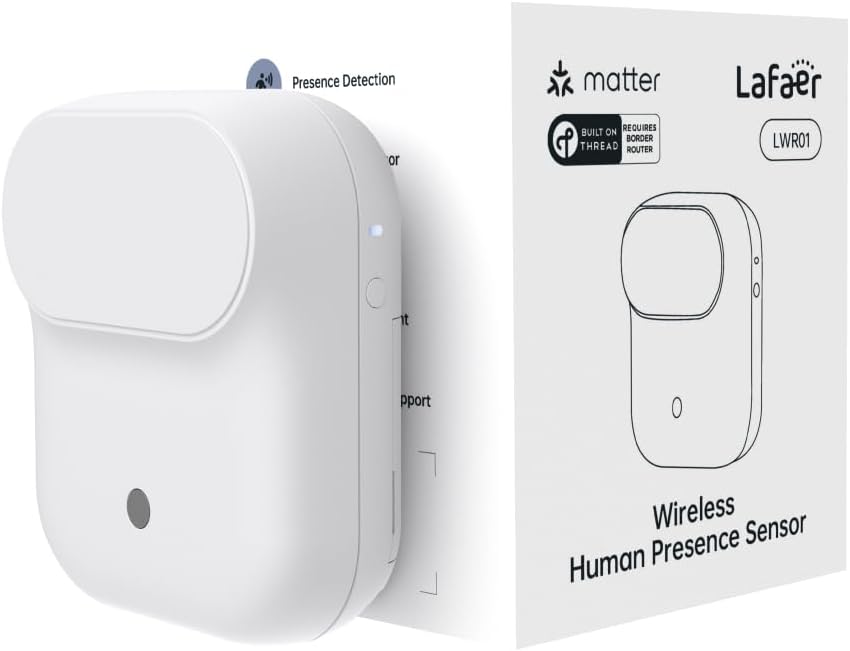
The LWR01 is designed for flexible placement across Apple Home, Amazon Alexa, Google Home, SmartThings, Home Assistant, Homey, and other Matter over Thread platforms. Its 3.3 rating is among the lower results, but the documented feature set remains appealing: wireless battery operation, optional wired power, ambient light sensing, and an IPX3-rated enclosure for bathrooms and other moisture-prone locations.
We may earn a commission when you buy through this link, at no additional cost to you.
The radar is specified to detect subtle movement and stillness up to 3.5 meters, with a movement range of 6 meters. This distinction helps when the target person is reading, watching television, or otherwise remaining still. The product also offers over one year of battery life, while a Type-C DC connection is available for continuous high-performance operation when the installation location has a reliable power source.
The main dependency is infrastructure. Users need a compatible hub or router for the selected platform, and the supplied information lists specific examples for major ecosystems. The claim of no new hub should be understood as no new dedicated presence-sensor hub when an appropriate Matter over Thread border router is already available. A 3.3 rating also warrants checking recent owner feedback for consistency and setup experiences before making a final choice.
The LWR01 is a useful option for a rental, finished room, or location where running power would be inconvenient. It also fits damp environments better than many exposed electronics. For users already invested in Matter over Thread and comfortable with their platform's device requirements, its wireless flexibility may outweigh the lower aggregate rating. New smart-home users should first confirm that the required router or controller is already supported in their setup.
Battery power supports locations without nearby outlets, while Type-C power offers a path to continuous operation. That combination makes the sensor easier to move as room layouts or automation needs evolve.
The IPX3 housing is intended for everyday splashes in bathrooms, kitchens, and similar spaces. It does not imply full waterproof submersion, but it broadens installation beyond dry rooms.
We may earn a commission when you buy through this link, at no additional cost to you.
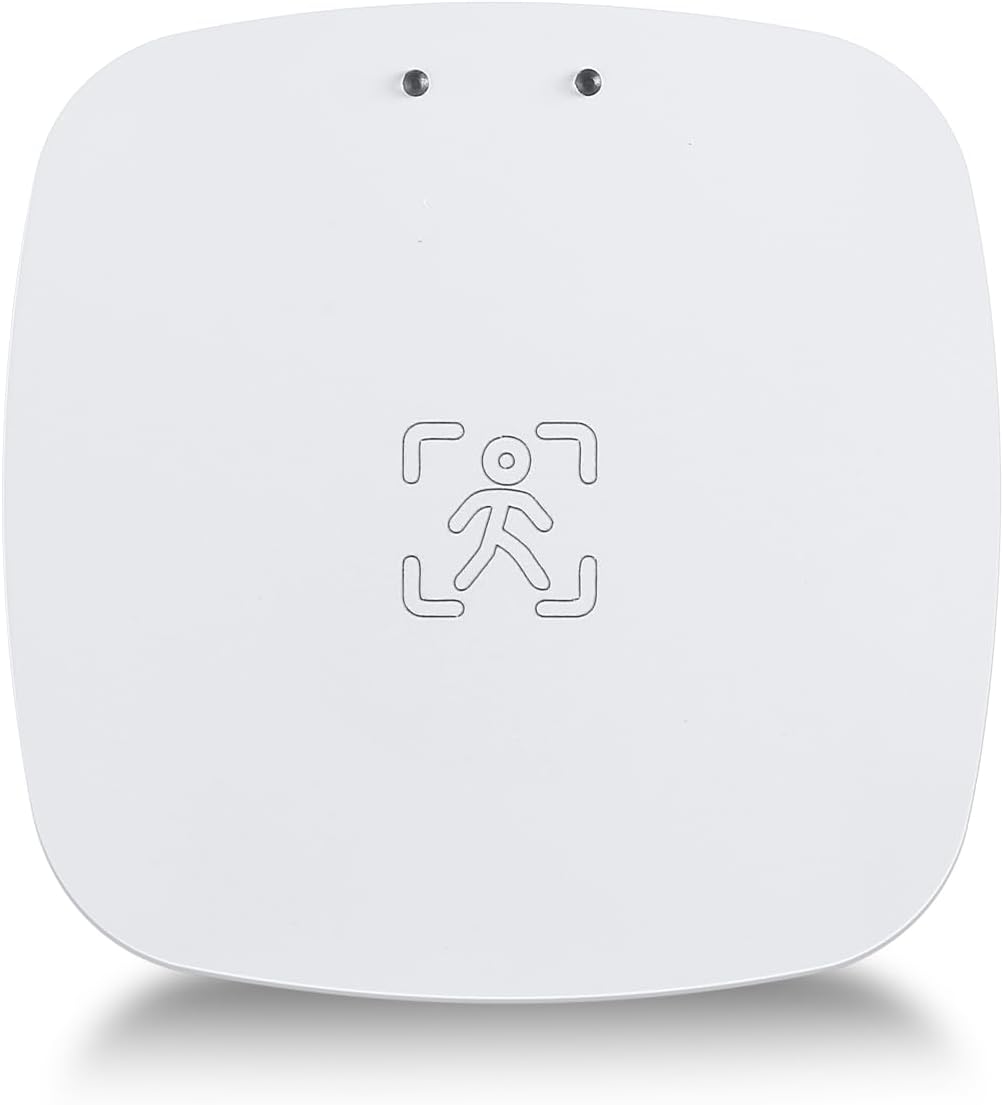
The 5-in-1 LWR02 is the most feature-dense model in this roundup, combining 24GHz mmWave radar, PIR, temperature, humidity, and ambient light sensing in one housing. Its 4.3 rating is among the strongest, and the dual-sensor design addresses two common weaknesses of presence detection: losing occupancy when someone sits still and reacting to fans, curtains, or small pets.
We may earn a commission when you buy through this link, at no additional cost to you.
Radar handles static presence and tiny movements such as breathing, sitting, or sleeping, while PIR responds to larger movements such as walking or waving. The stated coverage includes a 4-meter presence range, an 8-meter motion range, and an approximately 120-degree field of view. A hemispherical magnetic base, adhesive, or shelf placement gives the user several installation options, including an adjustable wall or ceiling orientation.
Power flexibility is another strength. Two included AAA batteries are advertised for up to two years of use, and rechargeable cells are also supported. IPX3 protection suits bathrooms, kitchens, laundry rooms, and other damp locations. The Matter over Thread implementation supports major platforms, while local processing is designed to limit unnecessary exposure of occupancy data to third-party cloud services.
This is the recommendation for someone who wants one compact device to provide room context rather than a collection of separate sensors. Its complexity and premium positioning may be unnecessary for a single lighting rule, but the value grows when temperature, humidity, light, motion, and occupancy all feed a dashboard or automation. Existing Matter over Thread users will get the most benefit; first-time buyers should confirm that a suitable border router is already available.
Radar preserves occupancy during stillness, while PIR provides a responsive signal for larger movement. Using both can reduce missed occupancy and false reactions to nonhuman environmental movement.
Temperature, humidity, and ambient light readings turn the unit into a compact room-context device. This is valuable for dashboards and automations that need more than a binary presence signal.
We may earn a commission when you buy through this link, at no additional cost to you.
The THIRDREALITY Presence R2 offers a familiar Zigbee presence sensor with adjustable sensitivity, battery power, and environment learning. Its 3.5 rating falls in the lower-middle range, yet the feature set covers the basics many users need: stationary-person detection, flexible placement without a power outlet, and compatibility with several common Zigbee ecosystems.
We may earn a commission when you buy through this link, at no additional cost to you.
The 24GHz radar can detect through non-metallic materials such as wood and glass and is described as unaffected by changes in light, temperature, or humidity. AI-enhanced environment learning aims to reduce false triggers caused by airflow or curtain movement. Five sensitivity levels give users an additional control: higher settings can capture posture changes and small gestures, while lower settings may suit busy hallways where only substantial motion should count.
The sensor uses three AA batteries, avoiding outlet and wiring requirements. It is compatible with Home Assistant through ZHA or Zigbee2MQTT, SmartThings, Homey Bridge, Homey Pro, and listed Echo devices with built-in Zigbee hubs. A hub is still required. The product description also warns that strong or repetitive motion, such as a fan, may still cause detection even with environment learning enabled.
The R2 is a practical candidate for cabinets, bathrooms, halls, storage rooms, and other spaces where wireless placement matters. It works especially well for users already operating a Zigbee mesh and wanting simple occupancy triggers for lights, thermostats, curtains, cameras, or notifications. The main reason to hesitate is the relatively low rating, so prospective buyers should examine current reviews for details about actual stability and battery performance.
Five levels support different room demands, from subtle seated movements to significant hallway activity. This control can make the difference between useful micro-presence reporting and unwanted triggers in high-interference spaces.
Three AA batteries free the sensor from permanent wiring. That makes it suitable for cabinets, storage areas, and other retrofitted rooms where a power outlet would be inconvenient.
We may earn a commission when you buy through this link, at no additional cost to you.
The Fermion C4002 is a component-level mmWave presence module for DIY smart-home builders, and its 5.0 rating is the highest listed result. It targets users who want extensive control over ESPHome, Home Assistant, Arduino, ESP32, and Raspberry Pi projects. The supplied specifications emphasize large static-presence and motion ranges, micro-motion sensing, ambient light measurement, and verified configuration resources.
We may earn a commission when you buy through this link, at no additional cost to you.
The radar supports motion detection up to 11 meters, static detection up to 10 meters, and a separate micro-motion mode. Adaptive background learning filters common interference from ceiling fans, curtains, and moving plants. Software-configurable distance gates help restrict sensing to the intended room, reducing the chance of activity beyond the target area. The integrated light sensor covers 0 to 50 lux and can be combined with occupancy in conditional automations.
This is not a plug-and-play finished sensor. It uses UART, needs a 3.6V to 5.5V supply, and will normally require a controller, enclosure, and physical integration. That complexity is a drawback for casual users but a major advantage for builders who want to embed the module in a custom device. The supplied data nevertheless includes ESPHome YAML, official wiki material, tutorials, parsing examples, and calibration instructions, reducing the amount of reverse engineering involved.
The C4002 is the clear pick for an experienced maker seeking capable presence detection without a finished smart-home product. It suits someone comfortable connecting UART, supplying regulated power, and assembling an enclosure. For a quick installation with minimal wiring, one of the finished Wi-Fi, Zigbee, or Matter units will be more convenient. The C4002 is best when customization and integration flexibility matter more than immediate plug-and-play use.
Configurable distance gates let users define where the radar should respond. Combined with adaptive filtering, this is useful for preventing adjacent-room activity or wall penetration from causing unwanted triggers.
Verified ESPHome files and official documentation shorten the path from module to working automation. UART connectivity and broad voltage support also make the C4002 accessible to multiple embedded platforms.
We may earn a commission when you buy through this link, at no additional cost to you.
The Akamatis Presence Sensor v2.2 is a focused Home Assistant device that removes much of the assembly work associated with DIY mmWave projects. Its 4.4 rating ties for one of the strongest customer results in the group, and the supplied features center on 6-meter radar coverage, pre-flashed ESPHome firmware, USB-C power, and a compact external-antenna design.
We may earn a commission when you buy through this link, at no additional cost to you.
The HLK-LD2410B radar module detects both moving and stationary objects, making it suitable for automations that should not end simply because someone stops walking. The Seeed C3 controller and external Wi-Fi antenna are intended to provide a more stable connection than a basic internal antenna. Importantly, the product arrives with ready-to-use ESPHome firmware, so the setup process is described as connecting to its hotspot and entering Wi-Fi credentials.
The main limitation is ecosystem exclusivity. Home Assistant must already be installed and running, and basic familiarity with the platform is recommended. Unlike the Litos v3, this model does not include an ambient light sensor, so a separate illuminance device may be needed for daylight-aware rules. It is also a sensor-only package, which may matter for buyers who expect a power adapter or enclosure to be included.
The v2.2 is a good choice for a Home Assistant resident who wants a finished sensor with dependable Wi-Fi and still-person detection without building an enclosure or manually flashing firmware. It may suit a bedroom, living room, or office where keeping lights on during quiet activities is important. The Litos v3 is the more versatile Akamatis option when integrated lighting data is also a priority.
Preloaded ESPHome firmware dramatically reduces setup complexity. Users can connect through the device hotspot, add their network credentials, and proceed to entity configuration.
The LD2410B radar is specified to detect stationary objects as well as movement. This makes it useful for reading, working, and other activities that would defeat a standard PIR timeout.
We may earn a commission when you buy through this link, at no additional cost to you.
The THIRDREALITY Presence R3 distinguishes itself with 60GHz radar, a visible RGB status light, ambient light sensing, TVOC monitoring, and Zigbee repeater functionality. Its 3.3 rating is tied for the lowest listed score, so buyers should investigate recent feedback carefully, but the product description presents a broad and distinctive feature set for home-automation users.
We may earn a commission when you buy through this link, at no additional cost to you.
At 60GHz, the radar is designed to identify genuine human presence by sensing subtle movement such as breathing, even when someone is still. The user mainly needs to set an appropriate detection distance, reducing the number of complicated adjustments associated with some radar sensors. The RGB light can show occupancy, automation, or system status at a glance, while also serving as ambient illumination.
The R3 is powered continuously by USB-C at 5V and 1A. It connects through Zigbee 3.0 and can serve as a repeater, potentially strengthening a mesh network in a large home. Lux and TVOC readings depend on platform support, which is an important qualification for buyers expecting every measurement to appear in Home Assistant, SmartThings, Homey, or another controller.
Choose the R3 when visual status feedback and a multi-function Zigbee node are central to the installation. It is especially fitting for quiet bedrooms, bathrooms, and living spaces where you want an obvious room-state indicator. The lower rating and platform-dependent environmental data are reasons to verify recent user experiences and confirm entity support before finalizing the purchase.
The RGB indicator can display occupancy or other automation states directly in the room. Different colors and brightness levels provide immediate visual confirmation without opening a dashboard.
Lux and TVOC monitoring add context that can support richer scenes and environmental awareness. Their usefulness depends on whether the chosen platform exposes those readings and supports the corresponding alerts.
We may earn a commission when you buy through this link, at no additional cost to you.
The Zigbee Presence Sensor offers a direct approach to true-presence automation: 24GHz radar, a stated 6-meter motion range, battery operation, and compatibility with several common Zigbee platforms. Its 3.2 rating is the lowest listed result, so the product comes with a clear recommendation to examine recent customer feedback. Even so, the supplied features cover the basic need to keep a room occupied while someone sits or sleeps still.
We may earn a commission when you buy through this link, at no additional cost to you.
Unlike a PIR sensor that reacts only to movement, the radar is described as detecting stationary people and maintaining presence status during reading, work, or sleep. The intended result is that lights remain on while the room is occupied rather than switching off when a person stops moving. Compatibility includes Echo devices with built-in Zigbee hubs, SmartThings, Home Assistant, Hubitat, and Tuya.
A Zigbee hub is mandatory, and the sensor is powered by two AAA batteries advertised to last up to two years in typical use. That makes it more convenient than a wired unit in a finished room. The lower rating may reflect variation in installation, hub compatibility, or actual user experience, but the provided information does not identify a specific defect, so it would be inappropriate to invent one. Buyers should instead verify fit, supported entities, and recent feedback.
The sensor is best for a simple Zigbee household that wants basic occupancy-triggered lighting without paying for extra environmental sensors. It offers less visible feature depth than the 5-in-1 LWR02 or the R3, but it may satisfy a narrow need very well. Confirm that the chosen Zigbee hub exposes the presence state correctly and install it where the full 6-meter field is useful rather than obstructed.
True-presence behavior prevents a light from timing out merely because someone has settled into a chair or begun reading. The radar continues to treat the room as occupied during these quiet activities.
Support for Home Assistant, SmartThings, Hubitat, Tuya, and compatible Echo hardware provides several possible paths. A compatible Zigbee hub remains a required part of the installation.
We may earn a commission when you buy through this link, at no additional cost to you.
The right presence sensor depends on your smart-home platform, room, power access, and the precision of the automation you want. Protocol, mounting, detection coverage, environmental sensing, and local control deserve attention before choosing a model.
Choose based on the controller you already have and the data you need to expose. Avoid buying a sensor whose ecosystem support merely overlaps with your existing setup.
Prioritize usable coverage where people sit or sleep, not merely the longest advertised range. Test the intended area and refine sensitivity or zones afterward.
Choose battery power for placement freedom and wired power for consistent operation. Confirm connector type, battery quantity, and recharge support before ordering.
Add environmental readings only when they will influence a scene, dashboard, or energy-saving rule. Combined sensors can save installation effort but may create duplicate data sources.
Aim the sensor at the area that defines occupancy. Check splash resistance for damp rooms and favor adjustable mounting when furniture positions may change.
Favor models with zones, distance gates, environment learning, and adjustable sensitivity. Then place the unit where it sees the target area without facing persistent interference.
Choose local control where possible, review cloud settings, and avoid covering more space than necessary. Radar avoids image capture, but data handling still depends on the ecosystem.
Choose a finished sensor for faster installation and a module for custom embedded projects. Match the device's assembly demands to your technical comfort.
Begin by identifying the room's primary occupied zone and the automation you want to improve. Mount the sensor toward a sofa, bed, desk, or entrance rather than simply aiming it across the entire property. For a wall or shelf installation, check the specified field of view and recommended height. For the C4002, connect UART and a regulated 3.6V-to-5.5V supply, then use the included ESPHome configuration and documentation as the starting point.
Connect the sensor to its required ecosystem. Zigbee units need a compatible hub or coordinator, Matter over Thread products need a suitable border router, and Home Assistant products need their network credentials entered through the appropriate setup process. After initial installation, configure the presence, distance, light, or environmental entities that the platform exposes. Test each entity while walking, sitting, and remaining still, then adjust sensitivity, zones, distance gates, and automation timeouts to fit the room.
Routine care is light: keep the sensing face unobstructed, avoid condensation or direct water exposure, and clean it with a dry or gently damp cloth. Do not paint over the radar area or place metal objects immediately in front of it. Replace batteries according to the manufacturer's guidance, and use the specified charger or power supply for wired and rechargeable models. Recalibrate or reassess the detection area after moving furniture, changing a room's use, or installing a new fan or appliance.
A PIR motion sensor usually reacts to changes in infrared energy caused by movement, so it may stop reporting occupancy when a person sits still. An mmWave radar sensor can detect fine movement and, depending on the model, maintain a presence state for stationary people. This makes radar more appropriate for lighting that should remain on during reading, working, or sleeping.
It depends on the connection method. Zigbee sensors require a compatible Zigbee hub or coordinator, while Matter over Thread sensors require a Thread border router. Wi-Fi ESPHome models connect directly to a 2.4GHz network and integrate through Home Assistant. Module-level products such as the C4002 need a compatible controller and wiring rather than a dedicated smart-home hub.
They are designed to do better than basic motion sensors, but no radar model should be understood as an infallible biological presence detector. The supplied descriptions emphasize micro-movements such as breathing, posture changes, and other subtle signals. Actual performance varies with distance, target movement, placement, environmental interference, and sensitivity settings.
Place the unit so its field of view covers the area where a person normally sits, sleeps, or works. Avoid pointing it directly at a busy doorway, fan, window, or moving curtain when possible. For ceiling installation, position the sensor over the relevant zone, and for shelf or cabinet use, make sure the front face is not blocked.
No, but it can make lighting behavior more useful. Presence establishes that someone is in the room, while illuminance indicates whether artificial lighting is already needed. Combining the two prevents a light from switching on unnecessarily in a bright room. The Litos v3, SNZB-06P24, LWR02, R3, and C4002 include ambient light sensing.
That depends on the model and its configuration. Several products include environment learning, sensitivity levels, zones, or distance gates to reduce these false triggers, and the LWR02 pairs radar with PIR to improve discrimination. Strong or repetitive motion can still be detected, so careful placement and tuning remain important.
Matter over Thread is designed to work across major ecosystems, but it still requires compatible hardware and a functioning Thread border router. Zigbee is mature and widely supported, yet its configuration and advanced entity support vary by coordinator and platform. The easiest route is usually to choose the protocol already supported by the hub, controller, and automations you intend to use.
Only if its housing has suitable water resistance. The LWR01 and LWR02 have an IPX3 rating intended for everyday splashes in bathrooms, kitchens, and laundry rooms. IPX3 is not waterproofing for submersion, so the sensor should still remain dry and follow the manufacturer's placement and operating guidance.
The Akamatis Litos v3 is the strongest all-around recommendation for a Home Assistant household because it combines stationary-person radar, ambient light sensing, external-antenna Wi-Fi, and pre-flashed ESPHome firmware. The 5-in-1 LWR02 is the feature-rich premium option, adding PIR, temperature, humidity, light, local-first processing, and flexible battery power. For makers, the Fermion C4002 offers an exceptional 5.0 rating and extensive DIY control at a budget-oriented entry point.
Before choosing, prioritize the protocol you already use, the occupied area that must be covered, and whether continuous power is available. Look for adjustable sensitivity, useful distance controls, and environmental filtering if the room contains fans or other moving objects. A sensor with a modest rating can still be appropriate for a simple requirement, while a feature-rich model may be unnecessary if you only need one lighting rule. Confirm the exact entities and advanced settings exposed by your controller before purchasing.
Finally, remember that listings, availability, included accessories, and prices can change over time. Compare the current product page, compatibility notes, power requirements, and user feedback with the priorities in this guide. A careful match between room layout and installation method will usually matter more than a small difference in headline detection range.
