
Intel Core i3-14100
4.8Editor score
Four performance cores
Eight processing threads
Integrated UHD Graphics 730
DDR4 and DDR5 support
Our Cheap Intel Processor guide compares 10 affordable Intel CPUs for basic PCs, gaming, upgrades, and everyday use, including compatibility and performance.
A cheap Intel processor can provide an affordable path to a capable everyday computer, but the least expensive option is not always the best value. Core count, integrated graphics, socket compatibility, memory support, and cooling requirements all influence whether a processor will suit your particular system.
We compared 10 Intel desktop processors spanning legacy platforms, modern hybrid designs, integrated graphics, and unlocked enthusiast models. The guide considers their supplied specifications and customer ratings while distinguishing basic computing needs from gaming, productivity, and specialized upgrade needs.
Each review identifies the processor’s strongest features, practical limitations, and ideal buyer, from basic office installations to performance-focused desktops. Product availability and pricing can change, so compare the current listing and verify motherboard support before purchasing.
4.8Editor score

4.8Editor score

4.6Editor score
This side-by-side overview highlights each processor’s architecture, core configuration, platform requirements, and graphics capabilities, making it easier to match a processor with an existing motherboard or planned desktop build.



The Intel Core i5-7400 is a practical choice for an inexpensive desktop built around a compatible LGA 1151 motherboard. It carries a 4.5 customer rating and combines Intel HD Graphics 630, Turbo Boost 2.0, and Hyper-Threading Technology in a package designed for conventional 200-series and 1001-series platforms.
We may earn a commission when you buy through this link, at no additional cost to you.
Its greatest advantage is accessibility for buyers maintaining an existing 7th-generation system. The integrated HD Graphics 630 means a separate graphics card is not explicitly required for ordinary display output, while Turbo Boost 2.0 provides additional clock-speed headroom during suitable workloads. Compatibility notes exclude Intel Octane Technology support, which is important when planning memory and storage features.
This is an older platform, so buyers should not expect the same CPU core count or platform flexibility offered by recent 14th-generation models. Motherboard socket, chipset, BIOS, and memory support all matter. It makes more sense to select this processor for a cost-conscious upgrade of a supported PC than for a new enthusiast build with long-term expansion plans.
The i5-7400 is best for basic office work, web browsing, media playback, and light productivity on a compatible system. It is a sensible budget choice when the motherboard is already owned or when a known-good LGA 1151 platform can be obtained at a favorable cost. Confirm the exact board and chipset before ordering.
Intel HD Graphics 630 makes this processor convenient for general-purpose desktop use because basic display output does not require a discrete graphics card. A separate card remains important for demanding games or graphics-intensive applications.
The processor is most attractive to someone preserving a supported 200-series or 1001-series desktop. Verify the motherboard model, BIOS, and memory configuration to avoid an incompatible upgrade.
We may earn a commission when you buy through this link, at no additional cost to you.
The Intel Core i5-14400F stands out as the most balanced processor in this guide, earning a 4.8 customer rating and a versatile 10-core hybrid configuration. Six performance cores work alongside four efficiency cores, producing 16 threads and giving users meaningful flexibility for gaming, productivity, and background applications.
We may earn a commission when you buy through this link, at no additional cost to you.
Performance reaches up to 4.7 GHz, and the processor includes 20MB of cache. Support for both DDR4 and DDR5 expands the possible motherboard choices, while PCIe 5.0 and 4.0 support provides a modern platform foundation. Compatibility covers Intel 600-series boards, potentially after a BIOS update, and 700-series boards that support the processor.
The F designation is the principal compromise. Discrete graphics are required, which can make a complete system more expensive if a graphics card is not already available. Although an RM1 thermal solution is included, buyers assembling a full desktop still need suitable memory, storage, a compatible motherboard, and an adequately powered case.
For a new general-purpose gaming or productivity build, the i5-14400F offers an excellent balance of core count, platform support, and efficiency. It is also a strong upgrade candidate for a current 600-series system after checking BIOS readiness. This is the pick for buyers who want modern capability without moving to a premium unlocked processor.
The combination of six performance cores and four efficiency cores allows the processor to prioritize demanding work while handling lighter background tasks efficiently. Sixteen threads provide a useful margin for modern applications and multitasking.
DDR4 and DDR5 support means buyers are not locked into one memory generation. They must still check the motherboard manufacturer’s specification list, BIOS requirements, and memory compatibility before completing the build.
We may earn a commission when you buy through this link, at no additional cost to you.
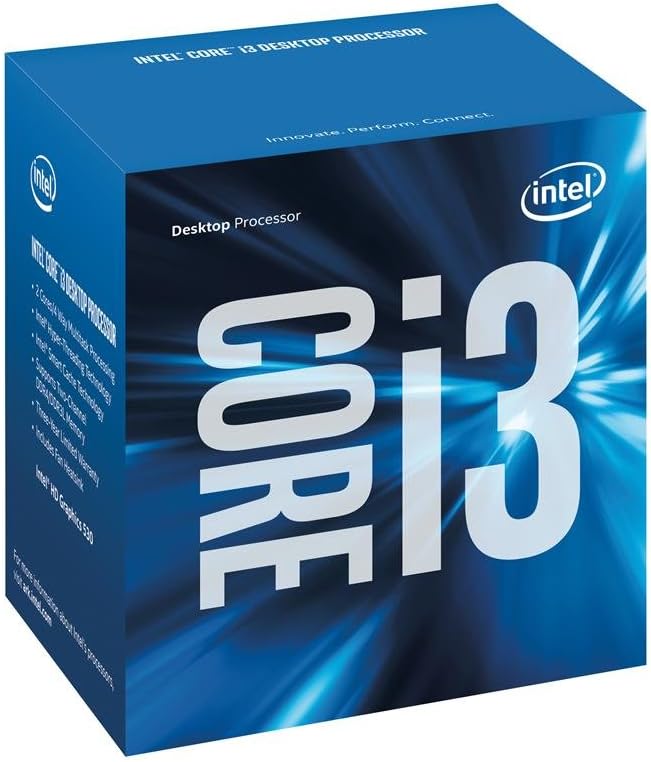
The Intel Core i3-6100 is a budget-oriented option for an LGA 1151 desktop that does not need a modern high-core-count processor. Its 4.6 customer rating reflects a generally favorable reception, while Turbo Boost 2.0, Hyper-Threading Technology, and Intel Secure Key provide useful platform features.
We may earn a commission when you buy through this link, at no additional cost to you.
The boxed presentation and explicit socket identification make it easier to compare with older desktop parts. It can be an attractive way to improve a compatible everyday machine used for documents, browsing, communication, and media. Hyper-Threading allows each physical core to support multiple software threads, which can improve responsiveness in supported workloads.
Compared with the Core i3-14100, the i3-6100 offers much less performance potential and a considerably older platform. Its cheapest listing does not necessarily make it the best value because compatible motherboards, memory, and other system components may be harder to find. A complete new platform could cost more than a modern alternative.
This processor makes the most sense for someone who already owns a compatible desktop and wants a modest, economical refresh. It is less appropriate for modern gaming, intensive creation, or a new system intended to remain highly expandable. Always confirm socket, chipset, and BIOS support before purchase.
The i3-6100 can extend the usefulness of a compatible LGA 1151 computer without requiring a complete platform replacement. Its value depends heavily on the condition and availability of the existing motherboard and memory.
Intel Secure Key adds hardware-based security support for compatible software environments. It is a modest but relevant feature for an office or home system handling routine online activity.
We may earn a commission when you buy through this link, at no additional cost to you.
The Intel Celeron G-5900 is aimed at straightforward desktop tasks rather than demanding applications. It has two cores and two threads, operates at 3.4 GHz, and uses the LGA 1200 socket. Its listed platform target is an Intel 400-series chipset motherboard, and it also advertises Intel Optane Memory support.
We may earn a commission when you buy through this link, at no additional cost to you.
The processor’s restrained specification can be useful in a compact office computer, reception desk, digital display, or lightly used home machine. Two threads are adequate for a single main application alongside basic background tasks, especially when paired with appropriate memory and storage. The 58W design also suits straightforward, power-conscious desktop configurations.
Its limitations are substantial for contemporary workloads. Applications, browser tabs, background synchronization, and high-resolution tasks can quickly load a two-core system. It does not offer the hybrid core count, threading capacity, memory-generation flexibility, or upgrade potential of the 14th-generation options in this guide.
The Celeron G-5900 is most appropriate for a specifically defined basic role or a compatible 400-series system that needs a low-cost processor. Buyers planning a new general-purpose PC should consider whether a Core i3 would provide a more useful balance of longevity and multitasking performance for only a modest additional outlay.
Two cores can handle basic document work, web access, email, and routine applications when the operating system and software remain light. It is better suited to one primary task at a time than to intensive multitasking.
LGA 1200 compatibility and 400-series chipset support create a clear platform boundary. Buyers should verify the exact motherboard and desired memory support rather than relying on socket shape alone.
We may earn a commission when you buy through this link, at no additional cost to you.
The Intel Celeron G3930 provides another approachable route into the LGA 1151 platform, with a customer rating of 4.6. Intel HD Graphics 610 supplies integrated display capability, while compatibility with 200-series and 1001-series chipsets makes it relevant to certain 7th-generation desktop systems.
We may earn a commission when you buy through this link, at no additional cost to you.
Integrated graphics can reduce the need for a dedicated card in a simple office or home setup. The processor may be useful for replacing a failed compatible part, completing a lightly used family computer, or upgrading an existing system that cannot justify a full rebuild. Its simplicity is one of its main advantages.
As a Celeron, it is constrained in demanding applications, content creation, and heavy multitasking. The older chipset generation also means less room for contemporary platform upgrades. Although the core product data is limited to socket, chipset, and graphics details, buyers should research the exact processor’s complete specifications and cooling requirements before installation.
The Celeron G3930 is best for a clearly basic, compatible machine rather than a modern gaming or content-creation build. Its rating and integrated graphics make it a viable legacy option, but system-wide value depends on how inexpensive the compatible board, memory, and storage can be obtained.
Intel HD Graphics 610 covers basic display needs, making the processor a practical option for general-purpose office systems. Specialized graphics work or modern games still require more capable hardware.
The stated 200-series and 1001-series chipset support narrows the field of compatible motherboards. Confirm the board model and BIOS before treating this as a viable upgrade.
We may earn a commission when you buy through this link, at no additional cost to you.
The Intel Celeron G1840 is a specific upgrade option for a narrow group of LGA 1150 systems. It supports Z87 and Z97 motherboards, with Z87 users potentially needing a BIOS update. The supplied compatibility note explicitly says it is not compatible with Intel motherboards, making careful model verification essential.
We may earn a commission when you buy through this link, at no additional cost to you.
Quick Sync Video can accelerate compatible video conversion tasks, while Intel Rapid Storage Technology, Intel Device Protection with Boot Guard, and Intel IPT with PKI add platform-oriented features. These capabilities make the processor relevant to specialized installations already based on one of the listed chipsets.
This is one of the least broadly compatible processors in the roundup. Both the motherboard socket and the brand and chipset of the board must align, and some systems may need firmware work. As a result, the apparent low cost of the processor does not necessarily translate into an inexpensive complete upgrade.
The G1840 is best for someone with a confirmed Z87 or Z97 motherboard who knows the processor fits. It is not a sensible foundation for a new modern desktop. For most buyers, checking a current Core i3 platform will produce more flexibility and performance for a more broadly useful build.
Quick Sync Video can improve conversion workflows in compatible applications. It is a meaningful reason to consider this processor for a specialized legacy media system rather than a generic modern upgrade.
The restriction against Intel motherboards and possible Z87 BIOS requirement make model verification mandatory. Socket shape alone is not enough to establish that the processor will work.
We may earn a commission when you buy through this link, at no additional cost to you.
The Intel Core i3-14100 is the strongest general-purpose budget choice in the list, combining a 4.8 customer rating with four performance cores and eight threads. It runs up to 4.7 GHz, includes 12MB of cache, and reaches as high as 4.7 GHz in the supplied specifications, making it a capable option for many mainstream PCs.
We may earn a commission when you buy through this link, at no additional cost to you.
Integrated Intel UHD Graphics 730 removes the need for a discrete graphics card in general-purpose systems, while DDR4 and DDR5 support offers useful platform choice. Compatibility with 600-series boards, potentially after a BIOS update, and 700-series boards allows it to fit many modern desktop designs. An Intel Laminar RM1 cooler is included, adding convenience to a new build.
The processor contains four performance cores and no efficiency cores, so it has less total throughput potential than the i5-14400F or the larger hybrid models. Highly parallel work, demanding games, and intensive creation applications can expose that limit. However, the i3-14100 is substantially more versatile than the Celeron and older Core i3 alternatives.
This is the best pick for an affordable new office, school, home, or light gaming computer that should still support current motherboards and memory. It offers stronger longevity than an entry-level Celeron without requiring a premium processor. Confirm BIOS support and graphics expectations before ordering.
UHD Graphics 730 supports ordinary displays without a discrete card, helping keep a budget build focused and economical. Users with demanding games should plan around a separate graphics solution.
The combination of current chipset support, DDR4 and DDR5 memory support, and an included cooler makes the i3-14100 a convenient starting point. Platform readiness remains more important than processor generation alone.
We may earn a commission when you buy through this link, at no additional cost to you.
The Intel Core Ultra 9 285K represents the premium end of this roundup, with 24 cores, a 5.7 GHz maximum clock, 40MB of cache, and an unlocked multiplier. Its performance hybrid architecture combines eight performance cores with 16 efficiency cores to divide demanding and background workloads across different core types.
We may earn a commission when you buy through this link, at no additional cost to you.
Integrated Intel Graphics provides basic display support, while PCIe 5.0 and 4.0 support, Intel Optane Memory support, and Turbo Boost Max Technology 3.0 create a feature-rich platform. These capabilities suit users who want maximum CPU throughput and the option to tune an unlocked system rather than simply install a basic office processor.
It requires an Intel 800-series chipset-based motherboard, narrowing the hardware selection. No thermal solution is included, so a capable cooler must be added. The platform is advanced, but buyers should ensure their motherboard, memory, operating system, and graphics arrangement support the complete intended configuration.
The 285K is best for demanding productivity, heavy multitasking, content creation, and enthusiast systems where maximum hybrid processing capacity is worth the premium. It is not the logical choice for a cheap office PC. Even within the broader Intel lineup, balance and platform cost should be considered before choosing this top-end model.
Sixteen efficiency cores alongside eight performance cores provide a large pool of processing resources. The design is well suited to systems that must alternate between intensive applications and numerous background tasks.
An unlocked multiplier provides greater control for users equipped to tune the processor. Cooling, power delivery, and motherboard support must be considered before adjusting performance settings.
We may earn a commission when you buy through this link, at no additional cost to you.
The Intel Core i7-14700K is a high-performance processor aimed at demanding gaming and productivity systems. It combines eight performance cores and 12 efficiency cores for 20 cores and 28 threads, while boosting up to 5.6 GHz with Turbo Boost Max Technology 3.0. Its customer rating is 4.6.
We may earn a commission when you buy through this link, at no additional cost to you.
Integrated Intel UHD Graphics 770 provides a fallback for basic display output, although a dedicated graphics card is normally essential for high-end gaming. Support for both DDR4 and DDR5 gives builders more options, and compatibility with 600-series boards, potentially after a BIOS update, or 700-series boards offers flexibility within the 14th-generation platform.
The unlocked designation makes this attractive to enthusiasts, but it also raises the standard for power delivery and cooling. Twenty cores create substantial performance potential, yet the complete system can become expensive once the motherboard, graphics card, memory, and cooling are included. Integrated graphics do not replace a capable gaming card.
The i7-14700K is best for a serious gaming desktop, advanced content creation, or a system that will handle sustained demanding workloads. It is overkill for routine office use. Buyers should assess their graphics requirements and cooling setup, and they should ensure the selected motherboard supports the processor.
Twenty cores and 28 threads create ample throughput for demanding games, streaming, multitasking, and content workflows. The hybrid arrangement helps balance high-priority work with background tasks.
UHD Graphics 770 handles basic visual output, but high-end gaming performance depends on a dedicated graphics card. The CPU alone does not determine the frame rate.
We may earn a commission when you buy through this link, at no additional cost to you.
The Intel Core i9-14900K is the flagship-style option among the 14th-generation processors here. It offers 24 cores divided into eight performance cores and 16 efficiency cores, along with 32 threads. A maximum clock of up to 6.0 GHz gives it the highest listed peak frequency in this roundup.
We may earn a commission when you buy through this link, at no additional cost to you.
Integrated Intel UHD Graphics 770 supplies integrated display capability, and DDR4 and DDR5 platform support allows considerable motherboard and memory flexibility. Compatibility extends to 600-series boards, potentially with a BIOS update, and 700-series boards. These features make it appropriate for a high-end desktop where the processor will be paired with capable supporting components.
Its 4.2 customer rating is the lowest among the ten products, although ratings alone do not reveal the reasons behind individual experiences. A processor of this class demands a strong motherboard, adequate cooling, and enough memory for demanding workloads. It is not a sensible option for web browsing, office productivity, or a basic family computer.
The i9-14900K is intended for enthusiasts who can exploit 24 cores, 32 threads, and high clock speeds through advanced gaming, streaming, rendering, or productivity software. The processor should be judged as part of a complete high-end system. For most buyers, the i5-14400F or i3-14100 offers a more rational balance.
The listed 6.0 GHz maximum clock is attractive for workloads that benefit from rapid single-core response. Real-world results also depend on the application, cooling, power limits, and graphics hardware.
Twenty-four cores can accelerate highly parallel work, but they require a suitably robust platform. Power, thermal headroom, memory capacity, and workload quality all influence the value of the extra cores.
We may earn a commission when you buy through this link, at no additional cost to you.
Choosing a low-cost Intel processor begins with the computer you already own or the complete system you intend to build. Socket, chipset, memory, graphics, cooling, and workload requirements are more important than core count alone.
The processor socket must physically and electrically match the motherboard. This guide includes LGA 1151, LGA 1200, LGA 1150, and newer platforms, and socket shape alone does not guarantee support. Motherboard manufacturers often publish supported processor lists and minimum BIOS versions, so confirm both the board model and firmware requirements before buying. A processor that is physically insertable may still be unsupported by the board, particularly when moving between chipset generations.
Core count determines how many major tasks a processor can handle simultaneously, while threads allow additional software threads to share physical core resources. A dual-core Celeron can suit a tightly defined office role, but a modern four-core Core i3 or 10-core i5 offers much more headroom for browsers, communications, background applications, and multitasking. Hybrid Core i5 and Core i7 processors add efficiency cores, while the Core Ultra 9 extends the concept to 24 cores.
Integrated graphics can simplify an inexpensive general-purpose build because the processor can drive a display without a separate graphics card. The i3-14100 includes UHD Graphics 730, the i7-14700K and i9-14900K include UHD Graphics 770, and older parts feature HD Graphics 610 or 630. The i5-14400F requires discrete graphics. High-end games, creative rendering, and specialized visual work still need a capable graphics card even when the processor includes integrated graphics.
The memory standard determines which motherboards and modules can be used. The i3-14100, i5-14400F, i7-14700K, and i9-14900K support both DDR4 and DDR5, but the motherboard generally supports only one generation at a time. Legacy processors have narrower platform constraints. Consider not only module type but also supported capacity, speed, and the number of memory slots, especially if the system must run many applications or handle large files.
Thermal requirements rise with core count, clock speed, and sustained workload. The i3-14100 and i5-14400F include their respective RM1 thermal solutions, which helps reduce the number of parts required for a new build. The Core Ultra 9 285K, Core i7-14700K, and Core i9-14900K do not include a thermal solution in the supplied information, so a suitable cooler must be selected. A motherboard’s power-delivery design is also important for high-core-count unlocked processors.
Start with the applications you expect to run. Basic office tasks, browsing, and digital-signage functions can be handled by appropriate Celeron or older Core processors. A current Core i3 provides more comfort when several modern applications run together, while an i5 or i7 is better suited to gaming and heavier productivity. The Core Ultra 9 and i9 belong in specialized or enthusiast builds where their additional cores can be used rather than sitting idle.
A processor upgrade can appear inexpensive while remaining poor value if the required motherboard is hard to source or expensive. Buying a complete platform may be more economical. Conversely, a compatible existing system can make a modestly capable processor an efficient way to extend useful life. Include the cost of any required graphics card, cooler, memory, and BIOS work when comparing an upgrade with a new build.
Newer platforms generally provide broader memory choices and more recent connectivity, while older sockets can limit future upgrades. The 600-series and 700-series options in this guide support both DDR4 and DDR5, giving buyers room to select a less expensive memory configuration. The Core Ultra 9 285K requires an 800-series motherboard. A longer-lived platform can justify a higher processor budget, but only if the rest of the build is similarly modern and reliable.
Before installation, identify the motherboard model, consult its supported processor list, and check whether a BIOS update is required. Install the processor and cooler according to the board manual, confirm that the thermal solution is mounted evenly, and connect the required power and signal cables. A newly assembled system should boot with memory, storage, and graphics properly seated before any operating system is installed.
After installation, update the motherboard BIOS when needed, install current chipset, graphics, and networking drivers, and monitor processor temperatures under a realistic workload. Enable the appropriate memory profile in the BIOS if the board and modules support it. Leaving the system on a well-ventilated surface, keeping dust away from the heatsink, and avoiding blocked airflow helps preserve consistent cooling and performance.
Do not unlock, overclock, or change power limits without understanding the board, cooling, and stability implications. Monitor temperatures during stress tests, use conservative settings, and ensure the operating system is updated. When the processor is eventually retired, dispose of it through an approved electronics recycling program and remove personal data from the storage drive before selling or donating the rest of the computer.
The Intel Core i3-6100 and Intel Celeron G-5900 are among the most budget-oriented choices, depending on the rest of the system. The i3-6100 is better suited to a compatible LGA 1151 upgrade, while the Celeron G-5900 targets a 400-series LGA 1200 platform. The complete system cost and availability of compatible boards should determine which is actually cheaper.
The Intel Core i5-14400F is the strongest balanced option for a new general-purpose gaming build. It has 10 hybrid cores, 16 threads, and support for both DDR4 and DDR5. Because it requires a discrete graphics card, budget must also cover the graphics hardware, motherboard, memory, storage, and cooling.
The processor supports DDR4 and DDR5, but the motherboard determines which type is usable. Most boards support one memory generation rather than both simultaneously. Check the board manufacturer’s memory specifications, supported capacity, and BIOS requirements before purchasing modules.
Yes, the Intel Core i5-14400F requires discrete graphics. Unlike processors with integrated graphics, it cannot provide a normal display output on its own. If a suitable graphics card is already available, that can make the F-series model particularly attractive for a gaming or productivity build.
It can be a sensible way to improve a compatible 200-series or 1001-series computer, particularly when the existing motherboard and memory are usable. The Core i5-7400 and Core i3-6100 cover this generation. The upgrade is less attractive if a new board and memory must also be purchased.
Check the motherboard model, socket, chipset, BIOS version, supported memory generation, and graphics requirements. Some processors in this guide require a BIOS update, while others are restricted to particular board brands or chipset families. The processor should also have adequate cooling and power delivery for the planned system.
An unlocked processor benefits from a motherboard with suitable power delivery, BIOS features, and cooling, but compatibility is determined by the socket and chipset rather than the unlocked label alone. Premium models may require more robust VRM phases and a higher-capacity power supply than entry-level boards provide.
A Celeron can be adequate for light document work, email, browsing, and controlled digital-signage tasks. The G-5900 and G3930 are better viewed as targeted options for compatible boards or basic roles. A modern Core i3 offers more multitasking capacity and a broader platform, making it preferable for a general-purpose office computer that may handle many applications.
The Intel Core i3-14100 is the best overall budget pick because it combines a 4.8 customer rating, four performance cores, eight threads, integrated graphics, modern memory options, and an included cooler. The Core i5-14400F is the stronger balanced choice for a modern gaming or productivity system, while the Core Ultra 9 285K serves buyers who need the platform’s highest hybrid processing capacity.
Prioritize compatibility before processor speed. Confirm the motherboard model, chipset, BIOS, memory generation, graphics arrangement, and cooling needs. A lower-cost processor that forces expensive component purchases is not necessarily economical, and a Celeron intended for a narrow role may be less useful than a slightly more capable Core model for a general-purpose system.
Finally, check the current listing, availability, warranty terms, and price before ordering. Processor value changes as new models and board platforms emerge, and the same processor can look more or less affordable depending on the parts already in your possession. Use this guide to establish requirements, then compare the current product listings to find the most practical total-system value.