
Cable Matters 2-Pack Premium XLR Cable
4.8Editor score
21 AWG oxygen-free copper
Copper braided shielding
Heavy-duty metal connectors
Durable XLR Cables guide comparing ten options for balanced audio, road-ready shielding, connector strength, flexibility, and dependable studio or stage use.
Durable XLR cables must survive more than repeated plugging and unplugging. They need to retain a stable balanced connection, resist interference, flex without cracking, and withstand the constant handling associated with rehearsals, live performances, studio sessions, and equipment transport. The strongest choices combine dependable connectors, effective shielding, flexible jackets, and appropriately sized conductors.
This guide compares ten XLR microphone and interconnect cables using the information available for each product. We examine conductor design, shielding, connector construction, jacket materials, strain relief, length, intended applications, and compatibility with common 3-pin XLR equipment. The list includes studio-focused, touring-oriented, home-recording, and multipurpose options, allowing readers to compare practical construction rather than relying on brand reputation alone.
Each review explains the product's strongest qualities, possible compromises, and most suitable audience. The Cable Matters 2-Pack stands out for its balanced mix of construction and convenience, while the two Mogami options target demanding studio and touring work. Cable lengths, shielding approaches, and connector designs vary across the list, so the right durable XLR cable ultimately depends on the environment, equipment, and handling demands in which it will be used.
4.8Editor score

4.7Editor score

4.8Editor score
The comparison below highlights the principal design choices across all ten cables, including conductor type, shielding, connector configuration, cable length, and practical extras. These distinctions help reveal which options suit compact studio patch bays, home recording, mobile live setups, long cable runs, and touring environments.


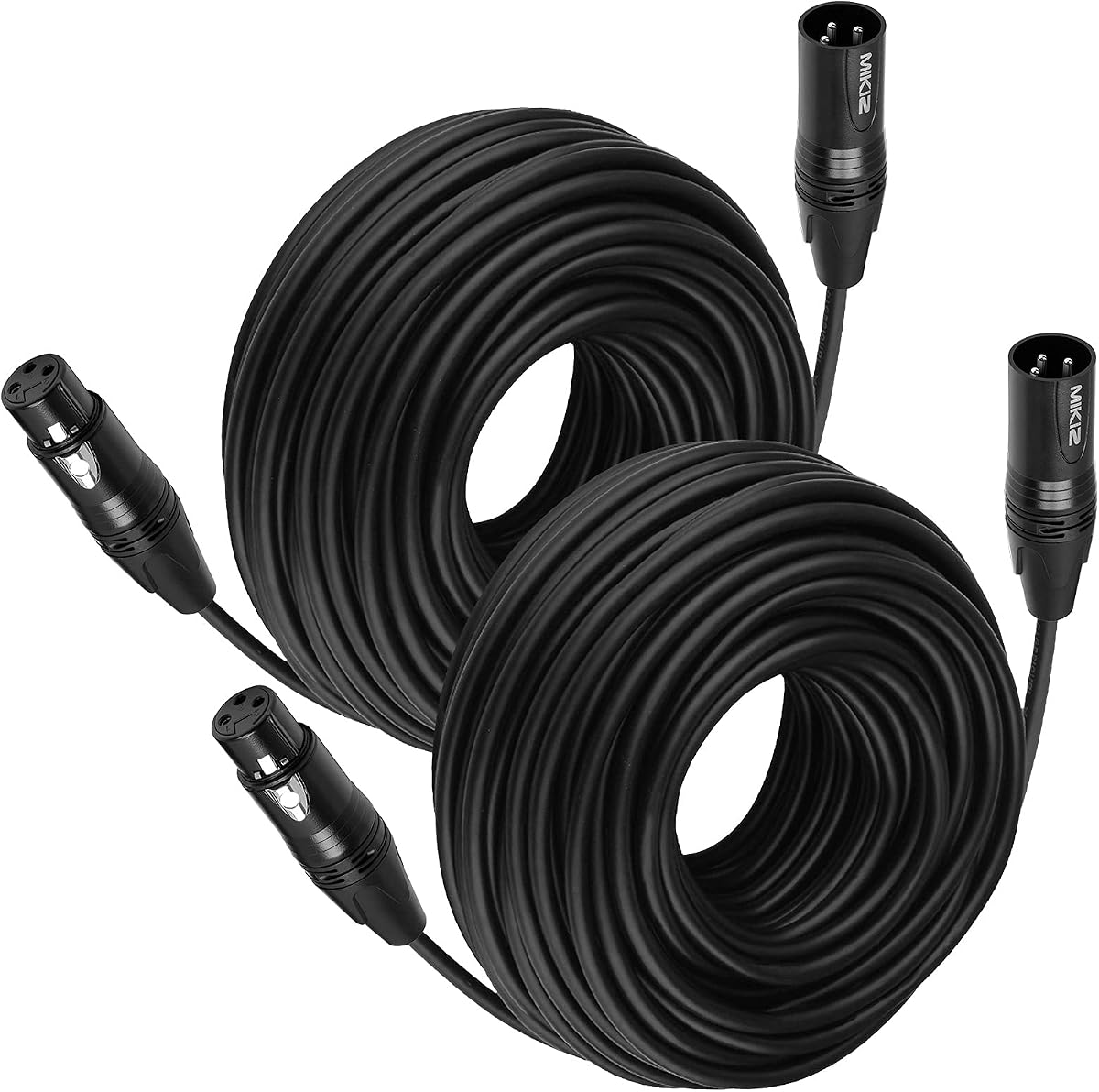


The Cable Matters 2-Pack Premium XLR to XLR Cable combines 21 AWG oxygen-free copper conductors with a balanced cable design and copper braided shielding. Its 4.8 rating reflects a well-regarded general-purpose option, while the six-foot length suits studio patch bays, close microphone placement, and compact live setups where excess cable would be inconvenient.
We may earn a commission when you buy through this link, at no additional cost to you.
Its strongest attraction is the combination of practical durability features. Heavy-duty metal connectors resist the wear associated with frequent mating, and molded strain relief helps protect the point where the cable enters each connector. The soft PVC jacket remains flexible enough for routine handling, while the oxygen-free copper core and braided shield support clean, interference-resistant signal transfer.
The main limitation is length. A six-foot cable is useful for connecting a microphone to a nearby preamp or mixer, but it cannot accommodate a larger stage, elevated microphone position, or distant amplifier without an extension or additional cable. The product information also does not mention a lifetime warranty, although the listed construction is notably robust for regular studio and live use.
This is a strong recommendation for performers, podcasters, home studio owners, and sound technicians who want two dependable male-to-female XLR leads without unnecessary bulk. The spare cable can serve as a backup in a case or support a second connection. For short, balanced connections with solid shielding and rugged connectors, it is one of the most balanced choices in the group.
The balanced construction and copper braided shielding are intended to limit interference and hum. This makes the cable suitable for connecting professional microphones to mixers, preamps, speaker systems, and other compatible 3-pin XLR equipment.
Metal connector housings and molded strain relief target the areas that commonly fail first. The soft PVC jacket also adds flexibility, making the cable easier to coil, route, and connect in repeated sessions.
We may earn a commission when you buy through this link, at no additional cost to you.
The Pig Hog XLR 25 Foot 2 Pack Tour Grade Microphone Cables offer a straightforward pair of 25-foot male-to-female XLR leads. The 4.8 rating is strong, and the bundle format makes the set attractive for users who want matching cables for two channels or one active cable plus a spare.
We may earn a commission when you buy through this link, at no additional cost to you.
Tour grade is the product's central positioning, suggesting that these cables are intended to handle the movement and repetition associated with live performance. Their 25-foot length is more versatile than a short patch cable, allowing more freedom between a microphone, stand, floor box, preamp, or mixer without creating an excessively long run.
The supplied product information is limited, however. It does not specify conductor gauge, shielding design, jacket material, strain-relief construction, or connector plating. That makes it harder to compare fine technical attributes with the more thoroughly documented alternatives in this guide. Buyers should also verify whether the connectors meet any current XLR gender or specific equipment requirements before ordering.
This pair is most appropriate for performers and small production teams seeking two matching cables of a practical stage length. It may be a convenient choice for rehearsals, mobile recording, and live sound, but buyers who require detailed shielding specifications or particular connector features should examine those claims on the current product listing.
At 25 feet, the cable provides useful distance between common stage positions and audio equipment. It is long enough for many microphone runs while remaining easier to manage than a very long cable.
The two-pack format supports stereo or dual-channel setups and provides a backup for live use. Matching cables can also simplify inventory and make stage patching more consistent.
We may earn a commission when you buy through this link, at no additional cost to you.
The Mogami Gold Studio 03 is a short, premium XLR patch cable built around Mogami's Neglex Quad conductor technology. Its 4.8 rating and studio-specific construction position it as a high-end choice for critical recording paths where clean signal, consistent geometry, and long-term reliability matter.
We may earn a commission when you buy through this link, at no additional cost to you.
The quad conductor arrangement is designed to improve noise rejection, with the product information stating performance of up to 30 dB better rejection than twisted-pair cables. Ultra-flexible XLPE insulation supports compact routing, while a spiral bare copper shield provides coverage around the conductors. Gold-plated contacts resist corrosion and support dependable signal flow over extended service periods.
Its three-foot length clearly limits it to short studio tasks such as connecting a microphone to a nearby preamp, linking outboard equipment, or patching a small console. Buyers who need a stage-length run will need a different cable. It also occupies the premium end of the category, so its specialized construction may be excessive for basic home recordings or infrequent use.
The Mogami Gold Studio 03 is best suited to recording engineers, serious home studio owners, and facilities that place a high priority on low noise and dependable critical-path connections. The included lifetime warranty further strengthens its long-term value proposition. For a short reference-grade patch cable, it offers an unusually clear and focused feature set.
The Neglex Quad layout is the cable's defining technical feature. Its enhanced rejection of RF and electromagnetic interference helps maintain a clean microphone signal in electrically busy studio environments.
Gold-plated contacts provide corrosion resistance and dependable electrical contact. Combined with the lifetime warranty, this supports use in equipment rooms and studios where repeated patching occurs.
We may earn a commission when you buy through this link, at no additional cost to you.
The Bietrun 100-Foot 2-Pack is designed for users who need long, balanced runs and heavy-duty connector construction. Its 4.8 rating is supported by a feature set that includes oxygen-free copper, several shielding layers, alloy XLR housings, and a self-locking connection mechanism.
We may earn a commission when you buy through this link, at no additional cost to you.
The cable combines copper conductors with cotton, copper, carbon-fiber, PE coating, and a 6 mm TPE jacket in its shielding and protection system. Heavy-duty alloy connectors, copper contacts, and metal spring strain relief target frequent use. Distinct connector colors and two included Velcro straps make it easier to identify and organize long cables during setup.
The principal trade-off is handling. A 100-foot cable can be cumbersome in a home studio, but it becomes useful across larger stages, rehearsal rooms, or outdoor installations where microphones sit far from a mixing position. Its multi-layer construction may also produce more bulk than a conventional short patch cable, and long cables require sensible routing to avoid tangles and trip hazards.
This two-pack is a practical choice for bands, mobile sound systems, community stages, and installations that need substantial reach without standard adapters. The self-locking connectors add confidence during movement, while the cleanable jacket offers practical maintenance benefits. Buyers should pair these long runs with proper cable ramps, loops, and strain relief.
The 100-foot length can connect distant microphones to a central mixer or preamp. The PE jacket is described as flexible and elastic, helping the long cable bend without the cracking associated with less resilient coverings.
A self-locking connector design helps maintain a secure grip during movement. This is particularly useful on stages where cables may be handled, repositioned, or subjected to vibration.
We may earn a commission when you buy through this link, at no additional cost to you.
The Gearlux 25-Foot 2-Pack is a fully balanced, male-to-female XLR cable bundle designed for microphones, mixers, and other professional audio equipment. Its 4.8 rating and straightforward construction make it a useful middle option for people who need more length than a desktop patch cable without the unwieldiness of a 100-foot run.
We may earn a commission when you buy through this link, at no additional cost to you.
Oxygen-free copper cores and copper braided shielding form the signal-carrying foundation. The product information specifically highlights reduced hum and interference, while the balanced design supports cleaner transmission in studio and live environments. A durable but flexible PVC jacket allows normal coiling and routing, and rugged metal connectors protect the connection points.
The design does not include a stated self-locking mechanism, advanced spring strain relief, or included cable organizers. Those omissions do not prevent regular use, but they may matter in mobile rigs where connections receive constant handling. As with any long cable, adequate routing is important to avoid creating pressure at the connectors.
The Gearlux pair is recommended for stage performers, rehearsal spaces, home studios, and small production environments. It supplies two dependable 25-foot cables with balanced signal characteristics and substantial connector housings. It is a straightforward choice for users who value practical construction over specialized extra features.
Oxygen-free copper cores and a copper braided shield work together to minimize hum and interference. The fully balanced configuration is well matched to professional microphones and grounded audio systems.
The PVC jacket is designed to remain flexible while tolerating regular use. Metal connectors add mechanical strength at the termination points where bending and pulling would otherwise be most damaging.
We may earn a commission when you buy through this link, at no additional cost to you.
The AuxLink 25-Foot 2-Pack combines 24 AWG oxygen-free copper conductors, double shielding, self-locking connectors, and a flexible PVC jacket. Its 4.8 rating makes it a strong candidate for performers who need dependable stage connections and protection against common sources of cable damage.
We may earn a commission when you buy through this link, at no additional cost to you.
The shielding system combines foil with an inner copper spiral layer, creating two barriers against EMI and RFI. Silver-plated copper pins and zinc-alloy connector housings contribute to stable connections, while the self-locking male-to-female design helps resist accidental disconnection when equipment moves. The imported high-elasticity PVC is described as resistant to cracking, abrasion, oil, and dirt.
One point worth noticing is the stated length discrepancy: the product is advertised as 25 feet, while the supplied information says the true length is 26 feet. That minor difference is unlikely to disrupt normal use, but buyers planning exact cable paths should measure carefully. The product information also mentions two years of after-sales service, which is less extensive than the lifetime coverage listed for the Mogami options.
AuxLink is well suited to musicians, mobile presenters, home studio users, and sound teams working across rehearsal rooms and small venues. The locking connectors and broad compatibility list make setup straightforward, while the two-pack provides matching leads for stereo or backup use. It is a particularly balanced option when secure connections and resistance to physical wear are priorities.
Foil shielding and an inner copper spiral layer provide complementary protection against interference. This layered approach is useful around lights, amplifiers, computers, and other electrically active equipment.
The self-locking XLR design helps prevent accidental separation during movement. Silver-plated pins support consistent contact, and zinc-alloy housings protect the connector assembly from impacts.
We may earn a commission when you buy through this link, at no additional cost to you.
The MIKIZ 50-Foot 2-Pack is built for longer microphone and interconnect runs, using 22 AWG balanced conductors with both aluminum foil and braided copper shielding. Its 4.8 rating reflects a well-liked long-cable option for stages, rehearsal spaces, and studio installations.
We may earn a commission when you buy through this link, at no additional cost to you.
Tinned oxygen-free copper is used to support signal transmission and resist oxidation under humid conditions. A thicker conductive PE shield adds insulation around the conductors, while the dual shielding helps reduce EMI and RFI. Silver-plated contacts provide a durable connection surface, and the screw-type connector housings can be opened to inspect solder points when servicing is needed.
Serviceable connectors are unusual among consumer-oriented XLR cables, but they require careful handling. Users should fully tighten the connector shells and avoid pulling on the cable itself. The 50-foot length also creates more opportunities for tangles and accidental stress, so proper loops and cable management are important.
This two-pack is suitable for bands, fixed installations, studios, and mobile performers who want long balanced cable runs. It is particularly appealing to technically inclined users who value inspectable connectors and dual shielding. For smaller spaces, a shorter cable would be easier to manage, but for extended microphone placement, the added reach is useful.
The screw-type XLR housings can be unscrewed to reveal solder points. This serviceability gives technicians a way to inspect or repair connections when a long cable is installed in a demanding environment.
Tinned oxygen-free copper is intended to support signal transfer and resist oxidation under humidity. That makes the cable relevant to locations where moisture or changing conditions may affect ordinary connections.
We may earn a commission when you buy through this link, at no additional cost to you.
The Mogami Gold XLR Stage Microphone Cable is a 20-foot road-oriented cable engineered for stage, broadcast, and studio environments. Its 4.7 rating reflects strong performance, while its 105-strand cores and ultra-flexible construction distinguish it as a touring-focused alternative to conventional studio patch cables.
We may earn a commission when you buy through this link, at no additional cost to you.
The cable uses precision-twisted conductors and full-coverage braided shielding to suppress electromagnetic interference. Low capacitance supports clear signal transfer across demanding audio paths, while the flexible 105-strand core is intended to withstand repeated bending, coiling, and transport. Importantly for outdoor and winter work, the cable is described as remaining flexible at temperatures down to minus 20°C.
The main practical limitations are that the package includes one 20-foot cable and does not offer a matching two-pack. Some users may also find a shorter tour cable less suitable than a 25- or 50-foot option for distant microphones. Nevertheless, the stated cold flexibility, shielding coverage, and lifetime warranty create a strong durability case.
This Mogami Gold Stage cable is recommended for touring musicians, broadcast crews, engineers, and mobile performers who repeatedly deploy and retrieve their equipment. It suits environments where cable flexibility, low capacitance, interference control, and long-term dependability outweigh the convenience of a multi-cable bundle. For demanding professional use, it is one of the most purpose-built choices here.
The 105-strand core is designed to remain flexible during frequent handling and storage. Its stated performance in temperatures as low as minus 20°C reduces the risk of a stiff cable during cold-weather travel or outdoor work.
Low capacitance helps maintain signal clarity across critical microphone and broadcast paths. Full-coverage braided shielding further reduces the chance that nearby electrical systems will contaminate the audio signal.
We may earn a commission when you buy through this link, at no additional cost to you.
The Monoprice Stage Right 25-Foot cable is a heavy-gauge balanced XLR interconnect with a 4.7 rating. Its 16 AWG conductors distinguish it from many thinner microphone leads, while gold-plated connectors and sturdy housings target dependable connections in stage and studio environments.
We may earn a commission when you buy through this link, at no additional cost to you.
The impedance-balanced line is designed to reduce electromagnetic and radio-frequency noise. A separate braided shield adds resistance to interference without allowing it to modulate the intended audio signal, and the description also states that the design helps prevent ground-loop issues. Thick wires and substantial connector housings support mechanical durability.
The listing contains a curious final specification identifying the connector type as HDMI to DVI, which conflicts with the product name and the rest of its description. Buyers should confirm the physical connectors visually through current listing images. This inconsistency does not change the XLR identity of the product, but it is worth noting while reviewing specifications.
This cable is best suited to stage-right audio work, speaker connections, microphone interconnects, and users who prefer a heavier cable gauge. It is also appealing for permanent or semi-permanent installations where low noise and robust terminations matter. The included lifetime coverage strengthens the case for long-term ownership.
The 16 AWG conductor size provides a substantial core compared with lighter XLR cables. It is a useful choice for longer interconnects and installations where mechanical robustness and stable electrical performance are priorities.
A separate braided shield and impedance-balanced construction help reduce EMI, RFI, and ground-loop concerns. Gold-plated connector contacts add corrosion resistance for dependable long-term connections.
We may earn a commission when you buy through this link, at no additional cost to you.
The Roland Black Series RMC-B25 is a 25-foot heavy-duty XLR microphone cable with a 4.6 rating. Its strongest attributes are the purpose-built connectors, low-capacitance balanced design, and ultra-flexible jacket intended to reduce tangles during storage and deployment.
We may earn a commission when you buy through this link, at no additional cost to you.
Heavy-duty XLR connectors target the mechanical demands placed on microphone cables by repeated handling. Low capacitance is intended to preserve full frequency reproduction and maximum dynamic response, while the balanced configuration supports dependable microphone signal transmission. The flexible jacket remains easy to handle even when the cable is routed around stands, stage hardware, or mixers.
Its 4.6 rating is the lowest among the ten products in this guide, although it still indicates generally favorable customer feedback. The package contains a single cable, and the supplied listing does not mention shielding layers or conductor material. Those omissions make it harder to evaluate fine interference-control details compared with the Mogami and Cable Matters listings.
Roland Black Series is recommended for performers, studio owners, and educators who recognize the brand's emphasis on heavy-duty construction. The 25-foot length is practical for ordinary stage and studio use, and the tangle-resistant jacket makes it convenient for repeated setup and teardown. It is a sound general-purpose option for users who value mechanical durability and flexibility.
The connectors are the cable's primary durability feature. Their heavy-duty construction is appropriate for microphones that are connected and disconnected repeatedly during rehearsals, lessons, and performances.
An ultra-flexible jacket reduces the tendency of the cable to form sharp coils and knots. This makes setup faster and lowers the chance of a tight bend becoming a long-term stress point.
We may earn a commission when you buy through this link, at no additional cost to you.
A durable XLR cable should match the signal path, physical space, and handling conditions. The most important considerations include balanced construction, shielding, connector strength, jacket flexibility, conductor design, appropriate length, and the availability of a practical warranty or service commitment.
Most professional microphones and audio devices use balanced XLR connections to reduce unwanted noise and interference. A cable with a balanced design should carry a matched signal arrangement and a dedicated shield, helping preserve clean audio over both short and extended paths. Products such as the Gearlux, Monoprice Stage Right, and AuxLink cables explicitly describe balanced construction, while several others emphasize dual or braided shielding.
Choose a balanced cable for studio recording, live sound, stage lighting runs, and any installation where hum, buzz, or electrical noise could become a problem.
Shielding creates a barrier around the signal conductors and helps reject electromagnetic and radio-frequency interference. Copper braiding provides flexible, full coverage around a cable, while foil shielding is often lightweight and effective against high-frequency interference. Some models combine both approaches for broader protection. The Bietrun cable adds several barrier materials, whereas the MIKIZ and AuxLink models use dual shielding systems.
Prioritize continuous shielding and proper connector grounding. Extra layers can improve robustness, but they may increase bulk and weight.
Connectors are the most visible mechanical components, yet cable failure often begins where the conductors meet the connector body. Metal housings resist impacts better than lightweight plastic, while molded or spring-style strain relief absorbs bending and pulling. Screw-type shells offer a different benefit because they can be opened for inspection, while self-locking connectors help resist separation during movement.
Inspect the connector collar, latch mechanism, shell, and boot. The strongest choice is one that matches how often the connection will be handled.
A durable cable still needs to bend cleanly. An ultra-flexible or high-elasticity jacket resists cracking, tangling, and permanent kinks, which is valuable during repeated setup and transport. Abrasion resistance matters around stage edges, rack hardware, floor boxes, and road cases. The Mogami Gold Stage cable emphasizes low-temperature flexibility, while the Cable Matters and Gearlux cables use flexible PVC jackets.
Avoid judging durability by stiffness alone. A cable that feels rigid may be harder to route, while a highly flexible jacket with suitable abrasion resistance is generally easier to manage.
Conductor size affects the cable's mechanical heft and electrical behavior, while material influences conductivity, oxidation resistance, and flexibility. The options in this guide use oxygen-free copper, tinned oxygen-free copper, or Mogami's 105-strand core construction. Gauge varies considerably, from 16 AWG in the Monoprice Stage Right cable to 24 AWG in the AuxLink model. Higher gauge numbers describe thinner conductors, while lower gauge numbers describe heavier ones.
Match conductor design to cable length, portability, and signal requirements rather than assuming one gauge is automatically superior for every setup.
Length affects both workflow and durability. Three-foot Mogami Gold Studio 03 cables are suited to patch bays and equipment racks. Six-foot Cable Matters leads are useful for close studio connections, while 20- and 25-foot cables suit many stage and rehearsal layouts. The 50-foot MIKIZ and 100-foot Bietrun cables provide substantial reach but require careful coiling, routing, and physical protection.
Choose the shortest length that reliably reaches the connection. Extra cable adds bulk, creates trip risks, and can introduce unnecessary handling stress.
The operating environment should influence the cable choice. Studios may prioritize low noise, short patch lengths, and compact routing. Touring systems must tolerate repeated transport, cold conditions, vibration, and fast setup. Permanent installations may benefit from heavy-gauge construction and serviceable connectors, while mobile event work may benefit from self-locking connectors and color-coded ends.
Match the cable to the harshest expected condition rather than only the nominal microphone connection. Shielding, flexibility, and mechanical retention all contribute to reliability.
Long-term support can add confidence, particularly for cables used every week. Both Mogami products list lifetime warranties, while Monoprice states lifetime coverage on its cables and AuxLink provides two years of after-sales service. Other products may focus on multipack configurations instead. The Cable Matters, Pig Hog, Gearlux, AuxLink, MIKIZ, and Bietrun options include two cables, which can simplify multi-channel setups and provide a spare.
Consider warranty coverage for primary studio leads and bundle convenience for touring work. The best balance depends on how many channels you need and how critical each connection is.
Before connecting a cable, inspect both XLR connectors and confirm that the cable matches the required male-to-female orientation. Power down or mute equipment when appropriate, hold the connector housing rather than the cable, and insert it straight without twisting. A self-locking connection should click or seat firmly; if it does not, inspect the pins and connector body for debris or damage rather than forcing it.
Route cables away from power supplies, dimmers, motor-driven equipment, and unnecessarily long parallel paths with mains wiring. Use gentle coils of a comfortable diameter, secure them with reusable ties, and avoid sharp bends immediately beside the connectors. Long stage cables should be protected with ramps and should never be stretched between the microphone and mixer when slack can be safely routed.
After use, disconnect cables from the equipment rather than pulling them from the connector. Coil them loosely, clean the jacket with a suitable damp cloth where appropriate, and keep connectors dry and free of debris. Store the cables away from extreme heat, crushing loads, and sharp edges. Inspect the cable periodically and replace any lead with damaged insulation, intermittent audio, a loose connector, or exposed conductors.
Durability depends on the connector housing, strain relief, conductor construction, shielding, and outer jacket. Flexible, abrasion-resistant jackets resist cracking, while metal connectors and reinforced strain relief protect the most frequently stressed section of the cable. The cable's length and intended environment also matter because touring and stage cables experience more movement than fixed studio connections.
Balanced XLR cables are generally well suited to professional studio recording because they reduce unwanted interference and hum. They work especially well with microphones, preamps, mixers, and other compatible balanced audio equipment. The actual results also depend on the complete signal chain, including grounding, equipment quality, and the condition of every connection.
Choose the shortest length that provides comfortable slack without creating excess cable to manage. Short three- to six-foot leads work well for racks and close studio placements, while 20- to 25-foot cables suit typical stages and rehearsal rooms. Longer cables can help with distant microphone placement, but they require careful routing and add bulk.
No. A thicker cable can feel robust and may be beneficial for long runs or demanding installations, but audible quality also depends on shielding, geometry, connector quality, and the equipment in the signal path. For ordinary studio and stage distances, a well-constructed thinner cable can provide entirely reliable performance.
A compatible 3-pin XLR cable can physically connect many microphones, mixers, preamps, patch bays, and powered speakers, but pinouts and signal requirements should be checked before making a connection. Some speaker connections require a specific wiring configuration. Checking the equipment documentation prevents reversed signals, missing audio, or unintended routing.
Disconnect the cables, remove unnecessary tension, and coil them loosely in a large loop. Avoid tight wraps, sharp bends, and heavy objects placed on top of the cable. A protective case or bag is useful for touring because it prevents tangles, crushing, and connector damage during transport.
Common causes include poor grounding, cable runs near power wiring, damaged shielding, loose connectors, and incompatible equipment wiring. A balanced cable can reduce interference, but it cannot correct every electrical problem in the signal chain. Checking connector seating, testing another cable, and isolating the equipment path can help identify the source.
Replace a cable when audio becomes intermittent, noise rises unpredictably, a connector no longer seats securely, or the jacket or strain relief is visibly damaged. Continuing to use a compromised lead can produce intermittent failures that are difficult to diagnose during a live event. Replacing it promptly is usually faster and more reliable than troubleshooting the connection repeatedly.
The Cable Matters 2-Pack is the most versatile all-around option, combining 21 AWG oxygen-free copper, braided shielding, metal connectors, and a convenient pair of six-foot leads. For mobile and touring work, the Mogami Gold XLR Stage Cable stands out through its 105-strand flexible construction, cold-weather flexibility, and lifetime warranty. Critical short studio links can receive an even more specialized treatment through the Mogami Gold Studio 03 and its quad conductor architecture.
For longer installations, prioritize conductor size, continuous shielding, and manageable strain relief rather than simply choosing the greatest length. Self-locking connectors are valuable on mobile stages, serviceable screw connectors help technicians inspect long runs, and color-coded ends can simplify crowded patch systems. In every case, proper routing and connector care remain essential to realizing the cable's intended durability.
Before purchasing, verify the current listing details, connector orientation, length, and construction claims for your exact equipment. Product availability and seller information can change, so the most current product page should remain the final reference for specifications and purchasing terms.