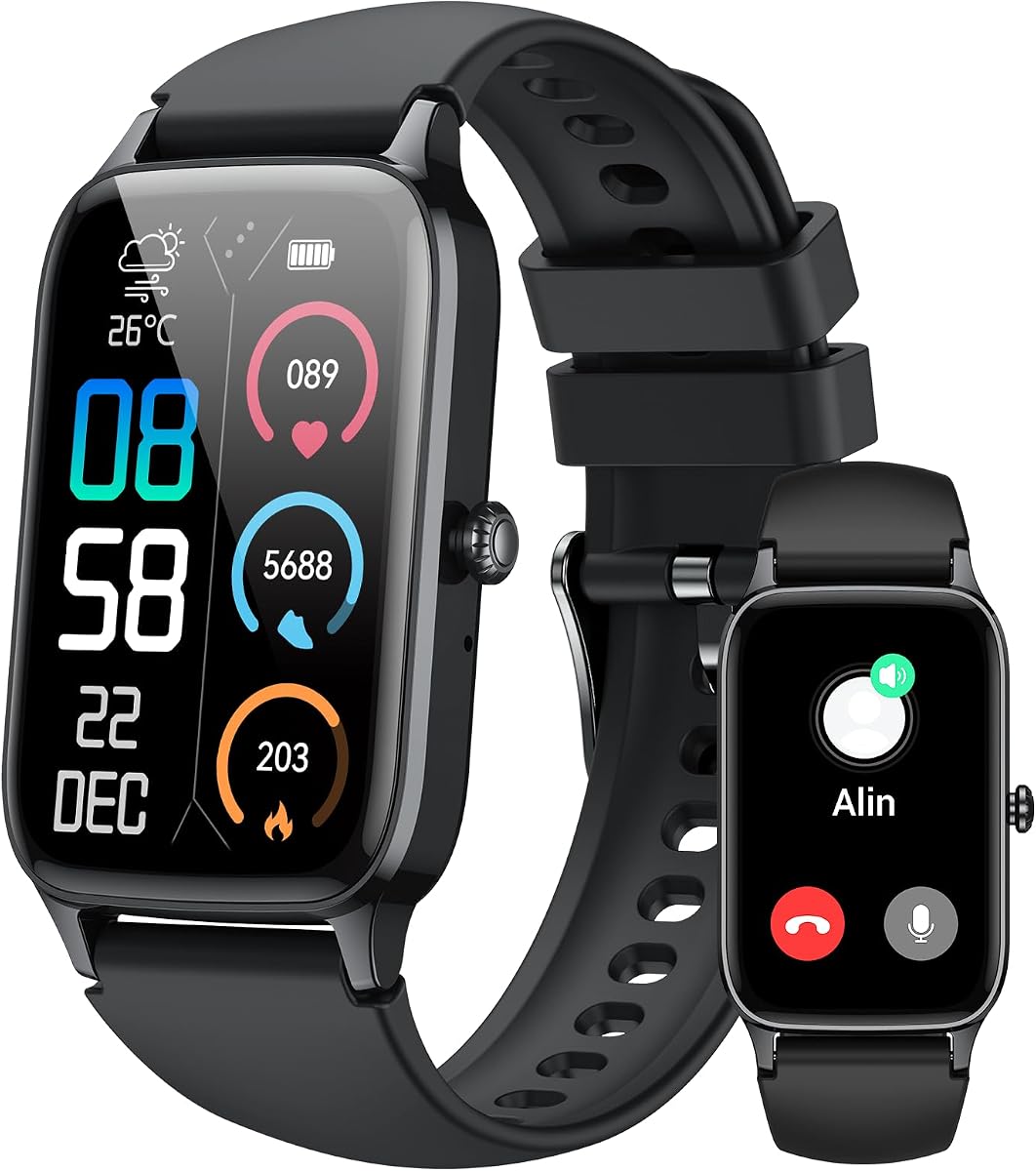
Smart Watch for Men Women
4.8Editor score
Bluetooth 5.3 wrist calls
Walking and 110+ sports
Seven-day active battery
A smartwatch for walking should make everyday movement easier to understand without turning every stroll into a complicated fitness project. The most useful models track steps, distance, calories, heart rate, and sleep while remaining comfortable enough to wear from morning to night. Built-in GPS, reliable water resistance, clear displays, and long battery life can make a meaningful difference for regular walkers.
We compared ten smartwatches using the supplied specifications, focusing on walking modes, activity accuracy features, health monitoring, navigation, battery claims, water resistance, phone compatibility, and everyday convenience. The list covers budget trackers, feature-rich general-purpose watches, rugged outdoor models, and premium GPS fitness watches, giving different priorities room to stand out.
Each review explains who the product is likely to suit, where it offers a compelling advantage, and which compromises a buyer should consider. Ratings reflect the listed customer feedback and may change over time. Product availability, features, and pricing also shift, so shoppers should confirm the current listing and device compatibility before buying.
4.8Editor score
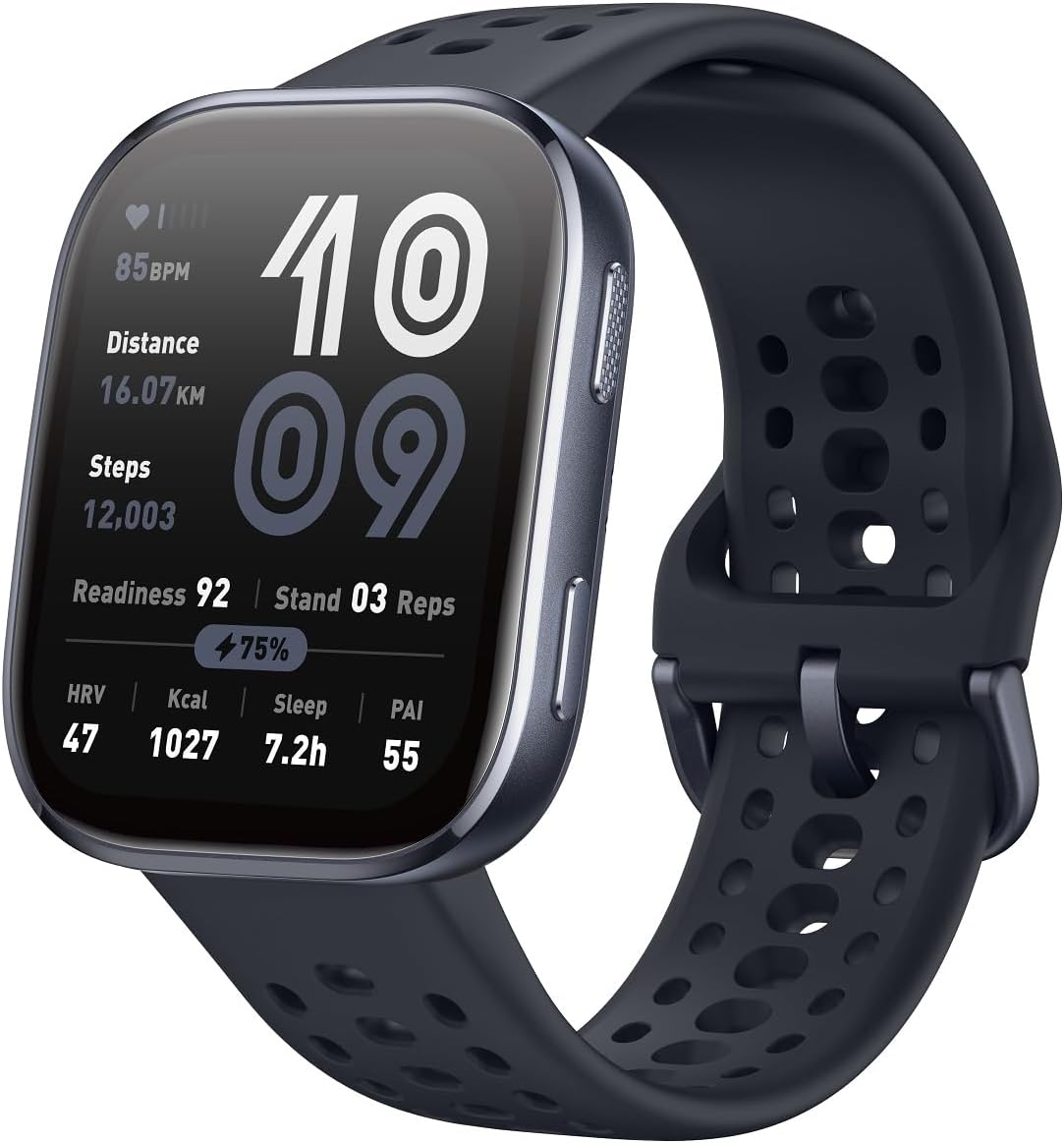
4.2Editor score

4.4Editor score
As an Amazon Associate we earn from qualifying purchases.
The comparison highlights the most important differences in walking support, location tracking, health sensors, display quality, battery endurance, water resistance, and smart-watch functionality, helping shoppers match a device to their routine without overlooking basic everyday features.


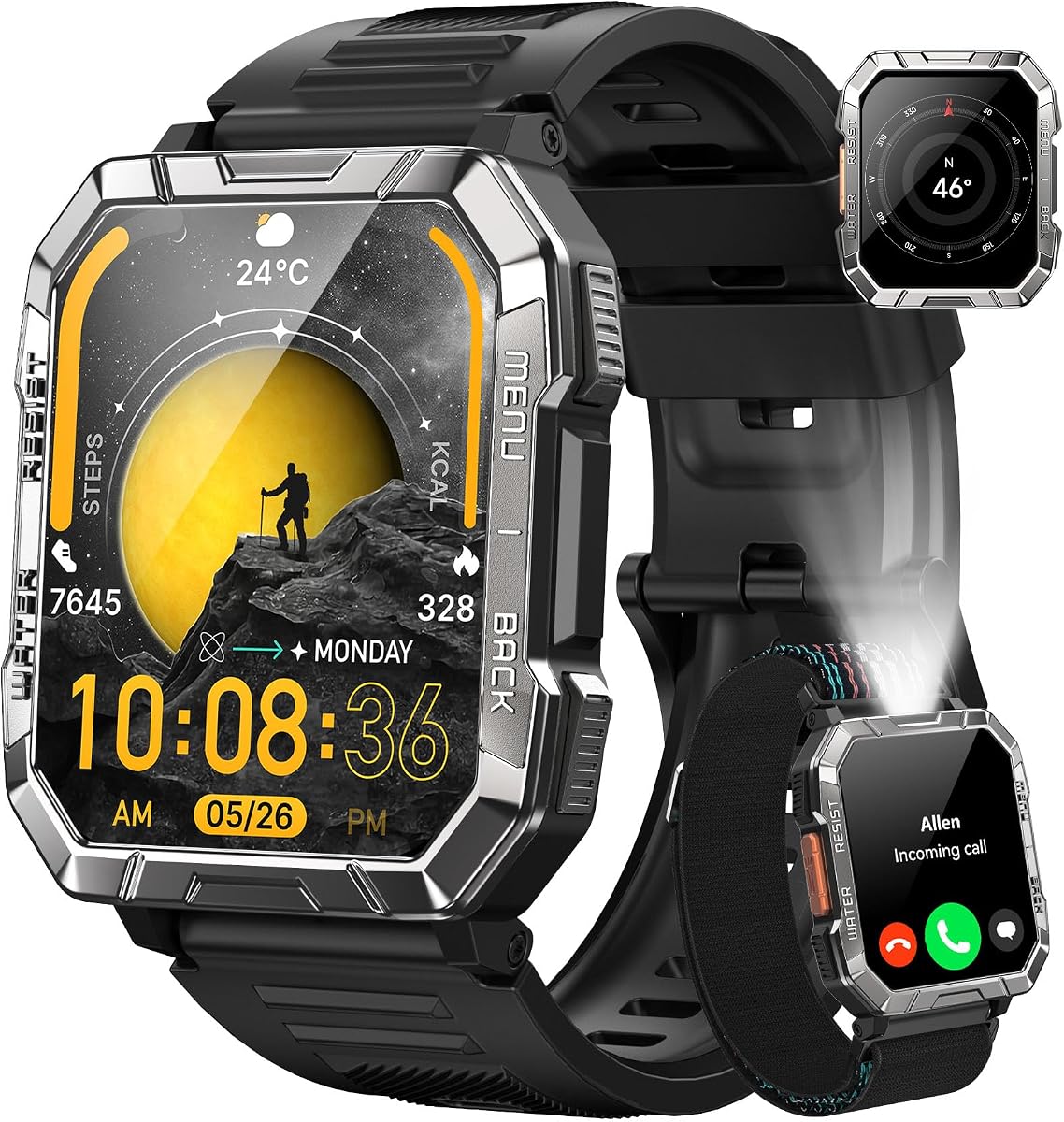


This general-purpose fitness smartwatch carries a 4.1 rating and stands out for combining a broad range of activity options with practical communication features. Walking is naturally supported by automatic step, calorie, and distance tracking, while the long list of sport modes can also cover cycling, yoga, swimming, and more demanding routines. Its gold finish and extensive customization options make it feel less like a basic step counter.
We may earn a commission when you buy through this link, at no additional cost to you.
The strongest feature set centers on everyday versatility. Bluetooth 5.3 supports calls through the built-in microphone and speaker, and the AI voice assistant can handle reminders and weather requests without requiring the phone to be removed from a bag. Hydration and posture alerts, a countdown timer, guided breathing, remote camera control, and more than 200 watch faces expand its usefulness beyond exercise tracking. The supplied information also notes compatibility with both iPhone and Android devices.
There are some trade-offs. Although the product is described as using Bluetooth 5.3 for daily pairing, another compatibility passage refers to Bluetooth 4.0, so buyers should confirm the final technical details in the listing. The product also lacks the specialized navigation emphasis of a watch with its own multi-band GPS system. Its 4.1 rating suggests broad appeal but less consensus than the leading products in this guide.
This is a strong choice for a buyer who wants a do-everything smartwatch at a budget-friendly level. It suits casual walkers who value calls, notifications, customization, and wellness tracking more than highly detailed route analysis. People who regularly walk unfamiliar trails, depend on precise navigation, or want advanced training analytics should look toward a dedicated GPS fitness watch.
Calls, a voice assistant, hydration reminders, posture prompts, breathing exercises, and camera control make this watch useful between workouts. These tools are particularly helpful for someone who wants one device to cover errands, commuting, and exercise rather than wearing a separate tracker for every purpose.
The listed iPhone and Android support lowers the barrier to adoption. A buyer should install the companion app, complete Bluetooth pairing, and review notification permissions before relying on the watch for everyday messages or calls.
We may earn a commission when you buy through this link, at no additional cost to you.
This compact smartwatch receives a 4.8 rating, making it one of the strongest customer-rated choices in the roundup. It directly tracks walking steps, distance, calories, speed, and other exercise data through more than 110 sport modes. A dedicated walking profile is joined by running, hiking, cycling, fitness, swimming, and yoga, so the device can move from casual strolls to mixed exercise routines without becoming tied to a single activity.
We may earn a commission when you buy through this link, at no additional cost to you.
Its feature set is unusually complete for a budget-oriented model. The 1.57-inch HD touch screen has five brightness levels, and users can select from more than 100 watch faces or use a favorite photo. Bluetooth 5.3 supports calls, contacts, call records, and message reminders through the FitCloudPro app. Additional tools include a stopwatch, timer, music controls, weather forecasts, find-watch and find-phone functions, breathing training, an alarm, camera control, women's health features, and sedentary reminders.
Health monitoring adds another layer of appeal. The optical sensors are listed as recording heart rate, blood oxygen, stress, and sleep quality, with phone syncing for later analysis. Battery life is stated at up to seven days of continuous use or 30 days in standby, following a two-hour charge. These figures can vary with display use, notifications, workouts, and sensor settings, but the stated endurance is favorable compared with many general-purpose smartwatches.
The main limitation is the 1.57-inch display, which may feel less spacious when reviewing detailed walking statistics. It also does not advertise the advanced multi-system GPS or navigation found in dedicated outdoor models. Even so, the combination of a 4.8 rating, broad sport support, comfortable everyday dimensions, and a useful set of smart features makes this a compelling recommendation for regular walkers seeking strong value and minimal charging interruptions.
Real-time steps, distance, calories, and speed give walkers an immediate view of current progress. Recording the activity consistently can also make weekly trends more useful than relying on a single daily number.
A compact screen can feel less cumbersome than a large wearable during sleep, desk work, and long walks. The stated multi-day battery also reduces the likelihood that basic step tracking will stop because the device needs charging.
We may earn a commission when you buy through this link, at no additional cost to you.
The Garmin vívoactive 5 earns a 4.3 rating and brings a more focused fitness experience than a typical notification-first smartwatch. Its bright AMOLED display makes walking statistics easy to inspect, while built-in GPS supports more than 30 indoor and outdoor sports applications. Walking, running, cycling, HIIT, swimming, golf, and many other activities receive dedicated profiles, and the watch can serve as a practical companion for both everyday movement and structured training.
We may earn a commission when you buy through this link, at no additional cost to you.
Garmin's health and recovery tools are the defining strengths. Body Battery energy monitoring considers sleep, naps, stress, and workouts, while a sleep score, personalized sleep coaching, and HRV status offer broader context for recovery. Advanced training features include workout benefit and recovery time, helping a walker understand what an outing contributes to overall fitness. The supplied information also notes wrist-based heart rate, a morning report, fitness age, stress tracking, menstrual-cycle and pregnancy tracking, meditation, and automatic nap detection.
The trade-offs come from its wider capabilities and premium positioning. The always-on display can reduce the stated battery life to five days, compared with up to 11 days in standard smartwatch mode. Beginners may not need all of the available health metrics, training assessments, and preloaded workout content. As the vendor notes, the health readings are close estimates rather than medical measurements, so they should not be treated as diagnostic tools.
This watch is best suited to a walker who wants more than a step counter but does not require a dedicated running watch. It is particularly attractive for people interested in recovery, sleep, broader health trends, and varied exercise. Buyers wanting the newest generation, animated workout guidance, and additional suggested walking workouts may prefer the Garmin vívoactive 6, while anyone content with a less advanced ecosystem may find the vívoactive 5 more than sufficient.
Workout benefit and recovery-time features add context that a basic pedometer cannot provide. They can help a walker balance frequent outings with rest, making gradual progression easier to manage without treating every metric as a medical conclusion.
Preloaded workouts, Garmin Coach adaptive plans, custom workouts in Garmin Connect, and downloadable music create a broader training ecosystem. This makes the watch useful for someone whose walking habits may gradually expand into running, strength work, or indoor exercise.
We may earn a commission when you buy through this link, at no additional cost to you.
The Amazfit Bip 6 has a 4.2 rating and is an attractive option for walkers who want navigation and long battery life in a colorful, lightweight design. Its 1.97-inch AMOLED display is easy to read under bright conditions, while the aluminum body provides a more refined appearance than many entry-level fitness trackers. The size offers generous screen space for reviewing live statistics, routes, and notifications.
We may earn a commission when you buy through this link, at no additional cost to you.
Navigation is a major advantage over basic watches. Built-in GPS supports five satellite systems, while downloadable maps and turn-by-turn directions help users travel without a phone signal. The Bip 6 also includes more than 140 workout modes, personalized AI coaching, and 50-meter water resistance. This combination makes it suitable for everyday walks, workouts, and casual outdoor exploration where route guidance matters.
Health monitoring includes real-time heart rate, sleep, blood oxygen, and stress tracking, with an emphasis on turning daily readings into actionable lifestyle information. The stated battery life of up to 14 days is the strongest endurance claim among the products reviewed, and it means many users could go more than a week between charges. As with any battery estimate, active GPS use, display brightness, notifications, and workouts will affect real-world results.
The primary caution is the 50-meter water-resistance rating. It supports swimming and general water exposure, but it is not intended for diving. Buyers should also spend time configuring the AI coaching features rather than assuming they are as comprehensive as a dedicated training platform. Overall, the Bip 6 is a strong fit for walkers who prioritize vivid display quality, maps, route tracking, and fewer charging interruptions.
Downloadable maps and turn-by-turn guidance are particularly useful in parks, neighborhoods, and outdoor routes where pulling out a phone can interrupt momentum. Independent GPS also makes recorded routes available without a constant connection to the paired smartphone.
A stated two-week battery is highly practical for a device worn continuously. It can support uninterrupted step and sleep tracking, although the longest runtime will depend on how often GPS, bright display settings, and workout tracking are used.
We may earn a commission when you buy through this link, at no additional cost to you.
This rugged smartwatch has a 5.0 rating and distinguishes itself through an aluminum-alloy frame, extensive battery claims, and genuinely useful outdoor hardware. It is designed for people who walk beyond city sidewalks, whether that means trails, camping, or long trips where carrying extra equipment would be inconvenient. The stated 100-day standby and 30-day daily-use endurance are especially notable among the models in this guide.
We may earn a commission when you buy through this link, at no additional cost to you.
The flashlight and compass are practical additions that most general fitness watches do not emphasize. The flashlight has a stated lighting range of approximately 6 to 10 meters, while the compass is described as magnetically resistant. Two straps are included, allowing a choice between silicone and nylon, with the nylon option suited to people who prefer a different feel or have sensitive skin. The 2.01-inch full-touch TFT display also provides a large view of activity information and customizable watch faces.
Walking is among more than 100 supported sport modes, alongside running, cycling, climbing, yoga, skiing, and football. The watch tracks steps, time, distance, and calories and can connect to a phone's GPS to record routes through the GloryFitPro app. Heart rate, sleep, blood oxygen, and stress monitoring add wellness features, while Bluetooth calling, notifications, an AI assistant, music control, and a stopwatch extend its daily usefulness.
The key trade-off is that route recording depends on a phone's GPS rather than a clearly specified independent multi-satellite system in the watch. The IP68 rating is suitable for sweat, rain, and daily use, but the product explicitly excludes sauna, hot-water, swimming, and diving use. A buyer should fully charge it before first use and confirm app compatibility. It is best for rugged walkers who value battery life and outdoor tools more than polished navigation.
The combination of a metal frame, dual straps, flashlight, compass, and long claimed battery life targets outdoor users who want fewer charging opportunities. It also adds useful detail to walks where phone access is inconvenient or the route crosses remote areas.
IP68 supports protection during sweat and rain, but the stated exclusions are important. The watch should not be taken into a sauna, hot bath, swimming pool, or underwater activity despite being marketed broadly for active use.
We may earn a commission when you buy through this link, at no additional cost to you.
This straightforward fitness smartwatch earns a 4.8 rating and focuses on the features most relevant to an active lifestyle. Its 1.85-inch display presents steps, calories, and other walking information clearly, while the listed product data specifically confirms tracking for heart rate, sleep quality, steps, and calories burned. That combination makes it a practical choice for people who want simple activity feedback without a large learning curve.
We may earn a commission when you buy through this link, at no additional cost to you.
Connectivity is a meaningful addition. The watch can answer, make, and reject calls from the wrist and receive app notifications, helping a walker stay connected without repeatedly removing a phone. It pairs with both iPhone and Android devices through Bluetooth, and IP68 water resistance gives confidence during sweat, rain, and hand washing. These everyday protections suit regular commutes, neighborhood walks, and gym sessions.
The product is less elaborate than the models with built-in GPS, extensive workout libraries, or advanced recovery training. Its supplied specifications do not detail independent satellite navigation, third-party sports applications, or a long battery estimate. That simplicity can be positive for users seeking an uncomplicated tracker, but it may be limiting for someone who wants detailed pace analysis, route mapping, and adaptive workouts.
This smartwatch is best for a budget-minded walker who values calls, notifications, a large screen, and basic wellness tracking. It is a sensible choice for daily steps, calorie awareness, and sleep monitoring without requiring a specialized fitness platform. For hikers, route-focused users, or people planning to expand into structured training, one of the GPS-equipped alternatives offers a more suitable foundation.
A large display and direct access to steps, calories, heart rate, and sleep information cover the core needs of an everyday walker. The information remains accessible without navigating through a complex training ecosystem.
Wrist calling and app alerts can be valuable on a walk, particularly when the phone is carried in a pocket or bag. Keeping the phone nearby remains necessary for the full communication experience.
We may earn a commission when you buy through this link, at no additional cost to you.
The Alexa-equipped smartwatch has a 4.2 rating and appeals to users who want voice assistance, fitness tracking, and phone connectivity in one wearable. Its 1.8-inch HD touch screen offers enough space for daily statistics and watch-face customization, while more than 100 sports modes include walking, running, yoga, swimming, and several team activities. Step, distance, and calorie tracking provide the basic framework for an active routine.
We may earn a commission when you buy through this link, at no additional cost to you.
Alexa is the defining convenience feature. It can set alarms, check the weather, control music, and manage compatible smart-home devices through voice commands. The watch also supports answering, making, and rejecting calls and displays notifications from services such as Facebook, Instagram, WhatsApp, and Snapchat. The supplied information specifically notes that users can receive messages but cannot send texts or reply by message from the watch, an important distinction for buyers who need two-way communication.
Health features include 24/7 heart rate, blood oxygen for non-medical use, stress tracking, and automatic sleep recording with stage analysis in the VeryFit app. The stated 300mAh battery supports up to seven days of daily use after a two-hour magnetic charge. Compatibility extends to iOS 9.0 and later, including several recent iPhone generations, as well as Android 6.0 and later, making it a flexible option for mixed-device households.
There is a caution around the water-resistance description. Although the product supports swimming among its modes, the listing also emphasizes IP68 protection for hand washing, rain, and general water exposure. Buyers should follow the manufacturer's current care instructions rather than assume every water activity is covered. Overall, this is a well-rounded watch for a walker who values Alexa, health metrics, and customization more than independent navigation.
Voice commands for weather, alarms, music, and compatible home devices are useful before or after a walk. They reduce the need to unlock a phone, particularly during early-morning or post-exercise routines.
Incoming messages and call functions are useful, but the watch cannot type or send replies. Anyone who needs rapid two-way conversations should keep a phone accessible rather than choosing this model solely for message handling.
We may earn a commission when you buy through this link, at no additional cost to you.
The ICOMTOFIT smartwatch carries a 4.4 rating and provides a balanced set of walking, wellness, and communication functions. It supports more than 100 light exercise modes, including walking, yoga, dancing, and jogging. For daily movement, it records steps, walking distance, calories burned, and active minutes, giving users several useful ways to judge whether a day has been sufficiently active.
We may earn a commission when you buy through this link, at no additional cost to you.
Health monitoring is comprehensive for a general-purpose tracker. The watch automatically tracks heart rate, blood oxygen, and stress, then analyzes light and deep sleep stages at night. It also includes menstrual-cycle tracking and prediction, although the product explicitly states that the device is intended for daily health reference rather than medical use. These features can offer useful context, but they should not replace professional health advice or diagnostic equipment.
A 1.83-inch full-touch HD display is adjustable for different lighting conditions, and hundreds of customizable watch faces allow a high degree of visual personalization. Bluetooth calling and real-time SMS, social-app, and incoming-call notifications make the watch useful beyond exercise. A magnetic charging system and stated five-to-seven-day normal-use battery support continuous wear, while IP67 protection handles sweat, hand washing, dust, and light rain.
The main limitation is the IP67 rating, which is a step below the IP68 rating offered by several alternatives. It also provides no detailed specification for independent GPS or advanced route tracking. This is a good choice for a walker seeking richer health information, customization, and calls at a modest feature level. It is less suited to technical hikers or athletes who depend on precise outdoor navigation.
Walking distance, calories, active minutes, heart rate, and stress provide a more nuanced picture of daily movement. Looking at several trends is often more useful than reacting to a single step count.
A large touch display, adjustable brightness, numerous watch faces, alarms, and a sedentary reminder cover common daily needs. These additions are useful for people who want their fitness watch to double as an everyday watch.
We may earn a commission when you buy through this link, at no additional cost to you.
The Choiknbo Smart Watch is designed with simplicity in mind and carries a 4.1 rating. Its clear display presents time, steps, and activity information in an easy-to-read format, making it a practical option for older adults, beginners, or anyone who prefers not to manage a complicated fitness watch. Walking is central to the product, with a built-in pedometer and step counter for reviewing daily movement.
We may earn a commission when you buy through this link, at no additional cost to you.
The device tracks distance, calories, and activity data, while multiple sports modes support walking, running, exercise, and other routine activities. Heart rate, blood oxygen, and sleep monitoring add wellness information without requiring a premium fitness platform. Its IP68 rating also provides suitable protection for sweat, rain, and hand washing, which is useful for regular outdoor wear.
Battery life is stated at approximately three to seven days depending on settings and usage. Charging takes around an hour and a half, making it straightforward to maintain the watch on a predictable schedule. The straightforward operation and limited feature emphasis reduce the learning curve, particularly for someone whose main goal is checking steps and walking distance rather than navigating menus or following advanced training advice.
The trade-off is a less extensive smart-watch ecosystem. The supplied data does not highlight independent GPS, turn-by-turn navigation, third-party app features, animated training, or detailed recovery metrics. This makes it a focused pedometer and wellness watch rather than a full navigation or coaching device. It is best for seniors and uncomplicated walkers who value readable data, basic health tracking, and a straightforward daily routine.
The uncomplicated screen and direct presentation of time, steps, and activity data reduce barriers for new users. Important walking numbers can be understood without navigating through several layers of menus.
Pedometer functions, sleep monitoring, heart rate, and blood oxygen tracking cover several common needs. Because the readings are intended for general wellness rather than diagnosis, they should support lifestyle awareness without replacing professional measurements.
We may earn a commission when you buy through this link, at no additional cost to you.
The Garmin vívoactive 6 combines a 4.4 rating with an advanced feature set, making it the strongest premium choice in this guide. Its 42mm body and bright AMOLED display present walking data, health trends, and notifications clearly, while the Garmin fitness platform adds much more depth than a basic pedometer. It is designed for users who want walking to become a more intentional part of a broader fitness plan.
We may earn a commission when you buy through this link, at no additional cost to you.
A major walking-specific advantage is the inclusion of personalized daily suggested workouts. The watch can recommend tailored walking sessions to keep users moving, while more than 80 built-in indoor and GPS sports apps cover running, cycling, HIIT, mobility, swimming, golf, and other activities. Animated workouts for cardio, yoga, strength, HIIT, and Pilates provide technique guidance, and Garmin Coach offers adaptive plans that respond to health and recovery information.
Recovery and wellness features are equally substantial. Body Battery energy monitoring considers sleep, naps, stress, and workouts. A sleep score, personalized coaching, HRV status, morning report, fitness age, wrist-based heart rate, stress tracking, menstrual-cycle and pregnancy tracking, meditation, and automatic nap detection create a broad picture of daily readiness. Workout benefit and recovery-time estimates can help users balance activity with rest. The supplied information appropriately notes that these metrics are close estimates rather than medical outputs.
The vívoactive 6 is not ideal for someone seeking the simplest possible watch. Its many metrics, menus, animated guidance, and adaptive features can feel excessive to a first-time fitness-tracker owner. The AMOLED display and advanced hardware also place it at the premium end of this market, while battery life depends on how aggressively the watch is used. For a walker who wants training guidance, recovery awareness, and a durable smartwatch ecosystem, however, it is the most complete option here.
Daily suggested walking workouts offer structure without requiring the user to design every session. This is useful for walkers who benefit from a clear prompt but still want the freedom to choose when and how far to go.
Garmin Coach, animated workouts, Body Battery, workout benefit, recovery time, sleep coaching, and HRV status create a connected training picture. The value comes from seeing activity alongside recovery rather than treating a single daily metric as the entire story.
We may earn a commission when you buy through this link, at no additional cost to you.
The right walking smartwatch depends on how, where, and why you walk. Consider tracking accuracy, route needs, comfort, endurance, health features, water exposure, and phone compatibility rather than selecting on display size or the longest feature list alone.
A dedicated walking mode should record steps, distance, calories, time, and preferably pace or speed. Some watches also distinguish active minutes or let a user start a specific outdoor workout. These metrics are more useful when they are consistent from day to day, so look for a clear watch face and an app that presents weekly trends without excessive manual input. Dedicated fitness platforms may also offer adaptive walking suggestions, while simpler trackers concentrate on reliable step and distance records.
Choose a watch that makes your most important walking numbers easy to see during and after a walk.
Independent GPS is valuable if you regularly walk trails, explore unfamiliar streets, or want your route recorded without carrying a phone. Dedicated fitness watches often provide more robust location features, turn-by-turn directions, downloadable maps, and detailed pace data. A phone-assisted tracker can be sufficient for neighborhood walks, but it may depend on the phone remaining nearby. Buyers should distinguish a clearly specified built-in multi-satellite GPS from general Bluetooth connectivity, which does not provide route mapping by itself.
Independent GPS and maps matter most for route-focused walkers, not casual step counting.
Continuous health tracking, a bright display, notifications, workouts, and GPS all influence battery consumption. A watch rated for several days of active use is convenient for consistent step and sleep tracking, while longer endurance reduces charging interruptions. Very long standby claims do not necessarily equal the same amount of time under continuous screen or GPS use. Review whether the quoted figure refers to normal use, smartwatch mode, or standby, and consider a magnetic charging system for convenience.
Choose a battery duration that matches your actual screen, workout, and notification habits.
A smartwatch for walking must remain comfortable over long periods, especially if it is worn overnight for sleep tracking. Screen size affects both readability and bulk, while adjustable brightness helps outdoors and at night. Larger displays can make numbers easier to inspect but may feel cumbersome on smaller wrists. Buyers should also consider the case shape, strap flexibility, weight, and whether the device is likely to remain comfortable during hot weather or sleep.
Prioritize a display that is readable and a shape that does not interfere with sleep or daily wear.
Heart rate, blood oxygen, stress, sleep, and menstrual-cycle tracking can reveal useful patterns, but they are not equivalent to clinical measurements. Optical sensors may be affected by movement, fit, skin tone, and environmental conditions. Look for features that explain trends over time rather than promising exact medical conclusions. A watch that connects records to a companion app can also make it easier to compare sleep with activity and establish realistic routines.
Treat wellness data as an estimate and trend, not a medical diagnosis or substitute for professional testing.
Rain, sweat, hand washing, swimming, hot water, and diving place very different demands on a watch. IP67 and IP68 ratings cover different conditions, and a brand's additional notes may be more restrictive than buyers expect. Check the care instructions for temperature limits, soap exposure, charging while wet, and specific activities. Rugged models may also add a flashlight, compass, durable frame, or interchangeable straps for outdoor walking beyond paved routes.
Match the exact water rating and exclusions to the activities you actually plan to perform.
Most smartwatches require a paired phone for setup, detailed data, and notification features. Confirm support for the current operating system and version, especially if the phone is older or if the household uses multiple platforms. Bluetooth calls, message alerts, voice assistants, music controls, and remote camera functions are convenient, but each adds complexity and may consume more battery. Also check whether a watch can only receive messages or can send replies, since entry limitations vary significantly.
Verify operating-system support and communication limits before relying on the watch as a phone replacement.
Casual walkers may need only a step counter, while regular exercisers may value adaptive plans, recovery estimates, animated instruction, route guidance, and downloadable music. Premium platforms usually offer deeper guidance and better integration with training history, whereas budget watches are more likely to focus on basic records and notifications. Decide whether a richer ecosystem will be used often enough to justify added complexity. Unused features add menu clutter and can make setup less pleasant.
Match the software ecosystem to your current activity level, not to a hypothetical future routine.
Begin by charging the watch fully, installing the stated companion app, and completing Bluetooth pairing. Set the correct units, personal details, age range, and health preferences before interpreting any readings. For the most useful walking records, open the walking or outdoor activity mode rather than relying solely on automatic step detection. Wear the watch securely around the wrist, allow the sensors to maintain consistent contact, and take a short indoor walk to confirm that steps, distance, and heart-rate updates appear as expected.
Plan to use the watch consistently rather than only during planned workouts. Daily wear lets the device compare walking habits with sleep, stress, and recovery trends, but it is important to remain consistent because different wearing patterns can make week-to-week comparisons less meaningful. Review weekly averages instead of reacting to a single unusually high or low day. If the watch offers recommended walking sessions, use them as flexible guidance and adjust them around fatigue, weather, and personal goals.
Care for the device according to the manufacturer's water and charging instructions. Rinse off sweat, soap, or dirt when appropriate, dry the watch and band, and avoid exposing it to hot baths, saunas, or diving unless the product explicitly permits those activities. Keep the sensors clean and the strap appropriately tightened. Review battery settings, notification permissions, and app updates periodically, and restart the watch if activity data appears delayed.
No, not for basic step counting. A phone-connected fitness watch can record steps, distance, calories, and walking time, while a dedicated GPS watch is more useful when you want an independent route, pace data, or turn-by-turn guidance. Choose based on whether you walk in familiar areas or regularly explore routes without your phone.
Several days of normal use is convenient for continuous step and sleep tracking, while a longer claim reduces charging interruptions. Actual runtime depends on display brightness, GPS use, workout frequency, and notifications, so compare battery specifications under similar conditions rather than relying only on standby figures.
Budget smartwatches can provide useful estimates of heart rate, blood oxygen, stress, and sleep stages. Accuracy varies with fit, movement, skin contact, and the sensor design, so these readings should be treated as general wellness information. Medical decisions require appropriate clinical equipment and professional guidance.
IP68 generally provides strong protection against sweat, rain, splashes, and hand washing. It does not automatically mean the watch is safe for diving, saunas, hot tubs, or swimming unless the manufacturer explicitly allows those activities. Check the product-specific care notes before exposing it to heat or submerged water.
Automatic tracking is convenient for general daily movement, while starting a dedicated walking mode often creates a more organized workout record with duration, distance, pace, or calories. If you use automatic tracking only, review the app regularly to make sure steps are being grouped into useful daily totals.
Consumer smartwatches are generally designed for general wellness and fitness tracking. Some products explicitly state that readings are estimates or for non-medical use. Anyone concerned about a health condition should consult a qualified professional and use approved medical equipment rather than relying on smartwatch data for diagnosis.
That depends on the model and features. Basic step tracking may continue independently, but notifications, music control, app analysis, and phone-assisted GPS can require a connection. A watch with built-in GPS and onboard storage offers more independence, while Bluetooth-only devices are best treated as companions to a phone.
Choose a simple watch if you primarily want steps, distance, calories, and basic health trends. Consider a premium GPS model if you want detailed route tracking, adaptive walking suggestions, recovery guidance, animated workouts, and deeper app analysis. The best choice is the one whose features you will use regularly without making setup overwhelming.
The three standout choices address different priorities. The Smart Watch for Men Women is a budget all-rounder with a 4.8 rating, 110-plus sport modes, wrist calling, and a stated seven-day active-use battery. The Amazfit Bip 6 stands out for its vivid AMOLED display, 140-plus workout modes, downloadable maps, five-system GPS, and up to 14-day battery. The Garmin vívoactive 6 delivers the most advanced walking and training experience through personalized suggestions, recovery metrics, animated workouts, and Garmin Coach.
For most casual walkers, the decisive requirements are readable tracking, comfortable wear, dependable phone compatibility, and a charging interval that fits the user's routine. More active walkers should prioritize independent GPS, route quality, and detailed pace information. Wellness-focused buyers can look closely at sleep, stress, heart-rate, and recovery trends, while anyone who values two-way communication should verify whether the watch can send replies as well as display incoming messages.
Ratings, availability, app behavior, and pricing can change, and feature lists may evolve. Before purchasing, confirm the current product listing, operating-system requirements, water restrictions, included accessories, and app permissions. The most suitable smartwatch is ultimately the one that makes walking information understandable, fits comfortably into everyday life, and supports habits the user will genuinely maintain.